Interview with Kang Donghwa, CEO of Newnaps
Development of DTx for Treating 'Visual Impairment' Previously Untreatable
Customized Stimulation Activates Brain Near Damaged Area
"There has been no globally validated treatment for visual field defects caused by stroke and other conditions. Our goal is to overcome such intractable diseases by developing DTx." (Donghwa Kang, CEO of NewNaps)
 Kang Dong-hwa, CEO of Newnaps, is being interviewed on the 2nd at Asan Life Science Research Institute in Songpa-gu, Seoul. Photo by Kang Jin-hyung aymsdream@
When digital therapeutics (DTx) were first introduced in Korea, they were called the 'third new drug' or 'digital new drug.' There were high expectations that it would be a new type of medicine following synthetic drugs (chemical) and biopharmaceuticals. However, as DTx later focused on digitizing existing treatments, this notion gradually disappeared.
Recently, however, a DTx that can be called an 'innovative new drug' for treating intractable diseases has finally emerged domestically. The protagonist is 'VividBrain,' the 'third domestically produced DTx,' developed by NewNaps. VividBrain treats visual field defects caused by brain damage from stroke and other conditions. This is a disability for which no validated treatment has existed until now.
Humans can see the left visual field through the right eye even if the left eye is closed. However, after experiencing a stroke, even if both eyes are intact, one side of the visual field may be lost. This is because the information entering through our eyes is processed in the visual cortex at the back of the brain, and if this area is damaged, the corresponding visual field cannot be processed. For example, if the visual cortex in the right brain is damaged, the left visual field becomes invisible.
Visual field defects affect 15-20% of stroke patients. However, even doctors have said that patients have no choice but to adapt and live with it, as there was no treatment available. Donghwa Kang, CEO of NewNaps and a neurology professor at Seoul Asan Medical Center treating stroke patients, focused on the 'brain plasticity theory,' which suggests that even if the brain is damaged, nearby areas can become activated to compensate for the damaged region. He hypothesized that continuous visual stimulation training, called 'visual perceptual learning,' could induce brain plasticity and restore the lost visual field. VividBrain clinically demonstrated the effectiveness of improving visual field defects through such customized stimulation training using virtual reality (VR) devices.
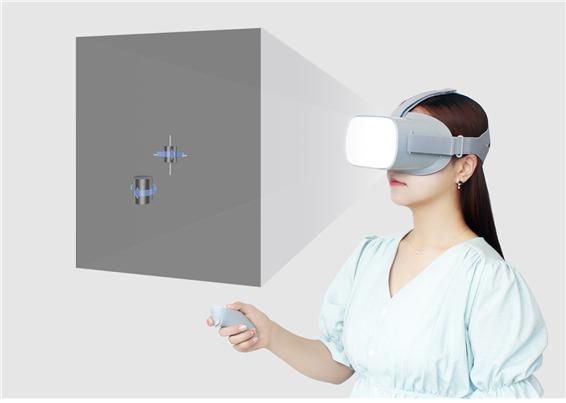
The success of VividBrain was not easily achieved. VividBrain received approval about five years after entering the first domestic DTx confirmatory clinical trial in 2019.
The most challenging part was proving its effectiveness. In the first clinical trial, the control group was given stimulation only at the center of the visual field. This method was a step below VividBrain’s personalized stimulation and could be considered a type of visual perceptual learning. The intention was to make the control group more rigorous during the clinical process. The problem was that both methods showed similar effects, causing the trial to fail.
However, CEO Kang explained, "When analyzing the data, I thought it was actually a step toward success." Since even central stimulation improved visual field defects, it became clear that visual perceptual learning was effective. Also, due to the high treatment motivation of patients trying to overcome visual field defects, treatment adherence was high, which led to significant effects even in the control group. From the early development stage, inquiries from abroad about participating in clinical trials via email confirmed the patients’ strong desire for treatment in measurable terms.
In subsequent clinical trials, VividBrain succeeded in proving its effectiveness by comparing treated patients with those who received no treatment. Some treated patients fully recovered their previously lost visual fields, and functional magnetic resonance imaging (fMRI) confirmed activation in nearby brain areas.
 Kang Dong-hwa, CEO of Newnaps, is being interviewed on the 2nd at Asan Life Science Research Institute in Songpa-gu, Seoul. Photo by Kang Jin-hyung aymsdream@
VividBrain plans to begin actual patient prescriptions later this year at Seoul Asan Medical Center and other institutions. CEO Kang said, "Just as 'willingness to pay' is important for consumer products, 'willingness to prescribe' is crucial in the medical field. Since a treatment method has emerged in an area where none existed before, doctors are highly willing to prescribe it, and patients have great expectations." However, he added that since previously approved domestic DTx products have faced commercialization challenges, they will not rush the market launch.
CEO Kang, who said, "It is exciting to see patients treated with a drug I developed," is also focusing on developing follow-up pipelines. Currently, confirmatory clinical trials are underway for Nu.T, a DTx that treats pediatric stereopsis disorders caused by strabismus. They are also attempting to develop DTx for mild cognitive impairment, a precursor to Alzheimer's dementia, using a separate algorithm.
© The Asia Business Daily(www.asiae.co.kr). All rights reserved.



















