Chosun University is set to become a leading university in the development of next-generation bio technologies.
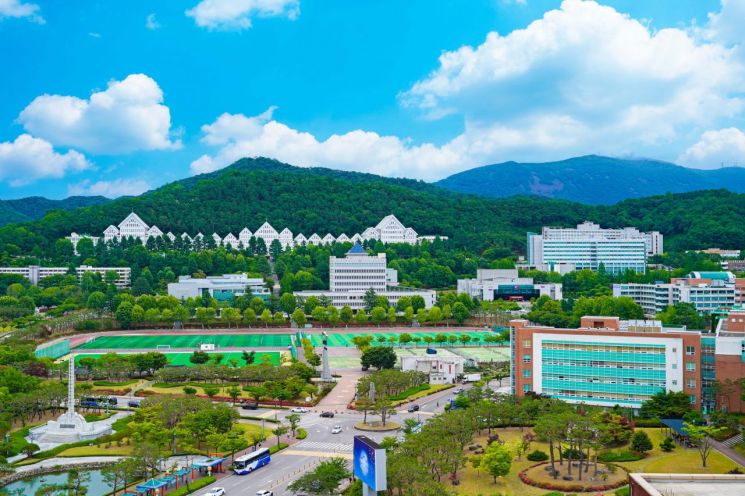
Chosun University’s Professor Park Yoon-kyung’s team from the Department of Biomedical Science has been selected for the 'Peptide Advanced New Drug Core Technology Development and Platform Establishment Project' under the 'Bio and Medical Technology Development Project' announced by the Ministry of Science and ICT. The research period is from 2024 to 2028, lasting 4 years and 9 months, with a total project budget of 44 billion KRW.
Through this project, Professor Park Yoon-kyung’s team at Chosun University plans to develop global-level core technologies for the entire cycle of peptide advanced new drugs and establish a platform. The main project contents include ▲deriving lead and candidate substances for peptide target diseases ▲building a peptide PK/PD platform ▲establishing a peptide formulation platform ▲developing next-generation peptide synthesis technologies ▲and training specialized peptide personnel.
This project involves five joint research institutions centered on Chosun University (Sungkyunkwan University, Seoul National University, Inha University, Dandicure Co., Ltd., and Vidtech Co., Ltd.) and entrusted research institutions such as Gwangju Institute of Science and Technology, Yonsei University, and Korea Research Institute of Chemical Technology.
Additionally, Seoul Asan Medical Center, Severance Hospital, and Eulji University Hospital will participate as clinical advisory institutions for target diseases, and the Korea Testing & Research Institute’s Nonclinical Evaluation Center, an internationally accredited testing and certification organization, will participate as a cooperating institution.
Chosun University stated that this project will become a new model that creates future value through collaboration between the university and the region. Hwasun County was designated as a vaccine industry special zone in 2010 and is building a full-cycle infrastructure for the bio industry, capable of research and development through clinical trials and commercialization. By establishing the Peptide Advanced New Drug Research Institute in the Hwasun Vaccine Industry Special Zone, Chosun University expects to position itself as a model to overcome regional extinction crises by combining the university’s excellent research capabilities with the region’s bioindustry development strategy.
Chosun University President Kim Chun-sung said, “Chosun University will establish a government-industry-academia collaborative research system to enhance competitiveness in the bio industry and improve regional living conditions through talent cultivation, contributing to the mutual growth of the university and the region.” He added, “We will actively nurture Chosun University to become a central university in the bio and healthcare fields.”
As of 2023, the global market size of peptides is approximately 60 trillion KRW and is expected to grow to over 100 trillion KRW by 2032.
Although peptide new drug development is already being led by global pharmaceutical companies overseas, domestic research and development is considered a latecomer. Therefore, South Korea is focusing on a catch-up strategy by integrating bio new drug development with digital technologies to narrow the gap.
To develop global-level peptide advanced new drugs, focused research is needed to overcome domestic technological gaps in areas such as analysis technologies for the mechanism of action and target effects in vivo, formulation, and mass production of peptides.
Professor Park Yoon-kyung of the Department of Biomedical Science at Chosun University, the project’s principal investigator, said, “The goal of this project is to establish global-level core technologies and platforms for the entire cycle of peptide advanced new drugs.” She added, “The reason our university was able to secure such a large project is that the Chosun University ERC Center (Protein Material Research Center) project, supported by the government for nine years from 2002, laid the foundation and steadily accumulated research capabilities.”
Meanwhile, peptides are substances composed of 2 to 50 amino acids, which are protein components, and play biologically important roles such as immune response, cell growth, and differentiation. Recently, peptide pharmaceuticals have gained attention as treatments for obesity and diabetes, and peptide new drug core technologies are expected to be applicable not only to disease therapeutics but also to various bio materials.
The government has presented four major strategies and 13 detailed tasks to achieve the vision of “Entering the Leading Bio Nation by 2030 through Digital Bio in the Era of Bio Transformation,” and among the 12 core technologies, advanced new drugs (RNA, peptides, CAR, etc.) were announced as one of the key technologies.
© The Asia Business Daily(www.asiae.co.kr). All rights reserved.
![Clutching a Stolen Dior Bag, Saying "I Hate Being Poor but Real"... The Grotesque Con of a "Human Knockoff" [Slate]](https://cwcontent.asiae.co.kr/asiaresize/183/2026021902243444107_1771435474.jpg)
















