Financial authorities are strengthening the minimum capital requirements regulation for the mutual finance sector to enhance crisis response capabilities. They are also promoting measures to prevent the expansion of insolvency in the mutual finance sector, including institutionalizing large loan limits.
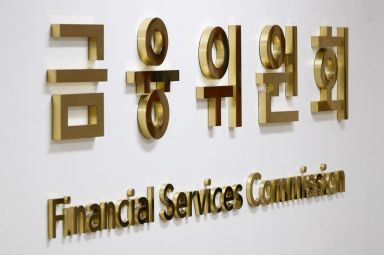
On the afternoon of the 20th, the Financial Services Commission held the ‘2024 1st Mutual Finance Policy Council’ at the Government Seoul Office in Jongno-gu, Seoul, chaired by Secretary General Kwon Dae-young, with related ministries and affiliated organizations. On the 21st, it announced that they discussed measures to improve the soundness of the mutual finance sector, including these contents.
At this first meeting, the authorities first explained the ‘Future Policy Directions for the Orderly Soft Landing of Real Estate Project Financing (PF)’ announced on the 14th and requested mutual finance institutions to comply. To normalize real estate PF, they requested the mutual finance sector to improve business feasibility evaluation standards, while urging that financing be supplied without disruption to the majority of normal projects with sufficient feasibility, and that projects with insufficient feasibility be restructured or liquidated after objective evaluation.
Additionally, the meeting reviewed the current status of soundness and liquidity management in the mutual finance sector and discussed management plans by institution. The mutual finance sector stated, “To enhance soundness, each central association is promoting the expansion of non-performing loan sales and activation of auctions, as well as guidance to increase provisions for loan loss reserves to improve loss absorption capacity of cooperatives,” and added, “We plan to continuously monitor the implementation status for individual cooperatives and continue loan restructuring.”
Furthermore, the mutual finance sector, led by the central associations, monitors liquidity status by cooperative and encourages improvement of liquidity ratios. They also continuously review and refine contingency plans to enable a company-wide response in emergencies, carefully managing to prevent systemic risk from spreading throughout the mutual finance sector and the financial industry as a whole. In particular, given the recent deterioration of soundness indicators in the mutual finance sector, there was consensus on the need for cooperatives to secure diversified response capabilities such as refraining from dividends and retaining earnings internally.
Participants also discussed a comprehensive development plan for mutual finance and, as the first task, the ‘Measures to Enhance the Soundness of the Mutual Finance Sector.’ Although loose regulations have been applied considering the characteristics of regional and low-income financial institutions, the number of cooperatives with scale exceeding that of commercial financial institutions in the region is increasing, and new business practices such as real estate project financing (PF) and joint loans are spreading. Therefore, there is a need to improve regulations on soundness management, business conduct, and governance that correspond to both scale and substance.
Accordingly, the authorities plan to eliminate regulatory differences between institutions under the fundamental principle of ‘same business, same regulation’ and establish a regulatory system equivalent to financial institutions, considering the impact of the mutual finance sector in the domestic financial market. They will apply differentiated regulations by scale according to the characteristics of various cooperatives. Specifically, they intend to pursue institutional improvements in ▲ soundness enhancement ▲ rationalization of business conduct regulations ▲ transparent governance.
In particular, the authorities will revise the minimum capital requirement system for mutual finance and institutionalize the large loan limit system. Large loans refer to loans exceeding either 10% of the previous fiscal year-end’s equity capital or 0.5% of total assets, whichever is greater. The management target includes mutual finance cooperatives with total assets of 100 billion KRW or more. Currently, the supervisory authorities control this through voluntary regulations.
The authorities and the sector will establish and operate a system where opinions from central associations, individual cooperatives, and financial authorities on regulatory improvement tasks are shared and reviewed with each ministry, then discussed and finalized at the council for systematic regulatory improvement.
Related organizations attending the meeting agreed to promptly implement short-term tasks after practical consultations on measures to enhance the soundness of the mutual finance sector, and to continuously discuss detailed plans such as implementation methods and schedules for tasks requiring additional review depending on economic conditions and the sector’s impact. They also agreed to discuss additional institutional improvement tasks and promotion plans centered on the council regarding governance improvement and business conduct regulation reforms.
The authorities stated, “We ask mutual finance institutions to revisit their original purpose as regional and low-income financial institutions based on member-centered mutual bonds, reflect on the factors causing current soundness deterioration, and prepare self-help efforts with a resolute determination. The financial authorities will also communicate closely with related organizations to secure soundness in the mutual finance sector and systematically improve regulations, making every effort to ensure proper operation.”
© The Asia Business Daily(www.asiae.co.kr). All rights reserved.
![Clutching a Stolen Dior Bag, Saying "I Hate Being Poor but Real"... The Grotesque Con of a "Human Knockoff" [Slate]](https://cwcontent.asiae.co.kr/asiaresize/183/2026021902243444107_1771435474.jpg)
















