The court ruled that the district office's decision to reject an application to change the registration of a rental business operator from "private purchase rental housing" to "private construction rental housing" after a construction company built officetels for the purpose of supplying rental housing and initially registered the rental business operator as "private purchase rental housing" was unjust.
The Seoul Administrative Court, Administrative Division 13 (Presiding Judge Park Jeong-dae) ruled on March 28 in favor of Mr. A in a lawsuit (2022GuHap90371) seeking cancellation of the rejection of his application to change the registration details of a rental business operator filed against Mapo District Office.
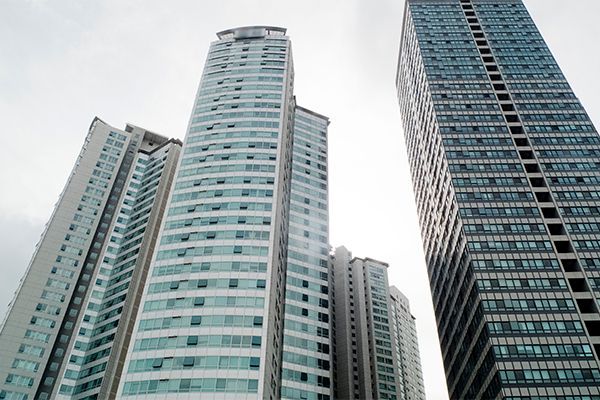
Mr. A obtained a building permit in October 2002 and constructed an officetel in Ilsandong-gu, Goyang City. In December 2003, he registered ownership preservation for a total of 364 real estate units under his name. In May 2012, Mr. A registered 362 of these units, excluding two, as rental business operators under "private purchase rental housing." The remaining two units were registered as "private purchase rental housing" in March 2019. Later, in September 2022, Mr. A filed a change report to modify the "housing classification" item in the existing rental business registration for each unit from "private purchase rental housing" to "private construction rental housing."
However, Mapo District Office rejected Mr. A's application, stating, "According to the Ministry of Land, Infrastructure and Transport guidelines, private construction rental housing can only be registered as a construction rental business operator if the business plan approval was obtained for the purpose of rental housing. If only a building permit was obtained, the purpose of construction is unclear, and registration as a construction rental business operator is only possible until the ownership preservation registration."
In response, Mr. A filed a lawsuit seeking cancellation of the rejection.
The court ruled in favor of Mr. A.
The court stated, "When determining whether a 'rental business operator has constructed and rented housing for rental purposes,' it cannot be said that registration as a rental business operator must be completed by the time of ownership preservation registration. The units in this case fall under 'housing constructed and rented for rental purposes' as defined in Article 2, Paragraph 2, Subparagraph 1(a) of the Private Rental Housing Act, and therefore the decision by Mapo District Office is unlawful."
Furthermore, the court explained, "Article 2, Paragraph 2, Subparagraph 1(a) of the Private Rental Housing Act does not specifically provide concrete criteria for judgment, and the Ministry of Land, Infrastructure and Transport guidelines were established without legal basis and have no external binding force, serving only as internal administrative processing guidelines or standards. There is no other basis to consider whether registration as a rental business operator was completed by the time of ownership preservation registration as the sole and objective criterion."
The court added, "Especially in cases like this, where relevant regulations did not exist at the time of ownership preservation registration, making it fundamentally impossible to register as a rental business operator, it would be impossible to register as private construction rental housing, thereby preventing the supply of rental housing that aligns with the purpose of the private construction rental housing system and depriving the operator of corresponding benefits. Therefore, all circumstances before and after the construction of the housing should be comprehensively considered to specifically and individually determine whether the housing was constructed for rental purposes."
Additionally, the court noted, "Since Mr. A has not sold any of the units from the time of ownership preservation registration until the conclusion of the trial and has used all units for rental purposes, it can be sufficiently recognized that Mr. A constructed the officetel for rental purposes."
Park Su-yeon, Legal Times Reporter
※This article is based on content supplied by Law Times.
© The Asia Business Daily(www.asiae.co.kr). All rights reserved.

















