[Interview] Lee Hoeseung, Director of Seoul Human Resources Development Institute
Public Officials Must Receive Good Training for Citizens' Benefit
"Special Attention and Communication Needed for MZ Generation"
'One Team' Training Needed for Successful Collaboration with Autonomous Districts
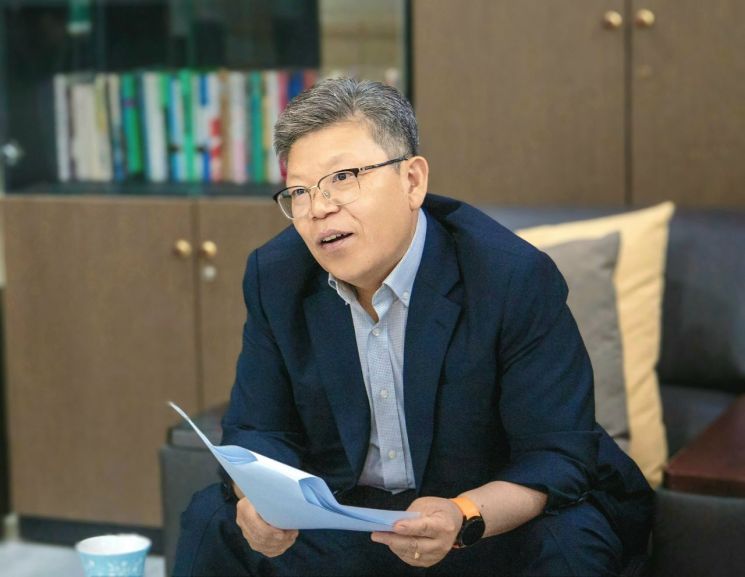 Lee Hoe-seung, Director of the Seoul Metropolitan Government Human Resources Development Institute (photo), said in an interview on the 16th, "A high demand for practical job training that can be immediately applied to work is also a characteristic of MZ generation public officials." Provided by Seoul Metropolitan Government.
"Older generations find it difficult to work with the MZ generation, and the MZ generation often views supervisors who insist on traditional methods as 'kkondae' (old-fashioned and rigid). However, I believe the MZ generation does not reject requests or instructions they find reasonable. When they think something is irrational, they respond with questions like 'Me?', 'Now?', or 'Why?'"
On the 16th, I met with Lee Hoe-seung, Director of the Seoul Metropolitan Government Human Resources Development Institute (pictured), at the Seocho-dong Talent Development Center. He said, "From the perspective of senior public officials, there is anxiety that junior staff may not have the basic attitudes and expertise required as public servants. Meanwhile, MZ generation public officials expect to perform well on their own and hope not to be burdened with unnecessary tasks." Both sides try to fulfill their responsibilities, but differences in thinking and communication styles often lead to misunderstandings.
As of this year, the proportion of MZ generation public officials (born from the early 1980s to early 2000s) in Seoul is 46.2%. This ratio will exceed half next year. The resignation rate within five years of appointment has significantly increased compared to the past. Although public service remains a popular career, it is not as attractive as before. The reality is that avoidance of public service is emerging, especially among the MZ generation. However, it is difficult to drastically change salaries or working conditions immediately. Regarding this, Director Lee said, "This is why special attention and communication with MZ generation public officials are necessary at this point."
The Human Resources Development Institute is responsible for the ongoing retraining of about 45,000 Seoul Metropolitan and district government public officials throughout their tenure, as well as the recruitment and training of 2,000 to 3,000 new hires annually. Director Lee said, "Employees must work happily and improve work efficiency to enhance the quality of administrative services. We have developed innovative measures to support the organizational adaptation and growth of the MZ generation and created an educational system to strengthen collaboration between Seoul and district government officials." Below is a Q&A with Director Lee.
-Recently, the resignation rate among low-tenure public officials has increased, and there are many conflicts regarding intergenerational communication. What is your view?
▲The Seoul Human Resources Development Institute is actively pursuing possible changes and innovations in education and recruitment. Last year, we conducted a survey on the educational needs of 1,300 public officials in their 20s. Many responded that they wanted practical job training that could be immediately applied to work and healing education to overcome burnout. Reflecting this, we significantly revamped the training content to help young generations settle into public service and grow into competent public officials.
-What changes have you made?
▲We increased practical training necessary for tasks such as report writing, e-Hojo (a system supporting local government financial tasks), and civil complaint handling. As a result, many gave feedback that they felt relieved to resolve issues at once instead of hesitating to ask seniors.
Many low-tenure employees who joined during the COVID-19 period and only received remote training requested experiential education opportunities to enhance camaraderie. Therefore, we also created healing programs for public officials with less than five years of service. We improved the quality of meals in the cafeteria by introducing menus preferred by the younger generation. It may seem trivial, but food is related to morale. It is important to let them know they are valued.
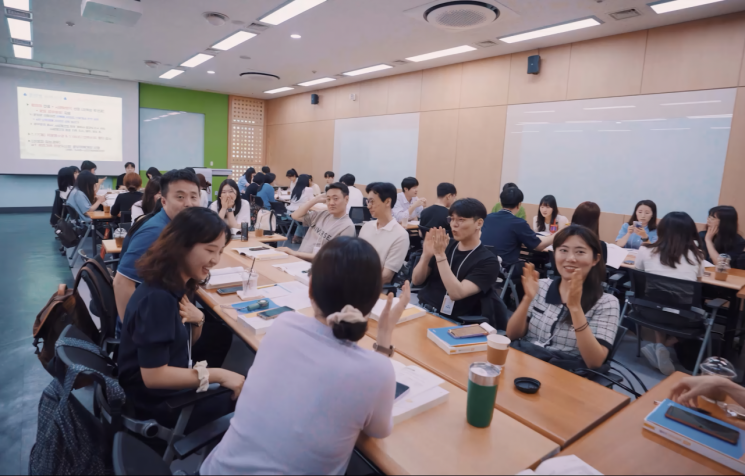 The Seoul Metropolitan Government Human Resources Development Institute has recently increased practical job training that low-ranking public officials can immediately apply to their work, as well as healing education to overcome burnout. Provided by the Seoul Metropolitan Government.
-You put a lot of effort into new employee training.
▲We extended the new employee training period from four weeks to five weeks. Although one week may seem short, it is not an easy decision to provide an additional week of training for about 2,000 new hires annually. To enhance their sense of belonging and teamwork, we introduced a 2-night, 3-day MT (Membership Training). When work is tough, colleagues become reliable supporters. We also operate mentoring classes with seniors of various tenures, including those with 3-5 years of experience, team leaders, and department heads.
-What is most needed to support the organizational adaptation and growth of MZ generation public officials?
▲We need to boost their pride as public officials and support their self-driven engagement. According to a survey by the Korean Society for Public Administration, 83.3% of MZ generation public officials consider themselves employees who seek economic benefits like private-sector workers. They want to openly express opinions, lead organizational change, and grow within the organization. For those raised differently from older generations, rigid hierarchies feel unfamiliar.
The city also operates various programs to instill pride in low-tenure public officials by improving working conditions. The Human Resources Development Institute introduced Reverse Mentoring, where the new generation becomes instructors to educate the older generation. We invited first- and second-year employees as instructors to have honest conversations about what the new generation expects from their seniors. From March to April, we conducted reverse mentoring for all managers at the section chief (grade 4) and team leader (grade 5) levels.
-You are also making changes to the recruitment process.
▲Seoul city managers increasingly demand selecting employees with strong communication and organizational adaptability from the selection stage. Therefore, the city conducts personality tests for candidates who pass the written exam before the interview. Interviewers review the personality test results before conducting interviews. The Human Resources Development Institute is developing evaluation questions to measure social skills and organizational adaptability in the personality test. Similar to changes in the national public official interview evaluation criteria, we are preparing to propose legal amendments to the Ministry of the Interior and Safety to assess candidates' communication skills, interpersonal relationships, and organizational adaptability.
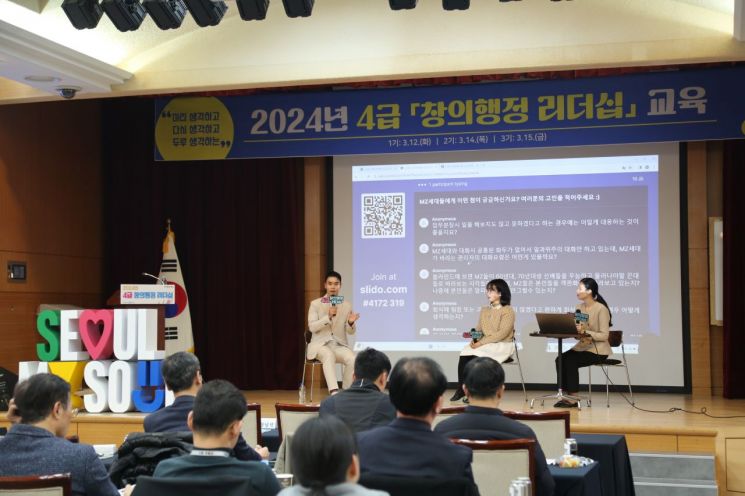 New public officials in their first to second year are taking the role of instructors and receiving questions from senior public officials at the manager level (Grade 4). Provided by Seoul City.
-You also emphasize cooperation and collaboration between the city and district governments.
▲Most projects that citizens recognize, such as the Rapid Integrated Planning for housing policy and Seoul-style Kids Cafes, require cooperation and collaboration with district governments. To successfully implement policies emphasized by Mayor Oh Se-hoon, such as accompanying the vulnerable and attractive city projects, it is essential to become 'one team' with the district governments.
The Human Resources Development Institute is expanding the six-month long-term training program called the 'Grade 6 Future Talent Development Course' to encourage many mid-level district officials at the Grade 6 team leader level to participate. The annual training quota increased from 150 to 250, and the district team leader participation quota was raised to 100 per year, with 50 per half-year. We also introduced policy subjects where the city and districts jointly discuss and deliberate on Seoul's current issues such as urban redevelopment, Han River development, and waste landfill. For major policies benefiting citizens to succeed, district mayors must send many employees to such training programs that facilitate personnel exchanges.
© The Asia Business Daily(www.asiae.co.kr). All rights reserved.
![User Who Sold Erroneously Deposited Bitcoins to Repay Debt and Fund Entertainment... What Did the Supreme Court Decide in 2021? [Legal Issue Check]](https://cwcontent.asiae.co.kr/asiaresize/183/2026020910431234020_1770601391.png)

















