Prolonged Deflation Increases Cash Holding Period
"Lack of Investment Experience Makes People Vulnerable to Scams"
Bloomberg reported on the 20th (local time) that while the Japanese stock market enjoyed a record boom, surpassing 40,000 points for the first time in history last March, investment scams also surged. It is interpreted that consumers, who had not gained investment experience due to long-term cash holdings, became vulnerable to scams as they joined the stock market.
According to data tracked by the Japanese Metropolitan Police Department since January last year, the amount of damage caused by investment scams in Japan in the first quarter of this year increased sevenfold compared to the same period last year. During the first three months of 2024, 1,700 scam cases were reported, with an average damage amount of 13 million yen (approximately 113 million KRW) per case.
Scam organizations were found to use methods such as advertising free investment seminars on social networking services (SNS) like Facebook to attract investors, then inducing them to gradually increase their investment amounts starting from small sums.
As the damage spread, the Japanese government also took action. Last month, Japanese Prime Minister Fumio Kishida announced that a scam response plan focusing on the arrest of criminals would be announced in June. Former Minister of Digital Innovation Takuya Hirai also criticized in an interview, saying, "As online advertisements that extort people's money are rampant, Japanese lawmakers are demanding a swift response from Meta Platforms," and added, "Meta should suspend all Facebook advertisements in Japan until it finds better ways to fight scams."
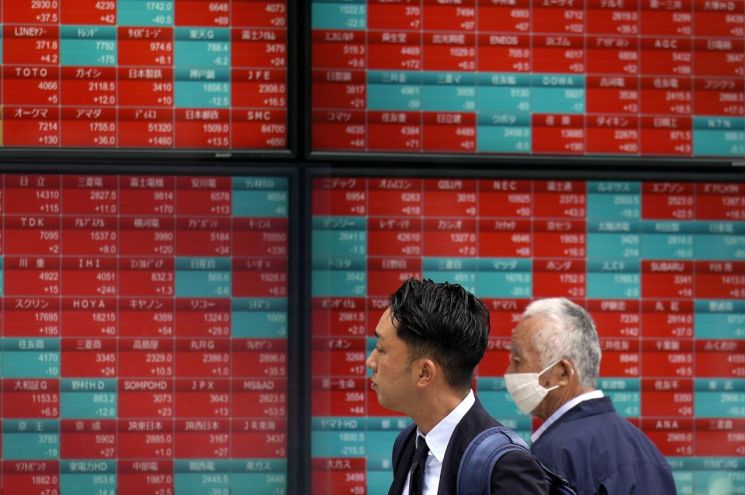
The background that allowed such typical investment scams to flourish is believed to be Japan's stock investment craze. According to a Bank of Japan (BOJ) survey released in March, as of December 2023, the scale of household stock investments in Japan increased by 29.2% annually, while cash savings grew by only 1%. In the same month, the Nikkei 225 index, the representative stock index of the Japanese stock market, surpassed 40,000 points for the first time in history.
There is also a view that Japan's inadequate investment education environment is a critical mistake. Mayuko Suzuki, a professor of consumer education at Osaka Kyoiku University, diagnosed, "Traditionally, Japanese schools focus on teaching savings and spending rather than how to accumulate wealth or invest," and added, "If people understood the principle that no stock guarantees continuous profits, they would not fall victim to so many scams."
Bloomberg analyzed, "Until now, Japanese consumers have coped with deflation by accumulating cash, which helped them avoid the global spread of investment scam damages," but "last year, as Japan's consumer price inflation rate hit its highest level in 41 years and the stock market enjoyed a boom by entering the 40,000-point range for the first time, inexperienced investors massively entered the stock market, creating an environment where scams could thrive."
© The Asia Business Daily(www.asiae.co.kr). All rights reserved.
![Clutching a Stolen Dior Bag, Saying "I Hate Being Poor but Real"... The Grotesque Con of a "Human Knockoff" [Slate]](https://cwcontent.asiae.co.kr/asiaresize/183/2026021902243444107_1771435474.jpg)
















