2022 Medical Expense Survey Results
Clinic-Level Coverage Rate Rises 5.2%P to 60.7%
Out-of-Pocket Rate Decreases
The health insurance coverage rate for 2022 was 65.7%.
The National Health Insurance Service (NHIS) announced the analysis results of the '2022 Health Insurance Patient Medical Expense Survey' on the 17th.
According to the NHIS, the total medical expenses for health insurance patients in 2022 were estimated at 120.6 trillion KRW, of which the insurer's burden was 79.2 trillion KRW, the statutory out-of-pocket expenses were 23.7 trillion KRW, and non-covered medical expenses were 17.6 trillion KRW.
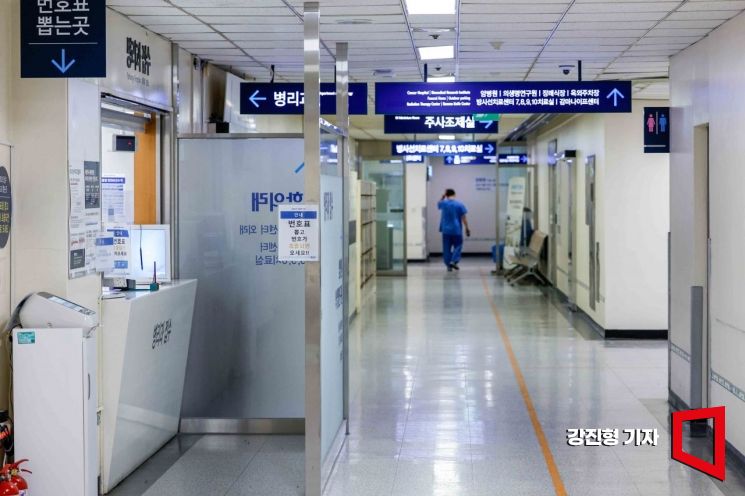 Seoul National University Hospital Outpatient Clinic, Jongno-gu, Seoul. Photo by Jinhyung Kang aymsdream@
While the total medical expenses increased by 8.5% compared to the previous year (111.1 trillion KRW), the health insurance coverage rate rose by 1.2 percentage points from 64.5% to 65.7%. The statutory out-of-pocket rate decreased by 0.2 percentage points from 19.9% to 19.7%, and the non-covered out-of-pocket rate fell by 1 percentage point from 15.6% to 14.6%.
The health insurance coverage rate refers to the proportion of covered medical expenses borne by the NHIS out of the total medical expenses, excluding cosmetic and plastic surgery expenses. While the insurer's burden increased by 10.5% compared to the previous year, non-covered medical expenses only slightly increased by 1.8%, resulting in a rise in the health insurance coverage rate.
The NHIS stated, "In 2022, the insurer's burden increased, while the growth of non-covered medical expenses, mainly at clinics, decreased due to stricter reimbursement criteria for cataract-related indemnity insurance, leading to an increase in the health insurance coverage rate compared to the previous year."
By institution type, coverage rates increased at tertiary general hospitals, general hospitals, and clinics, while coverage rates at hospitals and long-term care hospitals declined. Specifically, tertiary general hospitals (71.5%, +0.7 percentage points) and general hospitals (67.8%, +0.5 percentage points) were influenced by the inclusion of ultrasound and magnetic resonance imaging (MRI) in coverage and the reduction of COVID-19 tests, which had a high statutory out-of-pocket rate.
Clinics (60.7%, +5.2 percentage points) saw a significant increase in coverage rate due to a decrease in non-covered cataract treatments such as multifocal lenses, following stricter indemnity insurance claim standards. Conversely, long-term care hospitals (67.8%, -3 percentage points) experienced a decline in coverage rate due to a substantial increase in non-covered treatments such as medication and dispensing fees, rehabilitation, and physical therapy, mainly for cancer patients.
Notably, non-covered expenses for cancer patients in long-term care hospitals, including manual therapy, premium room charges, certification fees, and immunotherapy supplements?items with high patient-selective characteristics?accounted for 67.4%, which is higher than that of general hospitals or above. This contributed to a decrease in the coverage rate for severe and high-cost medical conditions compared to the previous year.
The coverage rate for the four major severe diseases?cancer, heart disease, cerebrovascular disease, and rare incurable diseases?was 80.6%, down 3.4 percentage points from 84% the previous year. Heart disease coverage rose by 1 percentage point to 89.4%, but coverage rates for cancer (75%, -5.2 percentage points), cerebrovascular disease (88%, -0.3 percentage points), and rare and severe incurable diseases (87.7%, -1.4 percentage points) all declined compared to the previous year.
The health insurance coverage rate for the top 30 severe and high-cost medical conditions per patient, including leukemia, pancreatic cancer, and lymphoma, was 79.6%, down 3 percentage points from the previous year. For the top 50 conditions, including dementia, respiratory diseases, and tuberculosis, the coverage rate fell by 2.5 percentage points to 77.8%.
When analyzed by demographic and social characteristics of subscribers, the coverage rate for those aged 65 and older increased slightly by 0.1 percentage points to 70.4%, while the coverage rate for children aged 0 to 5 decreased by 3 percentage points. For children aged 0 to 5 (68%), the coverage rate declined due to increased non-covered out-of-pocket rates at general hospitals and clinics and higher statutory out-of-pocket rates at hospital level and above.
Among non-covered treatments, the proportion of respiratory disease testing fees at general hospitals increased due to COVID-19 and other factors, as did the proportion of child developmental therapy at clinics due to mask usage. The increase in statutory out-of-pocket rates appears to be influenced by the increased proportion of ultrasound due to strengthened coverage for children and support for single rooms in children's hospitals.
Examining coverage rates by income level, all income quintiles showed an increase compared to the previous year, with lower-income quintiles having higher coverage rates than higher-income quintiles. The effect of the out-of-pocket maximum payment system was also more pronounced in the lower-income quintiles.
The NHIS explained, "When calculating the coverage rate excluding items with low necessity for coverage such as administrative fees like certification fees, nutritional injections, manual therapy, and premium room charges, the coverage rate was 67.3%, which is 1.6 percentage points higher than the current coverage rate."
The Ministry of Health and Welfare commented on the survey results, stating, "This shows that non-covered medical expenses play a key role in the total national medical expenses," and added, "We plan to discuss non-covered expense management and indemnity insurance improvement measures through the Medical Reform Special Committee to establish an appropriate medical use and supply system."
© The Asia Business Daily(www.asiae.co.kr). All rights reserved.

















