Preparing Research Foundation Ahead of Heavy Ion Accelerator Operation
Expected Roles Including Space Semiconductor Testing
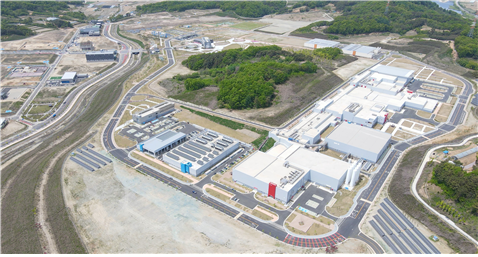
The heavy-ion accelerator ‘RAON,’ with a budget of 1.5 trillion KRW, has reached a milestone enabling it to play a full-fledged role. As our scientists have proposed a new methodology through international collaborative research that can precisely calculate and predict the properties of various atomic nuclei composed of protons and neutrons, ranging from light to heavy nuclei, it is expected to play a significant role in rare isotope research using the heavy-ion accelerator. RAON is also expected to play a major role in testing space semiconductors manufactured by Korean companies.
The ‘Wave Function Matching’ methodology developed by an international collaborative research team of dozens of nuclear physicists worldwide, including researchers from the Institute for Basic Science (IBS) Rare Isotope Science Project (RISP) and the Heavy Ion Accelerator Research Institute (IRIS), based on the ‘Nuclear Lattice Effective Field Theory,’ excited heavy-ion accelerator researchers around the globe. This theory allows precise calculation of properties such as binding energy, mass, and charge radius of various atomic nuclei.
RAON, the world’s first heavy-ion accelerator combining low-energy and high-energy accelerators, is essential equipment for discovering rare isotopes, which are clues to understanding the universe’s formation process and securing new energy sources. Due to the enormous investment scale in heavy-ion accelerators, only a limited number of countries possess such facilities. Once a heavy-ion accelerator facility is established, excellent research materials corresponding to it are also necessary. The newly developed Wave Function Matching methodology is evaluated as an opportunity to elevate not only the capability of our heavy-ion accelerator but also the level of Korean basic science to a higher stage.
The nuclear physics community has conducted extensive research on atomic nuclei composed of protons and neutrons and the nuclear forces between these nucleons (protons and neutrons constituting the nucleus), but it has been challenging to explain the properties of various nuclei solely based on nucleon-nucleon nuclear forces. The lack of a comprehensive nuclear force theory and computational limits even when using the highest-spec supercomputers have discouraged researchers. In this study, the IBS research team utilized the Nurion supercomputer at the Korea Institute of Science and Technology Information (KISTI) to calculate the binding energies of neutron-rich oxygen rare isotopes.
The Wave Function Matching methodology transforms the nuclear force to match a wave function that is easier to calculate at short distances. Using this methodology, the research team calculated the binding energy, mass, and charge radius of various stable nuclei ranging from deuterium with two nucleons to nickel (Ni) with 58 nucleons, confirming results consistent with known observational data. They also precisely calculated the binding energy and mass of neutron-rich oxygen rare isotopes up to oxygen-24 (24O). According to the research team, although the nuclear force applied in this study cannot yet be considered a complete nuclear force theory, it is expected to provide hints for improving existing nuclear force theories by finding a method that can simultaneously explain various properties of nuclei well.
Hong Seung-woo, director of IRIS, said, “The new Wave Function Matching methodology developed with the participation of our scientists has not only enabled theoretical calculation and prediction of heavy nuclei that were previously impossible but also presented a nuclear force model that can explain various properties such as nuclear binding energy, mass, charge radius, and nuclear matter saturation simultaneously. It will be usefully applied in future rare isotope research using the heavy-ion accelerator RAON.”
Song Young-ho, a research fellow at IRIS and a member of the international collaborative research team, said, “As a nuclear physics theory researcher at IBS IRIS, I am proud to contribute to an important international collaborative research project that will have great significance in future rare isotope research. We plan to continue conducting various studies using Nuclear Lattice Effective Field Theory.”
The research results were published online on May 16 at 0:00 (Korean time) in the world’s most prestigious international journal, Nature (IF 64.8). Kim Young-man, theoretical group leader of the Rare Isotope Research Division, explained, “This is the first time a nuclear physics theory paper involving domestic researchers has been published in Nature.”
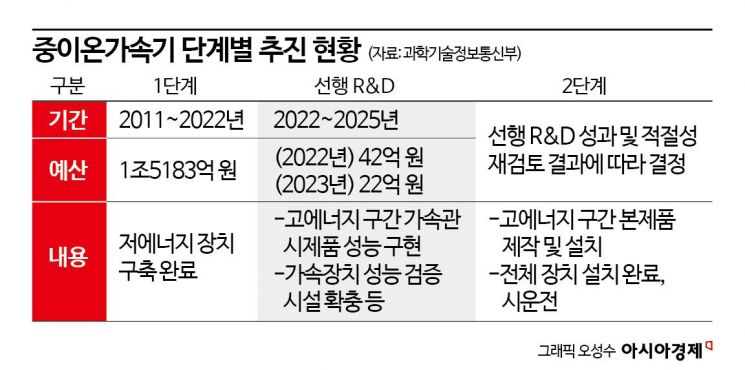
RAON completed its low-energy section commissioning at the end of last year and will begin experimental operation from June. It has already received 30 experimental proposals from domestic researchers in fields such as nuclear physics, biomedical science, and oncology science. Space semiconductors, which require performance verification under extreme environments, can also be tested using the heavy-ion accelerator.
▲Nuclear force: The binding force between nucleons such as protons and neutrons within an atomic nucleus
© The Asia Business Daily(www.asiae.co.kr). All rights reserved.


















