Up to 7% Loss in Global GDP in Worst-Case Scenario
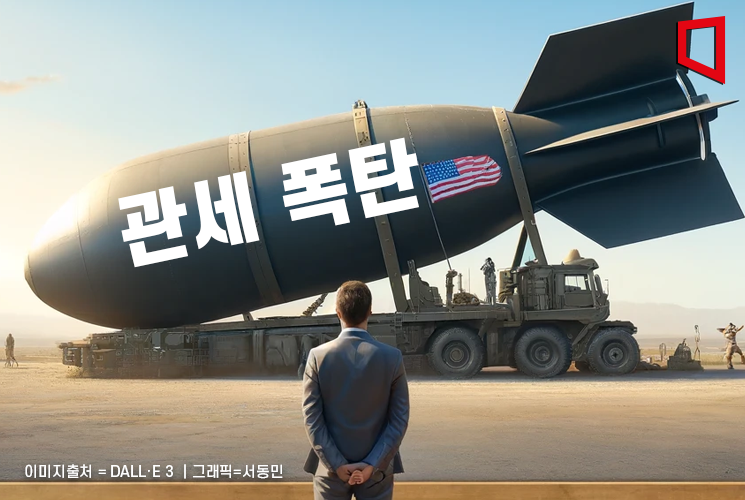
As the United States recently imposed a 'tariff bomb' on Chinese imports such as electric vehicles, the International Monetary Fund (IMF) has pointed out that such tariffs could pose a threat to global economic growth. If trade conflicts escalate to the extreme, losses amounting to 7% of the world's gross domestic product (GDP) could occur.
Julie Kozack, IMF spokesperson, said at a regular briefing on the 16th (local time) in response to questions about U.S. tariffs on China that these tariffs distort trade and investment, fragment supply chains, and could trigger retaliatory measures.
The Biden administration in the United States significantly raised tariffs on Chinese steel, semiconductors, solar panels, and other products on the 14th, including increasing the electric vehicle tariff from the existing 25% to 100%. White House National Economic Council Director Lael Brainard stated that China has made massive investments in these sectors to artificially lower production costs and overproduce, making competition impossible, adding, "There must not be a second China shock in the United States." China strongly criticized the U.S., accusing it of suppressing its normal economic activities.
Kozack emphasized, "This type of (trade) fragmentation can impose very high costs on the global economy."
According to IMF research, in the worst-case scenario where geopolitical blocs form and global economic trade fragmentation intensifies, the world's GDP could decline by about 7%. This loss is equivalent to the disappearance of the GDP of Japan and Germany combined. Kozack added that if trade and technology accessibility collapse, these losses would be even greater.
The IMF also noted that while there were only about 1,000 trade restrictions worldwide in 2019, approximately 3,000 restrictions were imposed in 2023, tripling in four years.
Kozack said, "Regarding tariffs, it would be more advantageous for the U.S. to maintain an open trade policy essential to its economic performance," and encouraged the U.S. and China to work together to find solutions that address the fundamental concerns worsening trade conflicts between the two countries.
© The Asia Business Daily(www.asiae.co.kr). All rights reserved.
![Clutching a Stolen Dior Bag, Saying "I Hate Being Poor but Real"... The Grotesque Con of a "Human Knockoff" [Slate]](https://cwcontent.asiae.co.kr/asiaresize/183/2026021902243444107_1771435474.jpg)

















