Kookgeum Center 'Changes and Prospects of South Korea's Trade Structure with China'
Trade Balance with China in Deficit for Two Consecutive Months
"Difficult to Expect Surplus Like in the Past"
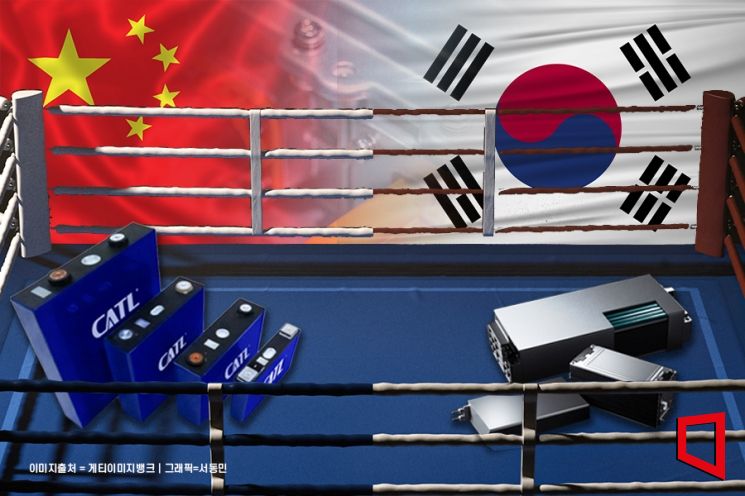
As the United States has surpassed China to become South Korea's largest export market, forecasts suggest that the trade balance deficit with China will continue to worsen. It is becoming difficult to expect a trade surplus with China like in the past.
According to the International Finance Center's report titled "Changes and Prospects of South Korea's Trade Structure with China" on the 17th, South Korea's trade balance with China turned to a deficit of $18.1 billion last year, marking the first deficit in 31 years. This year, the trade balance with China briefly showed a surplus in February ($200 million) due to a semiconductor boom, but deficits were recorded for two consecutive months in March (-$900 million) and April (-$2 billion).
This is analyzed to be due to China's economic slowdown, the relocation of production bases to ASEAN countries, and a patriotic consumption boom within China. Recently, China has been increasing direct investment in ASEAN to evade U.S. sanctions. The share of ASEAN in China's overseas direct investment (ODI) surged nearly twofold from 6% in 2010 to 11% in 2022.
China's technological capabilities have surpassed South Korea, especially in advanced sectors, further fueled by the patriotic consumption (Guochao) trend. In 2022, China's technological level in 11 major industries including information and communication technology reached 82.6 (with the U.S. as 100), surpassing South Korea's 81.5 for the first time. Moreover, the patriotic consumption trend has expanded to high-tech products such as mobile phones, intensifying the weak demand for foreign products.
On the other hand, South Korea's dependence on imports from China is increasing. South Korea's supply chain dependence on China stands at 19%, more than double that of major countries (9%). The proportion of items with over 50% dependence on China exceeds 30%, and key semiconductor materials such as hydrogen fluoride and neon have dependence rates exceeding 70%, indicating excessive reliance in core industries.
Given this situation, it is difficult to expect a trade surplus with China as in the past. In the short term, the recovery of China's economy may help deplete the large inventories accumulated during the COVID-19 period, and increased demand for IT products this year could drive exports. However, there are concerns that exports and surpluses with China will significantly decrease in the medium to long term. In fact, China has established the largest-ever semiconductor fund this year to overcome low semiconductor self-sufficiency and U.S. restrictions. Meanwhile, South Korea's ODI to China last year plummeted by 80% compared to the previous year, marking the lowest figure in 20 years, and the number of new corporations was 205, the lowest ever except for 2022.
Kim Ki-bong, senior researcher at the International Finance Center, explained, "Semiconductors account for about 30% of South Korea's total exports and 460% of its trade surplus. With the expansion of U.S. semiconductor restrictions on China, there is concern that South Korea's exports and trade surplus with China will significantly decrease."
There is an evaluation that strategies are needed to maintain technological competitiveness with China in AI and semiconductor fields while securing practical benefits amid U.S.-China conflicts. Last year, five out of the top ten export items of South Korea and China overlapped, indicating that competition with China over high value-added industries will intensify in the future. Furthermore, as Chinese companies have recently started mass production with low production costs, the possibility of eroding South Korea's global market share is increasing.
Researcher Kim said, "Over the past five years, South Korea's semiconductor sector surplus averaged $50.6 billion annually, nearly five times the total trade surplus, highlighting its importance. While utilizing the U.S.-led Chip 4 alliance and other measures to maintain the technological gap in semiconductor technology against China, it is necessary to seek a certain level of cooperation with China in the general-purpose semiconductor sector, where U.S. regulations are less strict."
He added, "It is also necessary to diversify export markets, focusing not only on the United States, where export shares are increasing recently, but also on ASEAN countries."
© The Asia Business Daily(www.asiae.co.kr). All rights reserved.

















