Received Supplementary Request Letter from FDA
Manufacturing Process "Issue Only Related to Combination Drugs"
Clinical Inspection "Difficult Due to War"
HLB Stock Hits Lower Limit... Negative Impact on Bio Investment Sentiment
HLB's anticancer drug, Rivoceranib, failed to clear the approval hurdle of the U.S. Food and Drug Administration (FDA). Concerns are emerging that this will deal a fatal blow to the recovering domestic bio investment sentiment.

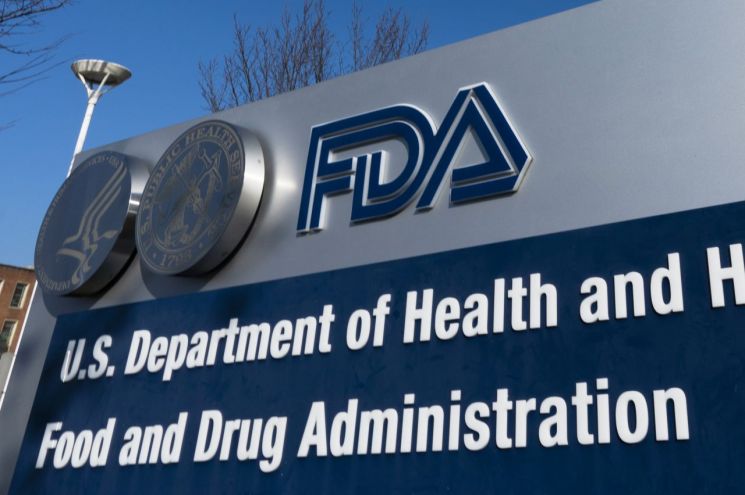
On the morning of the 17th, Jin Yang-gon, chairman of HLB, announced through the company's YouTube channel, "The FDA has issued a Complete Response Letter (CRL) regarding our new liver cancer drug review." A CRL is a letter issued by the FDA when additional on-site inspections or supplementary data are required for a new drug application. Since the pointed issues must be corrected and supplemented before reapplying for approval and undergoing review again, the decision on Rivoceranib's new drug approval is expected to be delayed by at least six months.
However, Chairman Jin stated, "There were no issues related to Rivoceranib," adding, "The issue lies with the combination drug Camrelizumab, and our responses to this were insufficient." Rivoceranib aimed for FDA approval through combination therapy with Camrelizumab, an immuno-oncology drug developed by China's Hengrui Pharmaceuticals, for liver cancer treatment. Clinical trials confirmed the longest overall survival (OS) period of 22.1 months among current liver cancer treatments, but this collaboration became the final hurdle.
The FDA pointed out two major issues in the CRL: the drug manufacturing process and insufficient on-site inspections of the medical institutions conducting the clinical trials. Chairman Jin said, "Hengrui Pharmaceuticals received minor comments regarding the Chemistry, Manufacturing, and Controls (CMC) inspection," and added, "I think our responses did not fully satisfy the FDA." Currently, Hengrui Pharmaceuticals is responsible for producing both Rivoceranib and Camrelizumab.
This CRL appears to be the result of unresolved issues found during the FDA's inspection of Hengrui Pharmaceuticals in January. However, the CMC-related issues were raised only for Camrelizumab, not for Rivoceranib, which is a chemically synthesized drug. This is interpreted as a result of more stringent scrutiny applied to Camrelizumab, a biopharmaceutical. Chairman Jin said, "I do not believe there are fundamental or uncorrectable problems in the manufacturing process of Hengrui Pharmaceuticals, which holds 17 global pharmaceutical products," and added, "We expect these to be quickly corrected."
Another issue is the Bioresearch Monitoring Program (BIMO) inspection of the medical institutions where the approval clinical trials were conducted. The combination therapy of Rivoceranib and Camrelizumab demonstrated efficacy and safety through a Phase 3 clinical trial conducted from 2019 to 2022 involving 543 patients across 121 medical institutions in 13 countries.
The FDA conducts inspections of clinical trial sites during the new drug approval review process. The problem is that among the 13 countries, Russia (13 sites) and Ukraine (8 sites), which are at war with each other, were included. These countries were popular clinical trial sites because they could quickly recruit Caucasian participants at lower clinical costs, contributing to ethnic diversity in the trials. However, the outbreak of war made inspections difficult, leading to this issue being included in the CRL. Notably, the clinical trial had a high proportion of Asian participants at 83%, and there were opinions that the FDA might raise issues related to this during the review process, making the impact of the missed inspections even greater.
Chairman Jin explained, "The sites with a high proportion of Caucasians were in Russia and Ukraine," and added, "This is not our problem and can be sufficiently proven through other methods, so it is not a fundamental issue." Since inspections in other regions such as China have been completed, the problem of missed inspections at some institutions due to geopolitical issues is expected to be resolved through inspections in other regions with a high proportion of Caucasians.
Although the company is confident in resolving the issues promptly, the setback in approval is expected to be a major blow not only to HLB and the HLB Group but also to the bio industry as a whole, given the high market expectations. HLB was the first KOSDAQ-listed biotech company aiming for FDA approval of a domestically developed new drug, which had been the exclusive domain of large corporations, so there were high hopes that Rivoceranib would boost overall bio investment sentiment.
In fact, HLB's stock price, which was around 50,000 won at the beginning of the year, soared to 129,000 won in March on the back of FDA approval expectations, and recently it was competing with EcoPro for the second-largest market capitalization on the KOSDAQ. However, following the news of the approval setback, HLB's stock price hit the lower limit and plummeted to 67,100 won. The market capitalization, which had reached 12.5335 trillion won the day before, dropped to 8.7787 trillion won, ceding third place to Alteogen. Moreover, HLB Group's listed companies such as HLB Global, HLB BioStep, HLB Life Science, HLB Pharmaceutical, HLB Innovation, HLB Therapeutics, and HLB Panagen also recorded lower limit prices, and other major bio companies' stock prices turned downward collectively, causing an overall weakening of investor sentiment.
An industry insider, who said, "It's an unimaginable event," commented, "Rivoceranib was a drug for which HLB acquired related rights from the early development stage, aiming to obtain FDA approval and direct sales themselves," adding, "With this plan thwarted, there are concerns that cases of small and medium-sized biotechs independently challenging FDA new drug approvals will decrease further."
© The Asia Business Daily(www.asiae.co.kr). All rights reserved.
![Clutching a Stolen Dior Bag, Saying "I Hate Being Poor but Real"... The Grotesque Con of a "Human Knockoff" [Slate]](https://cwcontent.asiae.co.kr/asiaresize/183/2026021902243444107_1771435474.jpg)


















