"Preparing for Future Pandemics with Domestic mRNA Vaccines"
Jiyoungmi, Commissioner of the Korea Disease Control and Prevention Agency (KDCA), stated, "We will accelerate efforts to develop a safe and effective domestically produced COVID-19 mRNA vaccine by 2027."
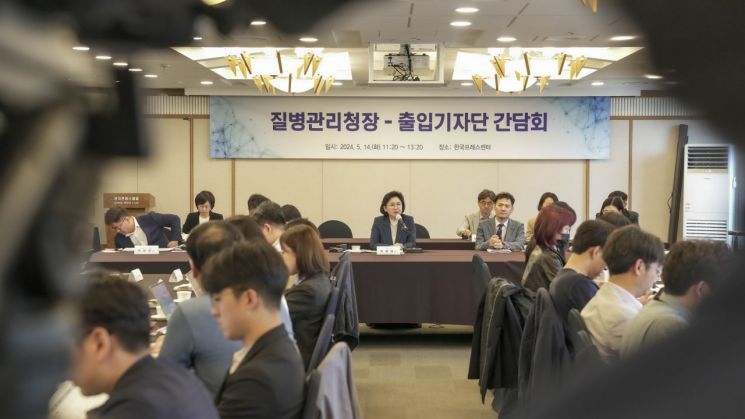
At a luncheon meeting with the press corps held on the 14th at the Press Center in Jung-gu, Seoul, Commissioner Ji said, "The fundamental solution to overcoming the pandemic and minimizing social and economic damage is securing independent vaccine technology."
The KDCA anticipates that new infectious disease pandemics like COVID-19 could occur at any time and plans to establish a response system capable of producing vaccines within 200 days of a pandemic outbreak.
To this end, the KDCA has formed the "Pandemic Preparedness mRNA Vaccine Domestic Development Support Team" within the agency and will operate it as an inter-ministerial organization. The KDCA considers the possession of mRNA vaccines?which have a revolutionary development speed of 3 to 6 months?as crucial, since securing vaccines is the fundamental solution to pandemics. Unlike traditional vaccines that are manipulated and processed in cells before injection, mRNA vaccines deliver only the virus's genetic information, offering advantages in speed, versatility, and safety.
Commissioner Ji emphasized, "Possessing mRNA vaccine technology, which is significantly faster to develop than traditional methods, will be very important in responding to future pandemics."
During the COVID-19 response period (2020?2023), there were no domestically produced vaccines, resulting in 7.6 trillion KRW spent on purchasing vaccines from overseas pharmaceutical companies. The KDCA explained that moving forward, they aim to reduce high dependence on foreign vaccines and develop independent domestic vaccines. For example, Japan invested 930 billion KRW in three private pharmaceutical companies during the COVID-19 period, successfully developing and starting mRNA vaccine administration in August last year. The private sector led development while the government provided financial support and regulatory relief.
Commissioner Ji stated, "If we secure mRNA technology, which will be the key to solving future pandemics, we will be able to protect our people independently without relying on foreign pharmaceutical companies during pandemic situations. The private sector and government will unite as one team to ensure success."
According to the KDCA, several domestic companies are developing and holding core technologies in five key areas of mRNA, but productization has been hindered due to limitations such as capital. There are calls to establish systematic support measures by referencing advanced countries like Japan, based on experience supporting clinical trials for COVID-19 therapeutics and vaccines. It is explained that benchmarking is needed where private companies lead development with investment, and the government focuses on financial and institutional support.
The KDCA plans to establish a strategic cooperation system between large and small-to-medium enterprises aiming to develop a COVID-19 mRNA vaccine within four years. They will present strengthening technology, facilities, and capital for independent development as preferential conditions for support selection, encouraging strategic cooperation such as consortia and technology transfers among companies. The goal is to develop vaccines that secure safety and efficacy at the level of overseas commercial vaccines by enhancing vaccine development capabilities.
Commissioner Ji said, "We will support bold research and development (R&D) in a package form, including clinical trials and production, centered on promising companies with highly potential technologies." They plan to provide initial support to multiple promising companies and conduct "stepwise support" by evaluating each stage and funding the next phase of clinical trials for outstanding companies. Starting next year, support will begin with non-clinical trials (Phase 1), followed by clinical Phase 1 (Phase 2, 2025?2026), clinical Phase 2 (Phase 3, 2026?2027), and clinical Phase 3 and commercialization (Phase 4, 2026?2027).
At the government level, technical and institutional support and regulatory relief are required. Accordingly, the National Institute of Infectious Diseases and others will provide various technical support packages necessary for mRNA vaccine development, and related regulations such as approvals and patents that hinder development will be promptly resolved at a reasonable level. Commissioner Ji said, "The government will focus on technical and institutional support and regulatory relief by referencing innovative development support systems of advanced countries like Japan, based on experience supporting clinical trials for COVID-19 therapeutics and vaccines."
In addition to new infectious diseases, the KDCA will continue to strengthen prevention and management of "endemic infectious diseases." A representative example is malaria eradication. Commissioner Ji explained, "To eradicate malaria, we announced the Malaria Re-eradication Action Plan in April with the goal of eradicating malaria domestically by 2030, and we are solidifying cooperation systems with the Ministry of National Defense and major local governments." He added, "Furthermore, we will complement policies for future pandemic preparedness, pursue a full revision of the Infectious Disease Control and Prevention Act, and enact laws on 'chronic diseases' and 'health hazards' to strengthen the foundation of public health policies. As the nation's central public health institution, we will do our best to protect the health of the people and create a safe society."
© The Asia Business Daily(www.asiae.co.kr). All rights reserved.

















