First Case of Acquittal Applying Article 310 of the Criminal Act on Illegality Exception Clause
The Supreme Court has ruled that if a post meets the elements of defamation against a superior under the Military Criminal Act but the content is true and the act is for the public interest, it cannot be punished.
Although there have been cases where the Supreme Court denied the justification defense under Article 310 of the Criminal Act, which concerns illegality exceptions (obstruction and repulsion) found in the 'Crimes Related to Honor' section of the Criminal Act, being analogously applied to the Military Criminal Act, this is the first time the Supreme Court has applied the provision and judged that illegality is excused.
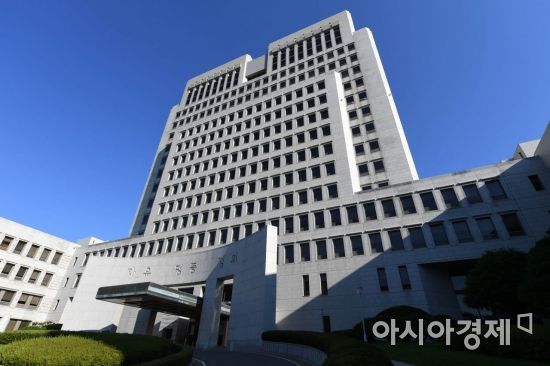
According to the legal community on the 14th, the Supreme Court's First Division (Presiding Justice Seo Kyunghwan) upheld the lower court's acquittal of professional military service officer A, who was prosecuted for defamation against a superior under the Military Criminal Act.
The court stated, "The lower court's judgment that Article 310 of the Criminal Act can be analogously applied to the factual defamation of a superior under Article 64, Paragraph 3 of the Military Criminal Act is proper, and there is no error in the legal interpretation regarding the scope of application of Article 310 of the Criminal Act as argued in the grounds of appeal," dismissing the appeal.
Additionally, the court added, "There is no error in the lower court's judgment that does not violate the rules of logic and experience or exceed the limits of free evaluation of evidence, nor in the legal interpretation regarding the justification defense of factual defamation, specifically 'only when it concerns the public interest.'"
A, a professional military service officer belonging to the Central Forensic Laboratory of the Identification Division of the Ministry of National Defense's Remains Recovery and Identification Unit, was prosecuted in March 2022 for posting a comment criticizing a superior, the head of the identification unit, under an article titled "British military remains buried, identification unit chief ignores possibility of other nationalities," thereby defaming the superior.
At the time, A wrote in the comment, "The person presumed to be the informant is the head of the main office and is currently under prosecution investigation for sexual harassment, abuse of power, personnel corruption, and whistleblower allegations," adding, "Maliciously distorting the facts, damaging the honor of the employees of the Ministry of National Defense's Remains Recovery and Identification Unit who are quietly performing their duties and the institution."
The military prosecutor indicted A on charges of defamation against a superior, and the military court of first instance found A guilty, sentencing him to six months imprisonment with a one-year probation.
However, the verdict was overturned in the second trial.
The second trial court stated, "It is reasonable to view the defendant's act of posting the comment as true facts solely concerning the public interest, thus excusing illegality," overturning the first trial's judgment and acquitting A.
Article 310 of the Criminal Act (Justification Defense) stipulates that "An act under Article 307, Paragraph 1, which is a true fact solely concerning the public interest, shall not be punished." Article 307, Paragraph 1 of the Criminal Act applies when defamation is committed by stating true facts rather than falsehoods.
This provision is why journalists or media outlets reporting misconduct for public interest can avoid punishment even if their acts meet the elements of defamation by publication.
The Military Criminal Act only contains provisions punishing defamation against superiors and does not explicitly include justification defenses like the Criminal Act. However, Article 4 of the Military Criminal Act states, "If there are no special provisions in this Act regarding crimes committed by subjects under Article 1, other laws shall apply accordingly," leaving open the possibility of applying Article 310 of the Criminal Act.
Previously, in 2009, the Supreme Court mentioned Article 4 of the Military Criminal Act, stating, "Article 310 of the Criminal Act presupposes the factual defamation under Article 307, Paragraph 1 of the Criminal Act, and since there is no essential difference in the elements between the crime of factual defamation under Article 307, Paragraph 1 of the Criminal Act and the factual defamation against a superior under Article 64, Paragraph 3 of the Military Criminal Act, and although the latter protects the military command system and hierarchy as legal interests, considering this special nature does not exclude the application of Article 310 of the Criminal Act, it is reasonable to analogously apply Article 310 to factual defamation against a superior," but in that case, the defendant's act was judged not to meet the justification defense, resulting in a guilty verdict.
The second trial court cited the Supreme Court precedent, stating, "That ruling accepted the lower court's judgment that there was no justification defense under Article 310 of the Criminal Act for the defendant's defamation against a superior, which presupposes the application, analogical application, or adoption of Article 310 of the Criminal Act to defamation against a superior."
The court found that the comment posted by A "is reasonable to be considered a 'true fact' as the important parts of the comment overall correspond to objective facts." It also took into account that the prosecutor initially indicted A for factual defamation against a superior, not for falsehoods.
Furthermore, the court stated, "The main motive or purpose of the act was for the public interest, and objectively, it is also considered for the public interest."
The court added, "The remains recovery project is a veterans' affairs project and a national project, thus a matter of public interest. The defendant appears to have posted the comment with the intention of informing that there was no identity manipulation."
The military prosecutor appealed, but the Supreme Court's judgment was the same.
The court stated, "Article 64, Paragraph 3 of the Military Criminal Act punishes factual defamation against a superior more severely than factual defamation under the Criminal Act, but does not separately provide a provision like Article 310 of the Criminal Act that exempts punishment when it concerns the public interest. However, despite the legislative omission, it is possible to apply similar legal norms to such gaps in regulation within the limits deemed reasonable considering the legal system, legislative intent, and purpose. Therefore, Article 310 of the Criminal Act, which provides the justification defense for acts under Article 307, Paragraph 1 of the Criminal Act, should be analogously applied to acts under Article 64, Paragraph 3 of the Military Criminal Act."
The court further explained, "Defamation against a superior under the Military Criminal Act protects not only the social evaluation of the superior, i.e., external honor, but also the military order and command system as legal interests. However, the fact that the victim is a 'superior' distinguishes it from defamation under Article 307, Paragraph 1 of the Criminal Act, and there is no reason to interpret the constitutive act of defamation differently from the concept under the Criminal Act."
It continued, "There is no essential difference in the illegality content between defamation against a superior under the Military Criminal Act and defamation under the Criminal Act. When examining whether the act concerns 'the public interest,' it is sufficient to determine the applicability of the justification defense by additionally considering the risk of infringing the military command system and hierarchy protected by defamation against a superior."
© The Asia Business Daily(www.asiae.co.kr). All rights reserved.

















