Elementary Student Stabs at Apartment Complex Playground
Police Responded but Could Not Arrest On Scene Due to 'Chokbeop' Law
An incident occurred inside an apartment complex in Yangju, Gyeonggi Province, where an elementary school student stabbed three classmates attending the same school with a knife. In cases of weapon-related violence, on-site arrest is the principle, but in this case, the perpetrator was a juvenile not subject to criminal prosecution, so they could not be arrested at the scene.
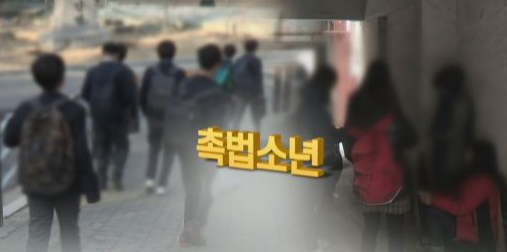
On the 14th, Korea Economic Daily reported that on the 12th, the Yangju Police Station in Gyeonggi Province booked a 13-year-old boy, A, on suspicion of stabbing three people, including a second-grade elementary school student, multiple times with a weapon. Earlier that day, around 4:20 PM, A allegedly wielded a 10 cm educational cutter knife at an indoor playground inside an apartment complex located in Goeup-dong, Yangju, causing injuries.
Both the perpetrator and the victims were students attending the same elementary school. The second-grade student B (9 years old), who sustained the injury, was acquainted with A. However, the other two students had no prior acquaintance with A.
As a result of this act, B suffered a 1 cm deep wound on the left index finger. The other two students were stabbed but reportedly did not sustain serious injuries. When the police arrived following a report, A explained, "It is true that I swung the cutter knife at the children, but it was an accident while playing."
The police stated, "We plan to promptly investigate the case after receiving the report," adding, "Since the perpetrator is a juvenile not subject to criminal prosecution, we could not arrest him at the scene, but if the charges are confirmed after investigation, he will be sent to the juvenile division."
Meanwhile, discussions about lowering the age of criminal responsibility for juveniles in South Korea remain stagnant. In 2022, the Ministry of Justice submitted a bill to the National Assembly to lower the age of criminal responsibility to under 13 years old by amending the Juvenile Act and Criminal Act, but it is still pending. Cases involving juveniles not subject to criminal prosecution have been steadily increasing. According to the Monthly Court Statistics Report, the number of such cases received by courts nationwide were ▲2018 (9,051 cases) ▲2019 (10,022 cases) ▲2020 (10,584 cases) ▲2021 (12,502 cases) ▲2022 (16,836 cases), showing an increase every year.
© The Asia Business Daily(www.asiae.co.kr). All rights reserved.