Cultivating Yang Guibi as a seasoning in a Chinese hotpot restaurant
Netizens outraged... "Children must have eaten the hotpot too"
A self-employed person in China who cultivated opium poppies, a narcotic, and used them as seasoning in their restaurant was arrested by the police.
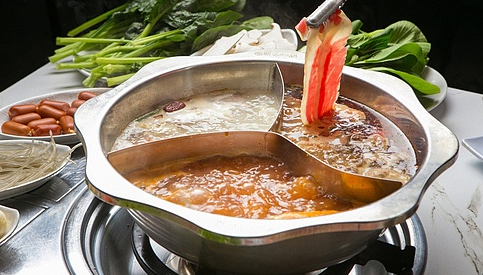
On the 14th, the Hong Kong South China Morning Post (SCMP) reported that the police in Taijiang County, Guizhou Province, southwestern China, discovered opium poppy flowers on the rooftop of a residential building during a drone patrol. Opium poppies contain a high amount of alkaloids such as morphine, papaverine, codeine, and narcotine, which cause strong physiological reactions in the body. Since harvesting poppies and extracting their sap to produce solid forms can be used to make prohibited drugs like opium or heroin, they are strictly controlled.
Upon investigation, the police found about 900 opium poppy plants on the rooftop. The person who cultivated the poppies was a Chinese woman, Ms. A, who confessed that she received the poppy seeds from her late father. She also stated that she grew the poppies to use as a 'special' seasoning in the hot pot restaurant she operates.
China's constitution stipulates that cultivating between 500 and 3,000 poppy plants can result in a prison sentence of up to five years. Ms. A was sentenced in April to six months in prison with a one-year suspended sentence and fined 3,000 yuan (approximately 560,000 KRW) for illegal cultivation of narcotic plants. She also surrendered the approximately 900 poppy plants she had cultivated to the government.
Local netizens who learned of this news responded with comments such as, "Restaurants using drugs to attract customers should be severely punished," "It's unfortunate since children might have eaten there," "The customers must feel very wronged," and "Thorough investigations should be conducted to prevent such incidents from happening again."
The media explained that using poppies as restaurant seasoning is common in China. Traditionally, dried and ground poppy powder is sprinkled on dishes served to customers to enhance the flavor. In fact, during a 2016 crackdown, 35 famous restaurants were found to be using poppies as seasoning, including cases where poppy powder was sprinkled on hot pot dishes.
Meanwhile, in South Korea, cultivating poppies is punishable under the Narcotics Control Act. Whether intended for narcotic use or not, possession alone can lead to punishment, and cultivation of 100 or more plants results in prosecution and penalties. However, varieties such as Papaver setigerum, Papaver dubium, and Papaver rhoeas do not contain narcotic substances and can be legally cultivated.
© The Asia Business Daily(www.asiae.co.kr). All rights reserved.

















