Minuteman-3 Deployed in Over 150 Sites
"Concerns Over Missile Base Surveillance and Intelligence"
Expansion of Law Prohibiting Land Ownership by Adversary Nations
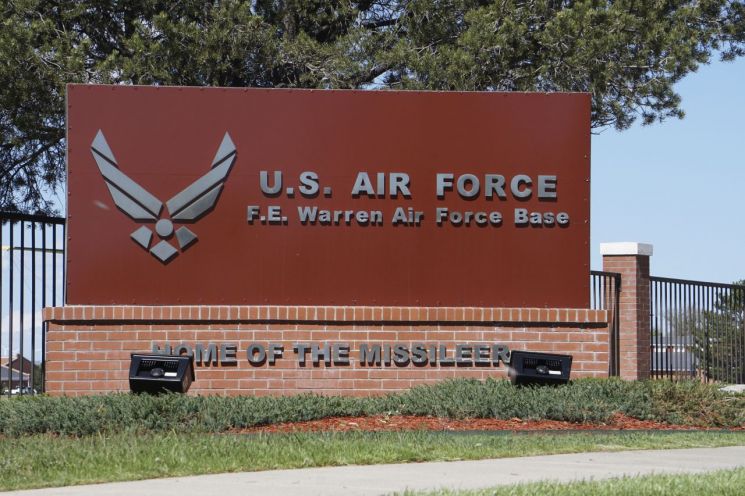 The main gate of Francis E. Warren Air Force Base, the world's largest intercontinental ballistic missile (ICBM) base located in Wyoming, USA.
 [Image source=AP·Yonhap News]
The U.S. government has issued a forced land sale and demolition order against a Chinese company located near a military base. The base in question is Francis E. Warren Air Force Base in Wyoming, known as the world's largest intercontinental ballistic missile (ICBM) launch facility. Amid intensifying nuclear weapons competition between the two countries, this move is interpreted as the U.S. government's effort to expel the Chinese government due to concerns over the transfer of military technology and classified information. China is also significantly increasing its nuclear arsenal centered around the Xinjiang Uygur Autonomous Region, suggesting that the nuclear arms race between the U.S. and China will become even more intense.
White House: "Sell the land and withdraw within 120 days"
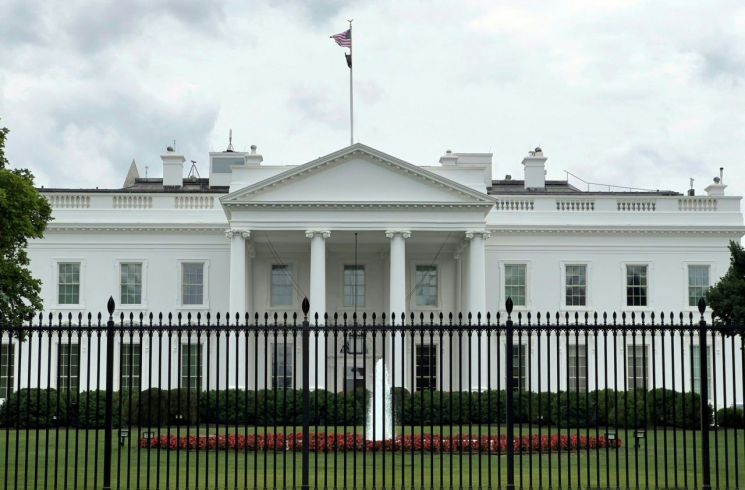
On the 13th (local time), the White House ordered the sale of land owned by the Chinese company Mine One Partners located within a one-mile (approximately 1.6 km) radius of Francis E. Warren Air Force Base and issued a demolition order for certain equipment in operation. Mine One Partners must sell the land within 120 days.
Mine One Partners is known as a cryptocurrency mining company partially owned by the Chinese government. There has been controversy, especially among U.S. Republicans, over the fact that a Chinese company owns land in front of a U.S. Air Force base, raising national security concerns. The White House made this decisive move considering the high risk of sensitive military technology and classified information falling into the hands of an adversary.
The White House also explained the forced land sale by stating, "The presence of foreign equipment capable of surveillance and espionage activities near a strategic missile base poses a threat to U.S. national security."
This decision comes amid a trend where various U.S. states are passing laws prohibiting companies and individuals from adversary nations, including China, from owning land in the United States. Last year, 15 states passed such laws, and this year, more than 20 states are enacting or amending laws to restrict land purchases by foreign nationals from adversary countries.
Francis E. Warren Base, the World's Largest Nuclear Warhead Launch Site
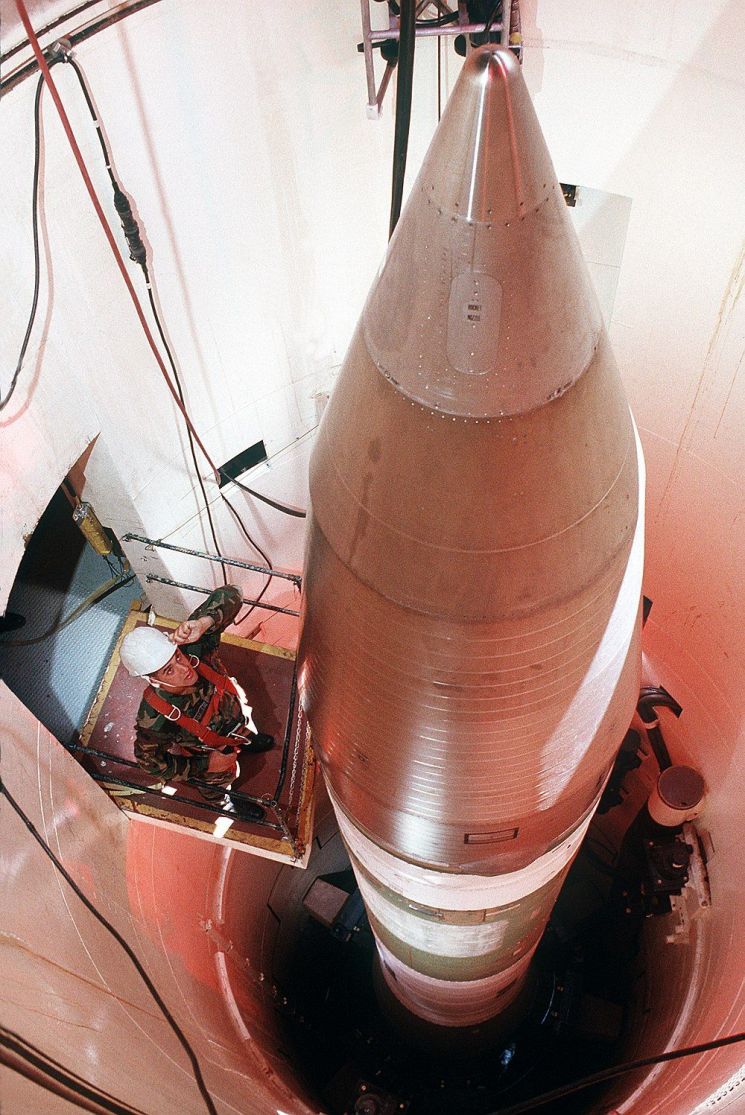 A deployed Minuteman-3 intercontinental ballistic missile (ICBM) at a missile launch pad within Francis E. Warren Air Force Base. [Image source: U.S. Air Force 90th Missile Wing]
In particular, Francis E. Warren Air Force Base, where the White House directly ordered the expulsion of the Chinese company, is famous as the world's largest ICBM launch facility. More than 150 Minuteman-3 missiles, a representative U.S. nuclear weapon, are deployed there. It is the headquarters of the 20th Air Force, responsible for operating strategic missiles including nuclear weapons deployed in the U.S., and the 90th Missile Wing operates the Minuteman-3 missiles.
Currently, about 3,000 personnel, including missile operation and support helicopter units, are stationed there. In the late 1980s before the end of the Cold War, more than 6,000 personnel were stationed, and more missiles were deployed than now. However, after the U.S. and Russia signed the Strategic Arms Reduction Treaty (START) following the Cold War's end, personnel numbers decreased to about 2,000 but have recently increased again. Given that this base hosts a large concentration of strategic nuclear missiles, it is extremely sensitive to military intelligence and classified information leaks.
China Establishes Large-Scale Nuclear Warhead Missile Base in Xinjiang Uygur... Intense Arms Race
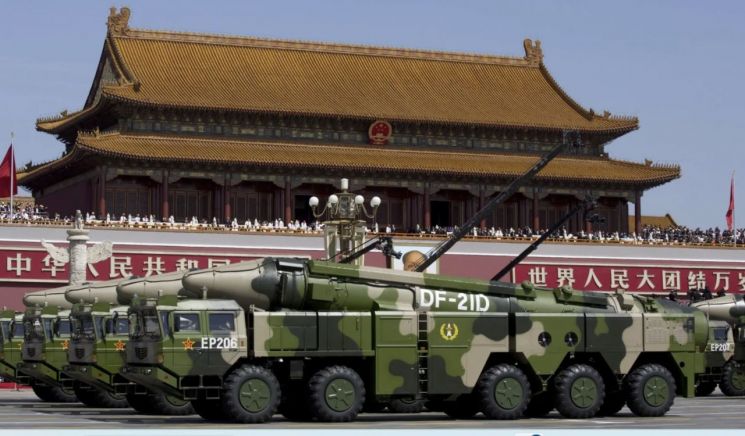
The U.S. is wary of China partly because China is actively expanding its nuclear arsenal. According to The New York Times (NYT), nuclear test activities have been observed resuming since the end of last year at the Lop Nur nuclear test site located in the southeastern part of the Xinjiang Uygur Autonomous Region. This site was where China conducted its first nuclear test in 1964 and declared a halt to nuclear testing after joining the Comprehensive Nuclear-Test-Ban Treaty (CTBT) in 1996.
China increased its number of nuclear warheads to over 500 last year. The number of China's nuclear warheads has risen from about 250 around 2013, when President Xi Jinping took office, to over 500 last year, and if the current pace continues, it is expected to exceed 1,000 by 2030.
Although China's total nuclear warhead count is only about one-tenth of the U.S. (5,244 warheads) and Russia (5,889 warheads), the rapid growth rate is drawing close attention from the U.S. It is also important to note that the number of various missiles is increasing simultaneously. The NYT explained, "To expand its nuclear strategy, which lags relatively behind the U.S., China established the Rocket Force in 2016 and is rapidly increasing not only ICBMs but also submarine-launched ballistic missiles (SLBMs)."
© The Asia Business Daily(www.asiae.co.kr). All rights reserved.
![Clutching a Stolen Dior Bag, Saying "I Hate Being Poor but Real"... The Grotesque Con of a "Human Knockoff" [Slate]](https://cwcontent.asiae.co.kr/asiaresize/183/2026021902243444107_1771435474.jpg)


















