Gwanak-gu, New Start for May's Care Safety Net Project for Middle-Aged and Elderly Living Alone
Supporting Daily Life Recovery with Meal Delivery and Job Connection for Isolated and Reclusive Vulnerable Single-Person Households
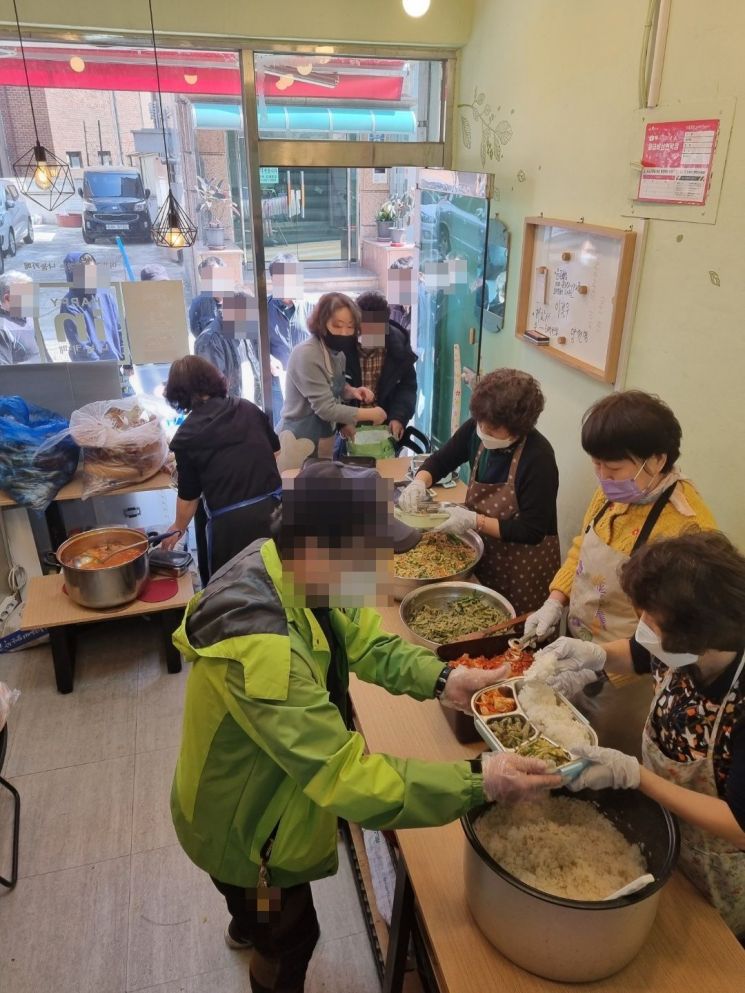
We live in an era where loneliness is widespread. According to the 'Quality of Life in Korea 2023' report by the Statistics Development Institute, 33% of households feel isolated because they have no one to ask for help with housework or to talk to. A survey by the Korea Institute for Health and Social Affairs found that 32% of Korean adults believe they might die alone.
Field experts point out that economically vulnerable groups due to unemployment or illness are becoming socially isolated, increasing the risk of dying alone. A survey of about 2,000 people at risk of dying alone by the Korea Institute for Health and Social Affairs revealed that the most needed services were meal support, interpersonal relationship support, and job opportunities, in that order.
In response, Gwanak-gu (Mayor Park Junhee) has officially launched a new project called the ‘Care Safety Net Formation Project for Middle-aged and Elderly Living Alone,’ reflecting the welfare needs of those at risk of dying alone.
The ‘Care Safety Net Formation Project for Middle-aged and Elderly Living Alone’ provides counseling through meal support to isolated households living in places like gosiwon (small, low-cost rooms) that lack or have inadequate cooking facilities. It also offers jobs to identified individuals to check on other isolated households, thereby providing opportunities for social participation.
The district publicly recruited private organizations to carry out the project and selected two institutions with relevant experience and capabilities: ▲Gilbeot Sarang Community Happyin ▲Central Social Welfare Center. Based on their long-accumulated local human and material welfare resources, these two institutions will operate the project in Daehak-dong and Jungang-dong, respectively.
Daehak-dong has the highest concentration of gosiwon in Seoul, and after a decline in gosiwon residents, middle-aged single-person households have been gathering there. Jungang-dong also has a high proportion of young and middle-aged single-person households living in one-room apartments, making it a necessary area for the care safety net project.
The project period runs from May to December. Happyin plans to provide lunchboxes to recipients three days a week (Monday, Wednesday, Friday), while the Central Social Welfare Center will provide them once a week.
Middle-aged single-person households living in Daehak-dong or Jungang-dong can become eligible for this project after counseling. Additionally, if residents living in seclusion without contact with family or friends are reported to the district office, services will be provided with their consent.
Meanwhile, the district enacted an ordinance on activating the discovery of at-risk households in Gwanak-gu, Seoul, and introduced a new ‘Reward Payment Project for Reporting At-risk Households’ this year.
The ‘At-risk Household Reporting’ allows residents to find neighbors struggling due to unemployment, business closure, or illness and notify public institutions so that the individuals can receive necessary social welfare services. Any resident who discovers an at-risk household can participate.
Since the first implementation of the project in January, the district has received about 20 online and offline reports. Amid residents’ warm interest and reports on at-risk households, the first reward payment recipient in Gwanak-gu was announced in March. It was Mr. Park (62), a resident of Miseong-dong, Gwanak-gu.
After participating in a government job program last year, Mr. Park became aware that Mr. Kim, whom he knew, experienced a rapid health decline this year and was unable to participate in the job program. Feeling concerned, he sought help through Gwanak-gu’s KakaoTalk welfare consultation channel ‘Together Welfare Talk.’
Thanks to the district’s prompt counseling and investigation, Mr. Kim was designated as a recipient of the National Basic Livelihood Security living allowance in March 2024, enabling him to receive stable support.
Mr. Park said, “I only informed the district office hoping my acquaintance would receive welfare assistance, so I am happy to receive an unexpected reward.” He also joined the ‘Honorary Social Welfare Officer’ program through the district’s guidance and plans to participate in finding and reporting at-risk households.
Mayor Park Junhee stated, “We will take the lead in providing more meticulous support tailored to the needs of vulnerable groups who isolate themselves.”
© The Asia Business Daily(www.asiae.co.kr). All rights reserved.
![Clutching a Stolen Dior Bag, Saying "I Hate Being Poor but Real"... The Grotesque Con of a "Human Knockoff" [Slate]](https://cwcontent.asiae.co.kr/asiaresize/183/2026021902243444107_1771435474.jpg)











