Vuno's Q1 Sales Increase 212% Year-on-Year
Expansion Driven by Growing Adoption of AI Medical Solutions in Hospitals
Foundation for Growth Established with JLKei and Deepnoid
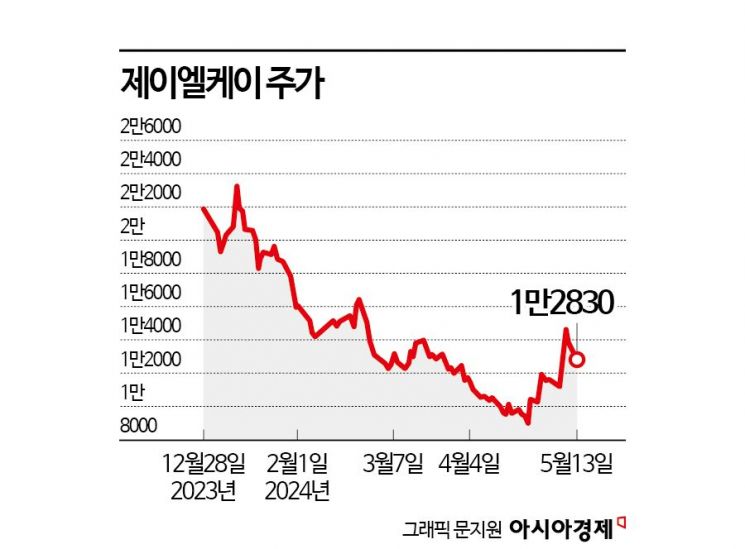
As AI medical-related listed companies in the domestic stock market continue to deliver results one after another, attention is focused on whether they can escape from sluggish stock prices. Medical AI-related stocks emerged as leading stocks in the market in the first half of last year due to excessive expectations, but currently, most stock prices have halved compared to their peak. This is the result of a flood of disappointment sales as the business progress was slower than expected. However, many listed companies are preparing for a rebound this year by emphasizing improved performance and the supply of medical AI solutions. Expectations have also grown that the break-even point will be reached sooner as sales rapidly increase.
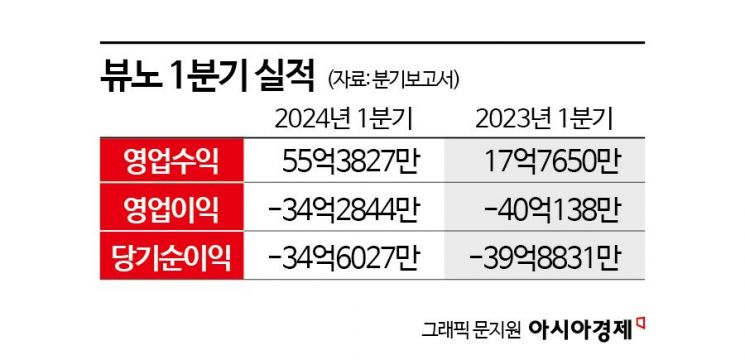
According to the Financial Supervisory Service's electronic disclosure system on the 14th, Vuno recorded operating revenue of 5.5 billion KRW and an operating loss of 3.4 billion KRW on a consolidated basis in the first quarter of this year. Sales increased by 212% compared to the same period last year and rose by 12% compared to the previous quarter.
Vuno explained that sales are increasing as more hospitals adopt 'VunoMed DeepCARS,' an AI-based medical device that monitors the risk of cardiac arrest. The number of hospitals adopting VunoMed DeepCARS increased from 60 last year to 85 this year, surpassing 34,000 beds. Since the billing method charges per bed per day of actual use, an increase in adopting hospitals leads to larger sales scale. The chest CT reading assistance solution 'VunoMed Chest CT AI' is also seeing increased sales in Japan.
Earlier, on the 9th, Vuno obtained medical device approval from the Ministry of Food and Drug Safety for the acute myocardial infarction detection software (VunoMed DeepECG AMI). This software-type medical device detects acute myocardial infarction by analyzing electrocardiogram data based on AI. Acute myocardial infarction (AMI) is a disease in which the coronary arteries supplying blood to the heart are blocked, causing the heart to malfunction, and early detection can increase survival rates.
Lee Ye-ha, CEO of Vuno, said, "Through approval, we will be able to introduce AI medical devices that can detect acute myocardial infarction early and provide timely treatment," adding, "We will continue research and development on various diseases that can be identified through electrocardiogram data."
Another medical AI company, JLK, is pursuing expansion through a lung disease detection AI solution that can be used in health screening centers. The Korea Medical Institute (KMI), a foundation with eight directly operated health screening centers, has decided to adopt the chest X-ray-based AI solution (JViewer-X). JLK plans to supply AI solutions to about 800 KMI network health screening centers associated with KMI's directly operated centers and expand its product lineup with stroke and dementia-related screening solutions.
Overseas expansion is also actively underway. JLK supplies medical AI solutions such as brain hemorrhage detection (JLK-ICH) and cerebral aneurysm detection (JLK-UIA) to Siloam Hospitals, which operate 41 hospitals and 30 clinics in Indonesia. By actively participating in the AI precision medical solution project 'Doctor Answer' promoted by the National IT Industry Promotion Agency (NIPA), JLK is finding various opportunities for overseas expansion.
Deepnoid has also laid the groundwork for a significant increase in sales in the medical AI sector. The AI-based brain aneurysm detection diagnostic support solution 'DeepNeuro' has started to be used as a non-reimbursed service under health insurance at medical institutions. Last year, the Ministry of Food and Drug Safety and the Ministry of Health and Welfare selected DeepNeuro as an innovative medical technology through an integrated review and evaluation of innovative medical devices. Seventeen hospitals have adopted DeepNeuro. It is used to analyze brain MRI results for patients who have given prior consent. DeepNeuro is a solution that assists medical staff in diagnosing by detecting brain aneurysms using AI in brain MRA images. It provides consistent results for brain aneurysms and improves the convenience and accuracy of image interpretation.
A financial investment industry official explained, "Most medical AI-related stocks rose with expectations until September last year but have since retreated," adding, "If meaningful performance indicators such as overseas expansion and passing the break-even point emerge, a stock price rebound will also be possible."
© The Asia Business Daily(www.asiae.co.kr). All rights reserved.


















