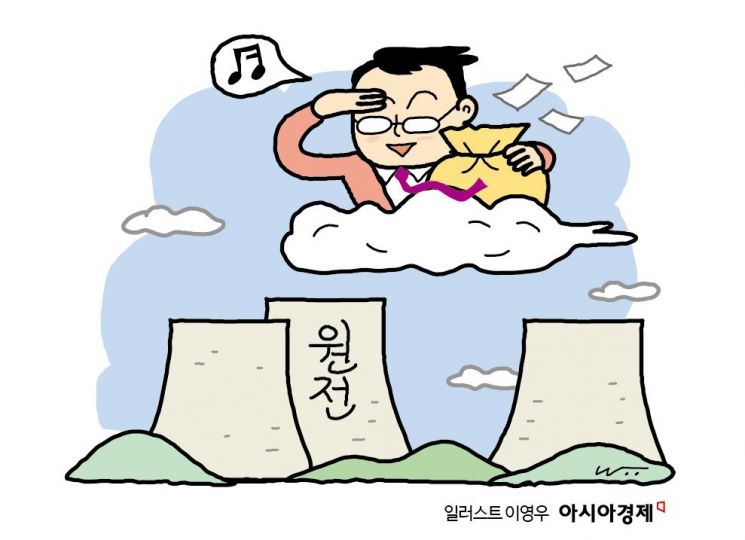
There is a prospect that the world's largest nuclear power plant, the Kashiwazaki-Kariwa plant, which had been shut down since the Fukushima nuclear accident in Japan, will be restarted this year. The Japanese government appears to be accelerating the 'nuclear revival' to prepare for increasing electricity demand.
According to a report titled 'Study on the Japanese Electricity Market' published by BloombergNEF on the 12th (local time), Tokyo Electric Power Company (TEPCO) plans to start production at Unit 7 of the Kashiwazaki-Kariwa plant in October. Bloomberg News reported that this will be the first time TEPCO operates a reactor under the safety regulations implemented after the 2011 Fukushima Daiichi nuclear accident.
Japan, once a nuclear power stronghold, has operated nuclear plants only to a minimal extent since the Fukushima accident. However, since the Kishida Cabinet took office, carbon neutrality has become a focus, and the option of restarting reactors is gaining traction to reduce electricity costs and ensure stable supply. Last month, TEPCO obtained approval to load fuel into a reactor in Niigata Prefecture, and the government urged local authorities to grant the necessary permits for the restart.
The Kashiwazaki-Kariwa nuclear power plant consists of seven reactors with a total capacity of 8GW, making it the largest single nuclear power plant in the world. The restart of Unit 7 is part of the government's policy to restart five reactors nationwide by 2025. However, BloombergNEF stated in its report that this pace still falls short of the government's goal to increase the share of nuclear power in the energy mix to about one-fifth by 2030.
BloombergNEF analyzed that the Japanese government will nearly double the active nuclear capacity from the end of 2025 to 2030. The shortfall caused by delays in the nuclear restart program is expected to be mostly compensated by gas production.
With the nuclear restarts, the average monthly electricity price this year is expected to fall by 11% compared to the previous year. This also reflects the increase in power supply due to wind and solar power generation. Bloomberg News explained that there has not yet been any significant electricity demand that could cause a price increase.
© The Asia Business Daily(www.asiae.co.kr). All rights reserved.
![Clutching a Stolen Dior Bag, Saying "I Hate Being Poor but Real"... The Grotesque Con of a "Human Knockoff" [Slate]](https://cwcontent.asiae.co.kr/asiaresize/183/2026021902243444107_1771435474.jpg)
















