Online Criticism Follows One Netizen's Post
Rest Area Food Prices Rise 11.2% Compared to Previous Year
As controversies over the 'fatty pork belly' at barbecue restaurants continue nationwide, the same issue has arisen at highway rest stops. On the 10th, a post titled "I ate kimchi stew with the taste of meat" was uploaded on the online community BobaeDream. The author, Mr. A, said, "I ate kimchi stew with the taste of meat at a rest stop," and shared a photo along with the comment, "It seems fatty meat is trending these days."
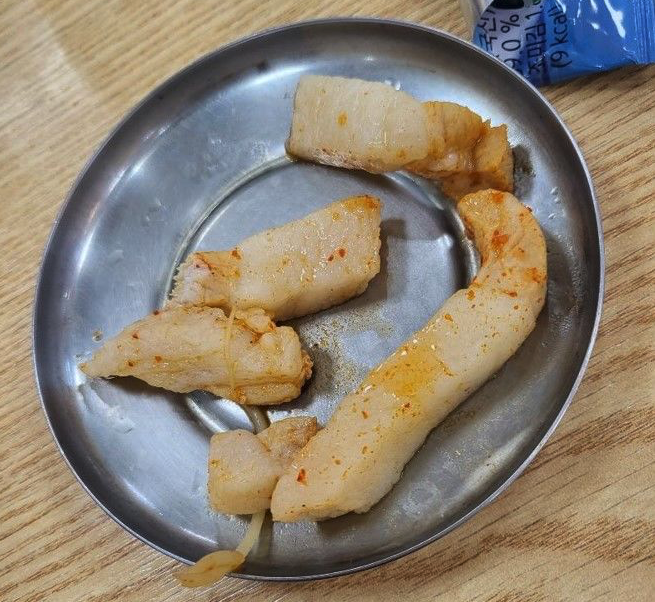
The photo showed meat with a high proportion of fat, presumed to be included in the kimchi stew. Mr. A said, "It must be hard to find meat like that," and added, "That chunk of fat makes up 90% of the stew's meat." He continued, "Isn't it shameful to serve food like that and charge money?" and "I was in a hurry because of work, so I just left, but I'm angry from the morning." Netizens who saw the photo reacted with comments like "Is this the second round of Jeju black pork?" and "Just looking at it makes me shudder." However, some pointed out that there was some meat along with the fat and questioned whether expectations for rest stop food might be too high.
10,000 Won Kimchi Stew at Rest Stop, 2,000 Won Goes to Road Corporation Rent
 The controversy over the price and quality of food at highway rest stops is not new. In March, the "13,000 won spicy stir-fried pork" sparked controversy, and voices of dissatisfaction with rest stop food and its prices have been pouring out on online communities.
 [Photo by Jinhyung Kang aymsdream@]
The controversy over the price and quality of highway rest stop food is not new. In March, the "13,000 won stir-fried pork" sparked debate, and complaints about rest stop food prices and quality have been spreading online. It was revealed that about 20% of the expensive rest stop food price goes to rent paid to the Korea Expressway Corporation, which caused further controversy. In particular, the issue of an "interest cartel" was raised as the 'Doseonghoe,' a group of retired Korea Expressway Corporation employees, became involved in rest stop operations and generated profits.
As the controversy spread, rest stop prices were even mentioned during last year's National Assembly audit, but prices have been difficult to control. As of August last year, the average selling price of the top 10 rest stop foods was 6,304 won, an 11.2% increase from the previous year. This was higher than the consumer price inflation rate of 3.4% during the same period.
In response, a Korea Expressway Corporation official said, "A food price disclosure system to lower rest stop food prices is scheduled for pilot operation in July," adding, "After the pilot, we will review improvements and aim for official operation by the end of this year." He also stated, "Rest stop food prices are autonomously set and sold by rest stop operators, considering raw material and labor costs."
© The Asia Business Daily(www.asiae.co.kr). All rights reserved.
![Clutching a Stolen Dior Bag, Saying "I Hate Being Poor but Real"... The Grotesque Con of a "Human Knockoff" [Slate]](https://cwcontent.asiae.co.kr/asiaresize/183/2026021902243444107_1771435474.jpg)

















