Financial Supervisory Service Announces Insurance Companies' Solvency Ratios as of End of December 2023
As of the end of last year, the solvency ratio of domestic insurance companies rose by 8.1 percentage points from the previous quarter to 232.2%. However, some insurers such as KDB Saengmyeong and MG Sonhae Insurance fell below the standard.
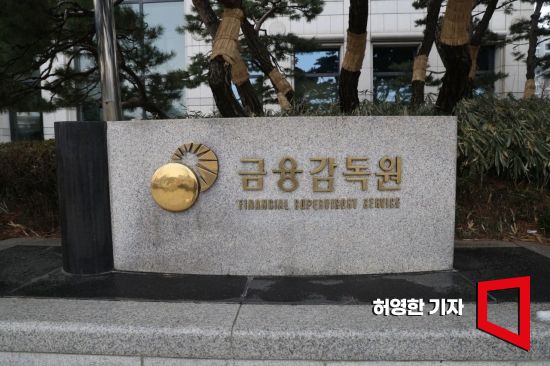
The Financial Supervisory Service announced on the 12th that as of the end of last year, the post-transition solvency ratio (K-ICS) for life insurance companies and non-life insurance companies was 232.8% and 231.4%, respectively. This represents an increase of 8.4 percentage points and 7.6 percentage points compared to the previous quarter.
The solvency ratio is the ratio at which an insurance company prepares funds in advance to pay policyholders. Since last year, insurers have been applying the new solvency ratio, a financial soundness indicator that complies with international standards. The recommended solvency ratio set by financial authorities is 150%, and the higher this ratio, the safer the insurer’s financial condition. If it falls below 100%, the insurer faces sanctions from financial authorities. The transition measure is a stepwise application of new risk measurement methods until the ratio stabilizes, anticipating a sharp drop due to the introduction of the new solvency ratio. Currently, 19 insurers are subject to the transition measure.
The solvency ratio is calculated by dividing available capital by required capital. As of the end of last year, available capital after the transition measure was KRW 261.6 trillion, down KRW 100 billion from the previous quarter. Although the adjustment reserve increased by KRW 8 trillion due to new contract inflows, other comprehensive income decreased by KRW 6.4 trillion due to an increase in insurance liabilities caused by a decline in market interest rates. The effect of dividend settlements also reduced capital by KRW 3.5 trillion.
Required capital was KRW 112.6 trillion, down KRW 4.1 trillion from the previous quarter. Although market risks such as stock and foreign exchange risks increased, life and long-term non-life insurance risks decreased by KRW 8.9 trillion due to a reduction in lapse risk following improvements in the calculation standards for mass lapse risk.
By insurer, KDB Saengmyeong (117.5%) and MG Sonhae Insurance (76.9%) fell below the recommended standard set by financial authorities.
The Financial Supervisory Service stated, "The solvency ratio of insurance companies after the transition measure remains at a stable level of 232.2%. As uncertainty in the financial market increases, we will supervise to ensure that vulnerable insurance companies secure sufficient solvency."
© The Asia Business Daily(www.asiae.co.kr). All rights reserved.

















