Military and Battery Manufacturers Each Claim "No Fault"
Cornea, Lips, Cheeks Injured in Multiple Areas, Self-Paid Treatment
Scar Removal Treatment May Not Be Supported
A 20-year-old soldier was injured in the face due to a military vehicle battery explosion accident, but the military and the manufacturer each claimed no fault, resulting in the victim receiving treatment at his own expense.
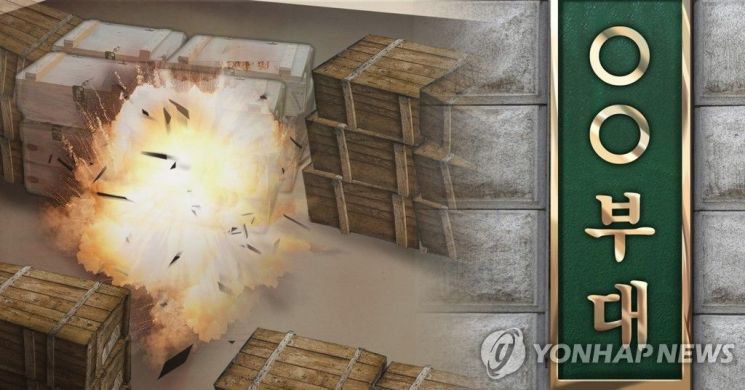
According to the Army and the battery manufacturer on the 11th, a military vehicle battery exploded on the afternoon of November 30 last year inside an Army unit in Gimpo-si, Gyeonggi-do.
Corporal A was injured while moving and placing a discarded battery from a 2.5-ton military vehicle into a warehouse. Due to the explosion, fragments flew and Corporal A (20), who was a Private First Class at the time, suffered injuries to multiple parts of his face including the cornea, lips, and cheeks. It was two months after his transfer to the unit.
Immediately after the accident, Corporal A was transported to a civilian hospital emergency room and received treatment to remove foreign substances from his cornea. His lips and cheeks were torn and he underwent suturing surgery, leaving scars for which he is currently receiving plastic surgery treatment to restore the original appearance.
The manufacturer collected the battery and investigated it but found no internal defects, concluding that compensation would be difficult.
The manufacturer stated, "The discarded battery storage warehouse was a steel container prone to static electricity and poor ventilation," and estimated that "an impact during transportation caused static electricity and the explosion." This implies poor safety management by the military.
The military reportedly judged that neither Corporal A nor the unit was at fault. This means they believe safety management was properly conducted, contrary to the manufacturer's analysis.
The Army Headquarters held a military injury review committee last month and decided that Corporal A’s injury qualifies as a "military injury" (injury during military service). They also supported the initial medical expenses incurred. However, they stated that treatments beyond injury care, such as scar removal, may be difficult to support under regulations if classified as non-reimbursable items.
Corporal A is continuing scar treatment at his own expense. While currently serving, he occasionally goes out for treatment and has already spent 1 million KRW of his own money on medical expenses, with future costs expected to exceed 7 million KRW.
Corporal A must wait for the military’s decision on whether treatment costs can be reimbursed after submitting a claim. There is also the option to file a state compensation lawsuit.
There are criticisms that it is problematic for the military not to take responsibility first and handle the situation when the injury occurred during a task performed under orders during mandatory service.
Corporal A’s side claims that everyone is avoiding responsibility despite the possibility of lifelong facial scars.
The Army stated, "If Corporal A files a claim for medical expenses in the future, we will support it according to relevant laws and regulations," and added, "To prevent similar accidents, we plan to issue guidelines for the safe handling and storage of discarded batteries."
The manufacturer, upon the start of media coverage, expressed willingness to support treatment costs as a gesture of consolation regardless of any potential state compensation lawsuits that Corporal A might file.
© The Asia Business Daily(www.asiae.co.kr). All rights reserved.

















