Up to 2 Months... Business Division and Employee Schedule Adjustments Underway
Construction Industry Seeks Labor-Management Cooperation and Business Diversification
Daewoo E&C has introduced a 'paid leave system' of up to two months for its headquarters employees. This measure is aimed at reducing labor costs amid the construction industry downturn, and it is understood that negotiations between labor and management are currently underway.
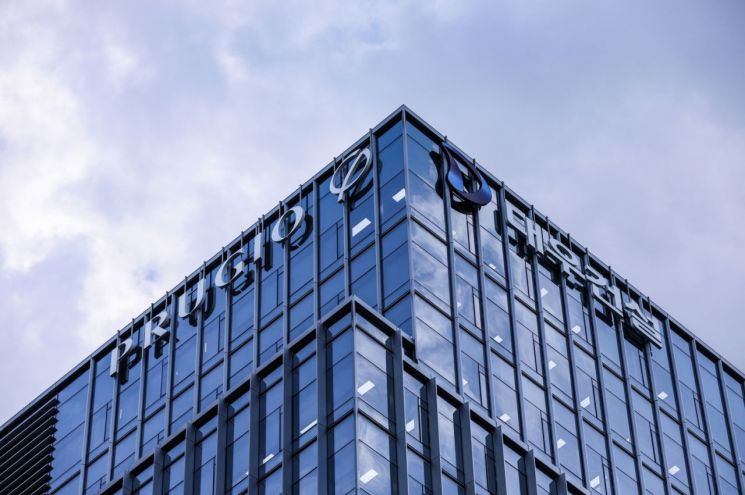
According to industry sources on the 9th, Daewoo E&C's labor and management recently discussed the timing of implementing paid leave and the resulting adjustments to employee schedules. This system, named 'Refresh Leave,' is valid for one year from the date of implementation. Except for executives, the leave period is proposed to be a total of one month in 15-day increments (up to two months upon request), with employees receiving 50% of their base salary. Daewoo E&C plans to finalize the details and announce them within this week.
Daewoo E&C has taken steps to reduce labor costs as the domestic housing market has stagnated due to high inflation, high interest rates, and high exchange rates, putting profitability at risk. Labor costs, which include salaries, welfare expenses, and rental fees, are part of selling and administrative expenses, and the company aims to improve operating profit by cutting these costs. It has also been reported that the company is encouraging headquarters employees to support field work.
According to the Financial Supervisory Service's electronic disclosure system, Daewoo E&C recorded consolidated sales of KRW 2.4873 trillion and operating profit of KRW 114.8 billion in the first quarter of this year. Compared to the same period last year, sales decreased by 4.6%, and operating profit dropped by 35.0%. Net profit for the period was KRW 91.5 billion, down 6.9% year-on-year. Last year’s consolidated performance showed sales of KRW 11.6478 trillion, an 11.8% increase from the previous year, but operating profit decreased by 12.8% to KRW 662.5 billion.
Daewoo E&C has implemented paid leave in the past. In the second half of 2018, employees of the Plant Business Division took two months of paid leave. Other divisions were also allowed to take paid leave if there were applicants. In the first half of the same year, Daewoo E&C posted an operating profit of KRW 306.8 billion on an individual basis, but the plant division alone incurred an operating loss of KRW 77.436 billion, prompting labor cost reductions.
A Daewoo E&C official said, "I understand that labor-management coordination is in its final stages," adding, "Internal reactions vary depending on the position." The official also stated, "This is to respond to changes in the business environment and to support a work environment that balances work and life," and added, "Schedules and handovers will be adjusted by each division to ensure no disruption to ongoing projects."
Currently, Daewoo E&C is the only major domestic construction company preparing to implement paid leave. It is rare for the construction industry to have company-wide paid leave in the past. In March 2018, Daelim Industrial (now DL E&C) implemented 'unpaid leave' for the first time in its history due to a sharp decline in new orders in the plant business. A representative from Company A said, "While there have been precedents such as executives giving up a portion of their bonuses during tough times, paid leave has never been implemented."
Some believe that Daewoo E&C's move could spread to other construction companies. A representative from Company B said, "There is a widespread atmosphere in the industry to reduce costs and strengthen financial soundness," adding, "It is also important for labor and management to seek ways to coexist during difficult times."
Construction companies are seeking ways to overcome the domestic housing market slump. Samsung C&T has turned its attention overseas. The proportion of overseas business sales, which was only 33% in 2019, rose to 48% last year. Samsung C&T’s construction division recorded sales and operating profit of KRW 5.544 trillion and KRW 337 billion, respectively, in the first quarter of this year, up 21.4% and 15.4% year-on-year. SK Ecoplant is targeting the environment and energy business as new growth engines. SK Ecoplant increased its domestic environmental business subsidiaries from one in 2020 to 24 last year.
A representative from Company C said, "In addition to basic efforts such as managing unnecessary materials due to rising cost ratios, we also consider long-term measures to improve profitability," adding, "Portfolio diversification is part of this."
© The Asia Business Daily(www.asiae.co.kr). All rights reserved.

![Clutching a Stolen Dior Bag, Saying "I Hate Being Poor but Real"... The Grotesque Con of a "Human Knockoff" [Slate]](https://cwcontent.asiae.co.kr/asiaresize/183/2026021902243444107_1771435474.jpg)














