"Israel and the US Cooperation Level Is Unprecedented"
"Differences Will Be Resolved Through Private Talks with Allies"
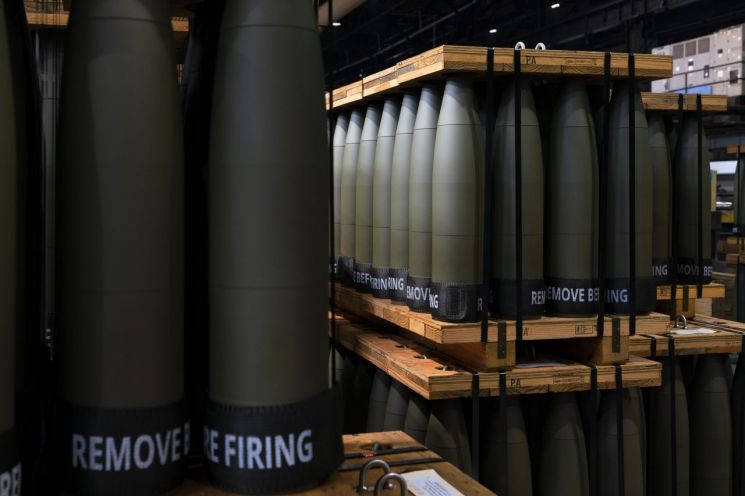
The Israeli government has expressed its intention to resolve disagreements with the United States through private discussions following the U.S. government's warning to halt arms support during the Israeli military's offensive in Rafah, southern Gaza Strip. Regarding the Rafah offensive, Israel maintains that it will launch attacks if necessary to eradicate Hamas, indicating that conflicts with the U.S. government are likely to continue. Although the Israeli government aims to reduce its dependence on U.S. military supplies in the future, this is expected to be difficult as the war continues.
"Disagreements with allies will be resolved through private talks"
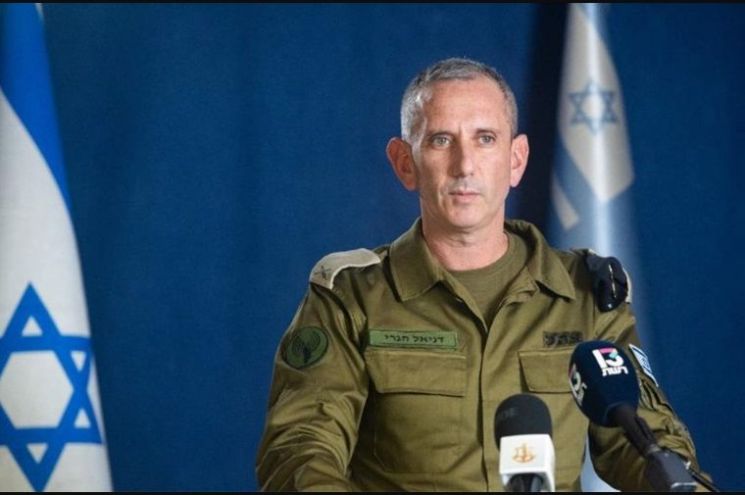
On the 8th (local time), according to the Israeli media Times of Israel, Daniel Hagari, spokesperson for the Israel Defense Forces (IDF), stated at a press conference in response to questions about the U.S. warning to stop arms shipments, "We will resolve all disagreements through private closed-door meetings with our allies," adding, "The level of cooperation between Israel and the U.S. is unprecedented in history, and we especially appreciate the operational support from the U.S. Central Command."
Although the U.S. government warned it would halt arms support if an attack on Rafah occurs, this is interpreted as meaning that even if the attack proceeds, the issues can be resolved through dialogue. On the same day, U.S. President Joe Biden, in an exclusive interview with CNN, said, "The U.S. remains committed to Israel's defense, but if Israel enters Rafah, we will not supply offensive weapons and ammunition," warning, "We have made it clear that we will not support the weapons Israel has used so far to attack Rafah and other cities."
U.S. Secretary of Defense Lloyd Austin also appeared before the Senate Appropriations Committee hearing that day and said, "From the beginning, we have clearly opposed the Rafah attack because Israel is not taking responsibility for protecting civilians on the battlefield," explaining, "We have temporarily suspended one shipment of high-explosive ammunition and have not made a final decision on how to proceed with further shipments."
The Israeli military has not yet launched a direct offensive on Rafah but has occupied the border area connecting Rafah and Egypt, completely encircling Rafah. Spokesperson Hagari hinted at a possible Rafah attack, stating, "We will handle Rafah in the way that is right for us," and "Wherever Hamas goes, we will attack."
Netanyahu orders self-reliance in military supplies... Long war makes this unlikely
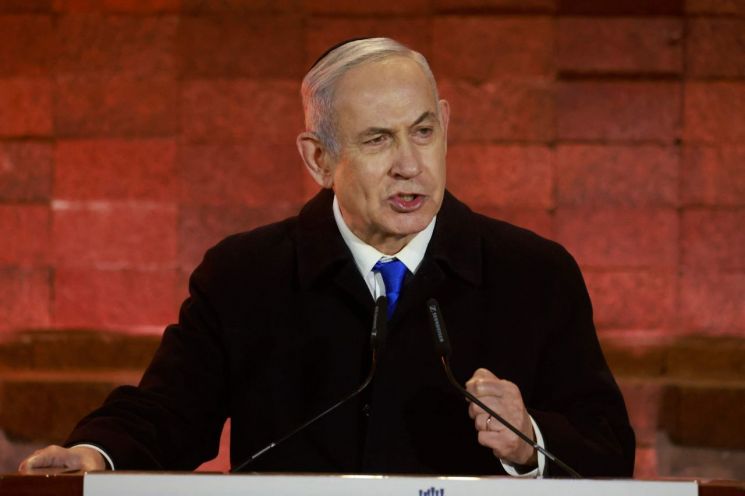
Within Israel, as disagreements with the U.S. over the conflict with Hamas grow, voices are rising to reduce dependence on U.S. military supplies and to develop domestic production capabilities. However, as the war continues, it is difficult even to secure budgets for this, making it very challenging to reduce reliance on the U.S.
According to Bloomberg News, the Israeli military depends on the U.S. for more than 70% of its military supplies. Since the conflict with Hamas began in October last year, the U.S. has provided Israel with over 200 types of military supplies, and most of the missiles and shells used for airstrikes have been supplied by the U.S. If U.S. military support is cut off, it would be difficult to continue the war.
The Israeli government is also striving to expand its domestic production capacity, but it faces difficulties in suddenly establishing production facilities during wartime. Bloomberg News pointed out, "Since February, Prime Minister Benjamin Netanyahu has instructed the Israeli Ministry of Defense and Ministry of Finance to strengthen the defense industry, but as the war drags on, they have not even been able to secure a budget," adding, "Israel especially wants to become self-reliant in the field of aircraft bombs, which it currently depends entirely on the U.S. for, but the preparation period for self-reliance will take more than 2 to 3 years."
© The Asia Business Daily(www.asiae.co.kr). All rights reserved.
![Clutching a Stolen Dior Bag, Saying "I Hate Being Poor but Real"... The Grotesque Con of a "Human Knockoff" [Slate]](https://cwcontent.asiae.co.kr/asiaresize/183/2026021902243444107_1771435474.jpg)


















