As the Japanese yen continues to weaken, concerns are rising that a new currency war could erupt in the Asia region. In particular, analysts believe that measures taken by Chinese authorities regarding the yuan will be a key factor.
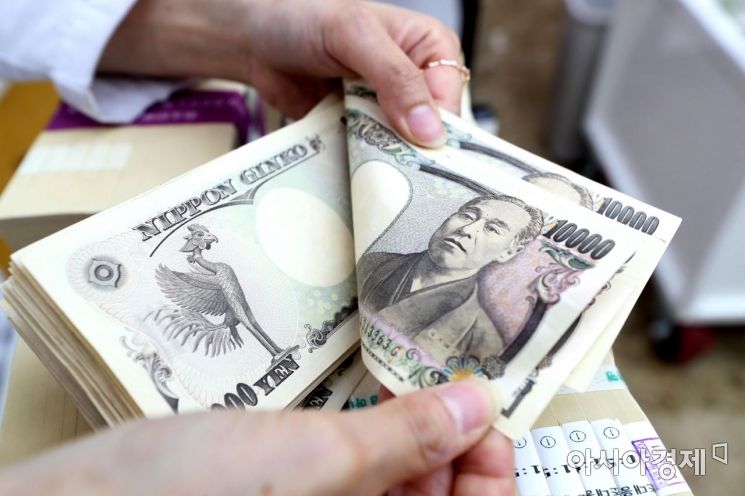
Bloomberg reported on the 9th that despite intervention by Japanese authorities, the yen's weakness is expected to persist, increasing the likelihood that neighboring countries will engage in competitive devaluations in response.
The yen's value hit its lowest level in 34 years at the end of last month, with the yen-dollar exchange rate reaching the 160-yen range. Subsequently, a large-scale yen buying spree, presumed to be government intervention, helped the rate recover to the 155-yen range per dollar. However, considering fundamental causes such as the interest rate differential with the U.S. and speculative forces, the yen's depreciation trend is expected to continue for the time being.
Accordingly, Bloomberg highlighted a scenario in which neighboring countries in Asia might consider extreme measures to defend their exchange rates. At the end of last month, the yen hit its lowest level against the Chinese yuan since 1992, its largest trading partner. Against the South Korean won, it also reached its lowest level since 2008. Bloomberg diagnosed that "further yen depreciation could be a potential trigger" and that "a disorderly decline of the yen could act like gravity on regional currencies."
Henry Quik, Global Markets Head for Asia-Pacific at State Street, said, "I haven't heard the term competitive devaluation for a long time," but added, "If the yen weakens further, competitive devaluations could occur in a chain reaction." Ki-Soo Park, Senior Portfolio Manager at Manulife Investment Management, analyzed that such competitive devaluations are "happening" and that "whether intentional or not, devaluations are occurring and affecting other regions." Arjun Vijay, Portfolio Manager at JP Morgan, stated, "Most directly, the yen's weakness will pull other Asian currencies such as the South Korean won and the Taiwan dollar."
However, Japanese authorities are signaling that they will not tolerate further yen depreciation. When the psychological threshold of 160 yen per dollar was breached, two large-scale buying waves presumed to be government interventions were confirmed. Additionally, measures taken since the Asian financial crisis, such as building foreign exchange reserves, strengthening financial sector supervision, and advancing capital markets, also help alleviate crisis concerns.
Nonetheless, if the yen's value falls to 170-180 yen per dollar, it is assessed that widespread effects will be inevitable not only in Asia but also on emerging market currencies. Due to its low interest rates, the yen serves as a representative funding currency for carry trades investing in developing countries. This could lead to a rapid outflow of investment funds, potentially triggering a risk-off situation.
The market views the Chinese authorities' response to the yuan as a key wildcard. Bloomberg noted, "There is a quietly spreading view that China might take extreme measures to stimulate the economy, namely a large-scale yuan devaluation," and emphasized that "even small moves by Chinese authorities could have a significant impact." John Woods, Chief Investment Officer for Asia-Pacific at Lombard Odier Hong Kong, pointed out, "Looking at Asia as a whole, concerns arise particularly about China due to the relative competitiveness caused by the unusual yen weakness," calling it "the risk currently focused on in the Asian market."
© The Asia Business Daily(www.asiae.co.kr). All rights reserved.
![Clutching a Stolen Dior Bag, Saying "I Hate Being Poor but Real"... The Grotesque Con of a "Human Knockoff" [Slate]](https://cwcontent.asiae.co.kr/asiaresize/183/2026021902243444107_1771435474.jpg)
















