Remains Found in Deotneol Tomb at Sarari, Seomyeon, Gyeongju
No Domestic Similar Cases...Estimated to Be Qingbai Ware from Eastern Han Dynasty
A bronze mirror fragment shedding light on early Silla history was discovered in Gyeongju, Gyeongbuk.
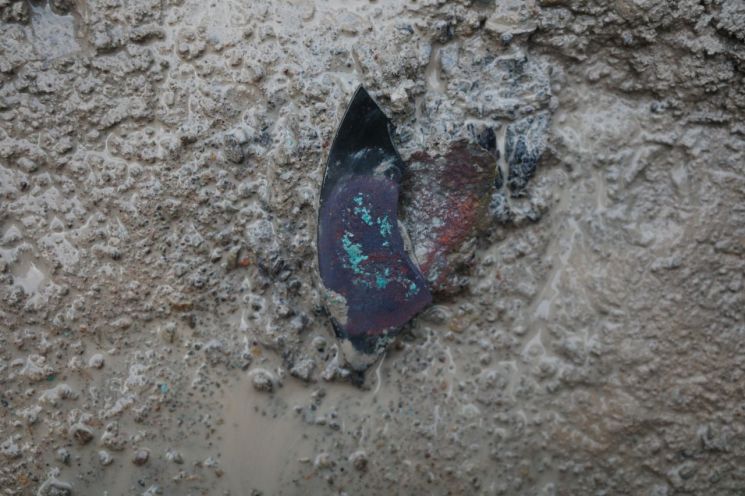
The Korea Cultural Heritage Foundation announced on the 8th that they excavated two pit tombs, two wooden coffin tombs, Bronze Age and Three Kingdoms period traces of life in the area of 124-2, Sarari, Seomyeon, Gyeongju, Gyeongbuk.
The bronze mirror fragment was found in a wooden coffin tomb along with a Chilchocheolgeom (漆?鐵劍), an iron sword inserted into a lacquered wooden scabbard. It was confirmed near the chest of the deceased buried in the tomb. There are worn marks on the edge, suggesting it was owned for a considerable period.
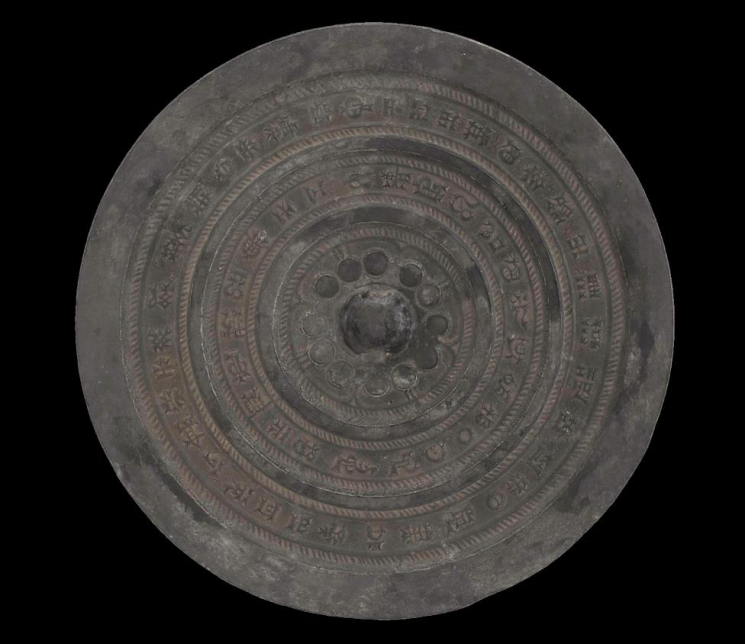
The fragment bears the inscription ‘承之可 (Seungjiga).’ A foundation official explained, “This inscription and fragment form are unprecedented domestically.” Similar material was found in Fukuoka, Japan. It is a Qingbai mirror (淸白鏡) from the Dateiwa (立岩) site’s single wooden coffin tomb, dating to the Western Han Dynasty (202 BC?AD 8) in China. It bears the inscription ‘外承之可兌 (Oeseungjigatae).’ The foundation official said, “The character forms and inscription layout are very similar,” and added, “It appears to be a fragment of a Western Han Dynasty Qingbai mirror.”
The Qingbai mirror is an important academic resource for studying early Silla history, including the founding process of Silla. This is because it proves that a considerable ruling class already existed before the founding of Silla. It is also noteworthy as evidence of exchanges with the Western Han Dynasty, which was located in northern Korea at the time. A foundation official emphasized, “The deceased is judged to have been a person with considerable power,” and “It is significant as an artifact proving the existence of a ruler.”
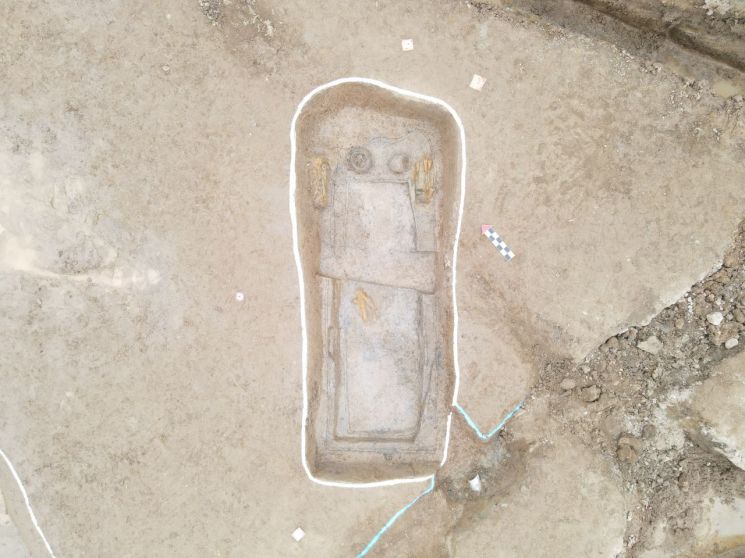
The foundation believes that the tombs investigated this time were constructed up to 100 years earlier than Tomb No. 130 in Sarari, Gyeongju, which is estimated to have been built during the Proto-Three Kingdoms period. An official said, “It was confirmed that a political power group existed in the northwestern area of Gyeongju before 100 BC.”
© The Asia Business Daily(www.asiae.co.kr). All rights reserved.



















