On the 7th (local time) in Cairo, Egypt, as discussions on a ceasefire in the Gaza Strip between Israel and the Palestinian armed faction Hamas continued, both sides once again revealed differences in their positions.
Benjamin Netanyahu, Prime Minister of Israel, criticized Hamas's ceasefire proposal as an attempt to hinder military operations in the southernmost city of Gaza, Rafah. In response, Hamas countered that there would be no release of hostages unless military operations were halted.
In a video message that day, Prime Minister Netanyahu emphasized, "Hamas's proposal is very far from Israel's demands," adding, "Israel will not allow Hamas to restore its evil rule over the Gaza Strip and rebuild its military power to destroy us." He also stated, "Israel cannot accept any proposal that threatens the safety of its citizens and the future of the nation," and "I have instructed the negotiation team to respond strictly regarding the release of hostages and security."
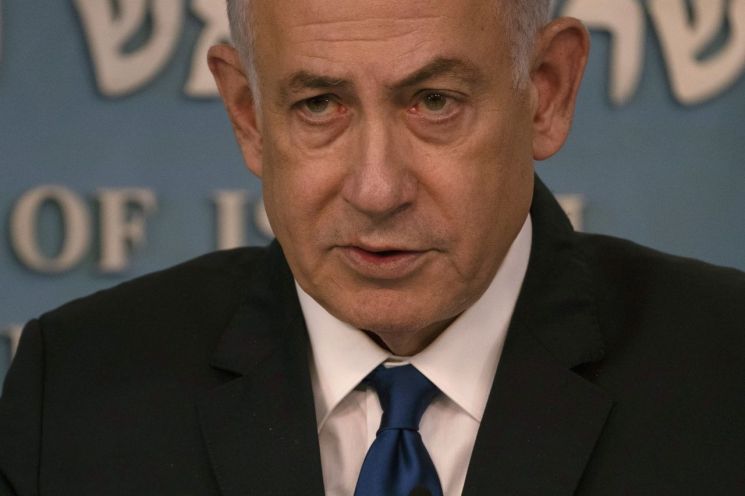
Prime Minister Netanyahu announced that military operations against Hamas would continue even while ceasefire negotiations were underway. Earlier, the Israeli military took control of the Gaza Strip side of the border checkpoint in Rafah leading to Egypt that morning.
Osama Hamdan, Hamas spokesperson, warned in Beirut, Lebanon, that "if Israel's military attacks continue in Rafah, there will be no ceasefire negotiations." He added, "The ball is now in Netanyahu's court," and stated, "The Rafah border has always been the border solely between Egypt and Palestine, and it will remain so."
On the same day, mediators from Qatar, the United States, and Egypt were holding ceasefire talks with the Hamas delegation in Cairo. Israel also dispatched a negotiation team composed of mid-level officials, stating that they would seek to understand Hamas's intentions regarding the ceasefire proposal accepted by the mediators.
According to The New York Times (NYT), the core of the ceasefire plan that Hamas decided to accept in the Gaza negotiations is "sustainable calm," but differences in the interpretation of the term are expected to cause difficulties. The U.S. White House stated that it must be able to narrow the gap between the positions of Israel and Hamas.
The United States is Israel's closest ally but has consistently opposed the Rafah operation. Regarding this, the political media outlet Politico reported that the Biden administration is delaying the shipment of precision bombs to send a political message to Israel. The U.S. government is reportedly withholding approval for the sale of Joint Direct Attack Munitions (JDAM), a type of precision-guided bomb manufactured by Boeing, to Israel. CNN also reported that the Biden administration temporarily halted a shipment of U.S.-made ammunition to Israel, though the reasons remain unclear.
Meanwhile, some Democrats have pressured President Joe Biden to impose conditions on U.S. support for Israel following the Israeli airstrikes in the Gaza Strip that resulted in numerous civilian casualties and attacks on humanitarian aid vehicles delivering relief supplies.
© The Asia Business Daily(www.asiae.co.kr). All rights reserved.
![Clutching a Stolen Dior Bag, Saying "I Hate Being Poor but Real"... The Grotesque Con of a "Human Knockoff" [Slate]](https://cwcontent.asiae.co.kr/asiaresize/183/2026021902243444107_1771435474.jpg)











