Four Kiln Tile Workshop Sites Confirmed Including One Site
Initial Firing of Yongmun Incense Burner and Royal Celadon Confirmed
"Important Data to Reveal Goryeo Celadon Materials and Production System"
At the Yucheon-ri site in Buan, Jeonbuk, production facilities presumed to be a Goryeo celadon kiln and workshop site have been discovered.
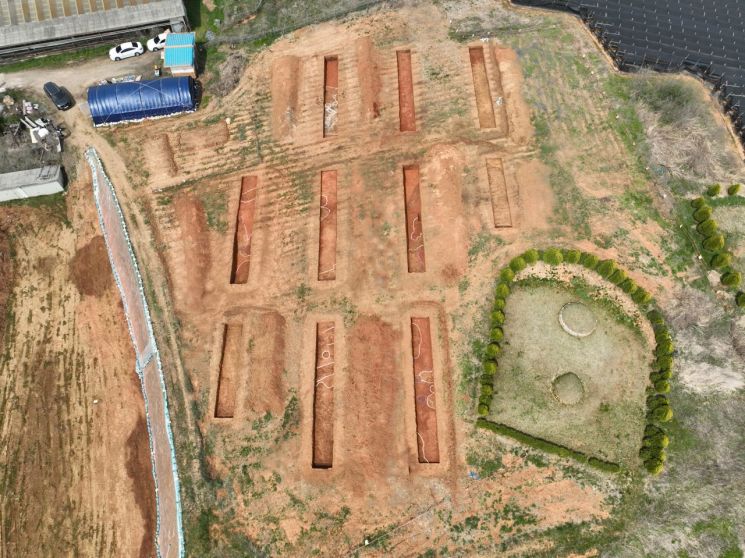
The National Wanju Cultural Heritage Research Institute announced on the 8th that since February, they have conducted trial excavations in Yucheon-ri districts 2 and 3 (inside the earthen fortress) and confirmed four kilns, one workshop site, and pits (postholes) containing discarded porcelain, wall fragments, and kiln tools used for firing (燔造) celadon. All of these are facilities related to the production process of Goryeo celadon. The kiln tools include items such as gapbal (a vessel used to hold porcelain during firing to prevent direct flame contact or impurities from falling on the porcelain) and dojimi (supports used when firing porcelain in the kiln).
The Yucheon-ri site is known as a celadon kiln site formed during the mid-Goryeo period. It was discovered in 1929 by Nomori Ken during the Japanese colonial period and designated as a historic site in 1963. Systematic exploration began in 1997. Through continuous trial and full excavations of districts 2 to 7, large-scale Goryeo celadon kiln sites and related building remains dating from the late 12th to 13th centuries were found.
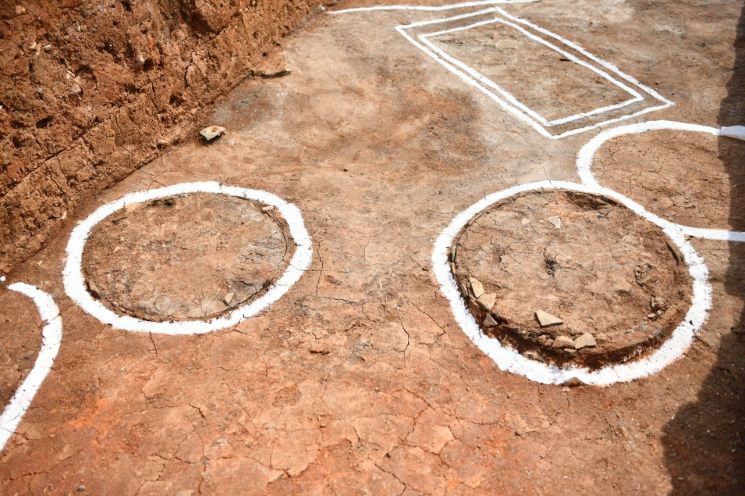
The kiln discovered this time was located on a hillside slope. At the workshop site about 6 to 7 meters away, two round earthenware jars and rectangular postholes were identified. Grayish-white clay was distributed inside and around the area. A representative from the National Cultural Heritage Research Institute explained, "The Conservation Science Laboratory conducted X-ray diffraction analysis and laser particle size analysis, revealing soil rich in silicate minerals such as kaolinite and mica," and added, "It is presumed to have been used as the body clay (胎土, taeto) for ceramics."
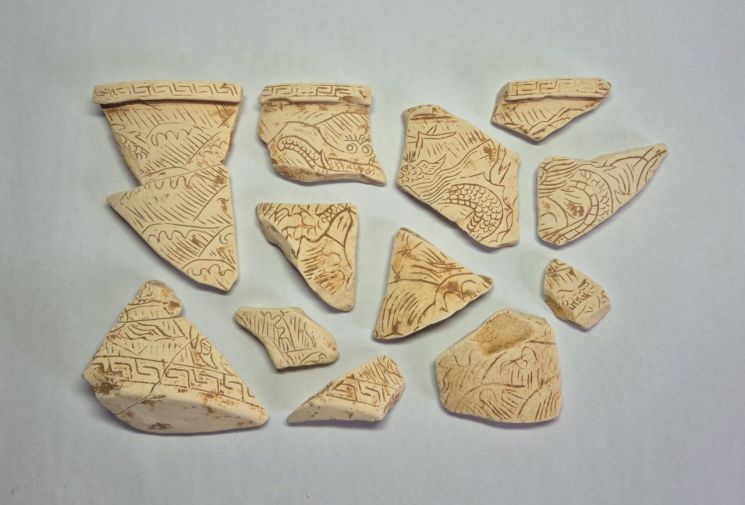
The investigation unearthed common types such as bowls, plates, and cups believed to have been made from the mid-12th to early 13th centuries, as well as special types including incense burners, jugs, and melon-shaped bottles. Some plates resembled artifacts excavated from royal tombs such as Jireung (King Myeongjong) and Seokneung (King Huijong). High-quality celadon, presumed to have been used by the royal family or aristocracy, was also confirmed, including first-fired pieces of Yongmun incense burners.
The Cultural Heritage Administration stated, "This is the first time a workshop site for processing Goryeo celadon body clay has been discovered at the Yucheon-ri site in Buan," and expressed confidence that "it will become an important resource for clarifying the materials and production system of Goryeo celadon." They added, "We will conduct detailed investigations by combining physical surveys, topographic analysis, compositional analysis, and dating methods."
© The Asia Business Daily(www.asiae.co.kr). All rights reserved.



















