Joint Development of Post-Processing Automation Technology Underway
"Post-Processing Market Expected to Grow 13% This Year"
Aiming to Reduce Dependence on China in Post-Processing Production
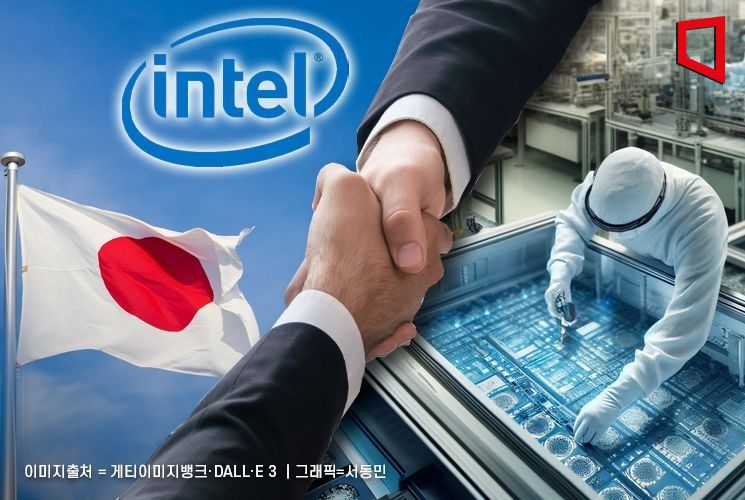
U.S. semiconductor company Intel plans to develop semiconductor back-end process automation technology in collaboration with local companies in Japan, the Nihon Keizai Shimbun (Nikkei) reported on the 7th.
According to the report, Intel has launched the "Semiconductor Back-End Process Automation and Standardization Technology Research Group" (SATAS) together with 14 companies including Omron, Yamaha Motor, Rezonnac Holdings, and Shin-Etsu Polymer, to develop back-end process automation technology and equipment. The project aims for commercialization by 2028 and plans to achieve integrated control of multiple manufacturing and inspection devices within a single system through technology standardization.
The semiconductor process is divided into front-end processes, which manufacture wafers and etch circuits, and back-end processes, which package and test chips. Recently, as semiconductor miniaturization technology has reached physical limits, packaging technology that combines multiple semiconductor chips to enhance performance has attracted market attention. Research firm TechInsights forecasts that the semiconductor back-end process market will grow by 13% compared to last year, reaching $12.5 billion (approximately 17 trillion KRW) this year.
The Japanese Ministry of Economy, Trade and Industry is also expected to support development costs of up to several tens of billions of yen, Nikkei predicted. The Japanese government, which regards semiconductors as a key economic security material, has allocated about 4 trillion yen in its budget for semiconductor support from fiscal years 2021 to 2023, focusing all efforts on reviving its domestic semiconductor industry. Last month, it provided 590 billion yen in support to domestic semiconductor company Rapidus, allocating 53.5 billion yen of that to back-end process technology development.
Nikkei analyzed that the technological cooperation between Intel and Japanese companies aims to "reduce geopolitical risks as the U.S. and Japan prepare to sever semiconductor supply chains dependent on China." In fact, back-end processes often involve manual assembly of various components and products, so factories are concentrated in China and Southeast Asia, where labor is abundant. According to U.S. consulting firm Boston Consulting Group, as of 2022, China accounted for 38% of the world's back-end process factory production capacity. The fact that Intel and Japanese companies are targeting back-end process 'automation' is interpreted as a recognition of the need to automate back-end production lines due to relatively high labor costs in the U.S. and Japan.
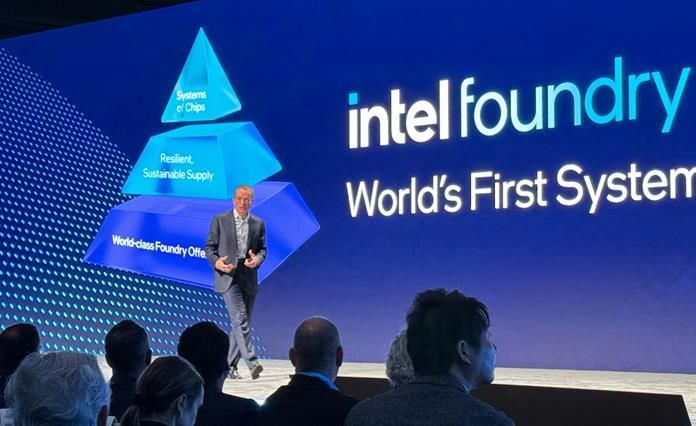
Meanwhile, Intel, which recently received $19.5 billion in support from the Biden administration, is investing $20 billion to build a foundry (semiconductor contract manufacturing) plant in Ohio, U.S., putting all efforts into establishing and expanding its foundry business. Pat Gelsinger, Intel's CEO, said in an interview with Bloomberg Businessweek released on the 1st (local time), "Intel's Ohio foundry complex could become the largest in the world," and evaluated, "I believe the foundry is Intel's future."
© The Asia Business Daily(www.asiae.co.kr). All rights reserved.


















