Gas Exports Plunge 50% Due to Russian Sanctions
Warm Last Winter... Gas Consumption Also Declines
Russia's Budget Sustained by 25%... Fiscal Deficit Snowballs
Russian state-owned gas company Gazprom posted a massive loss for the first time in over 20 years. Western sanctions against Russia by the U.S., Europe, and others have blocked gas exports, drastically reducing sales volume. Additionally, global warming has led to decreased gas demand, which is considered the main cause of last year's deficit. As Russia’s gas export volume?a major source of government revenue and war funding?declines, it is expected to impact the ongoing war in Ukraine.
Gazprom Suffers Massive Loss Exceeding 9 Trillion Won... Gas Sales Volume Halved
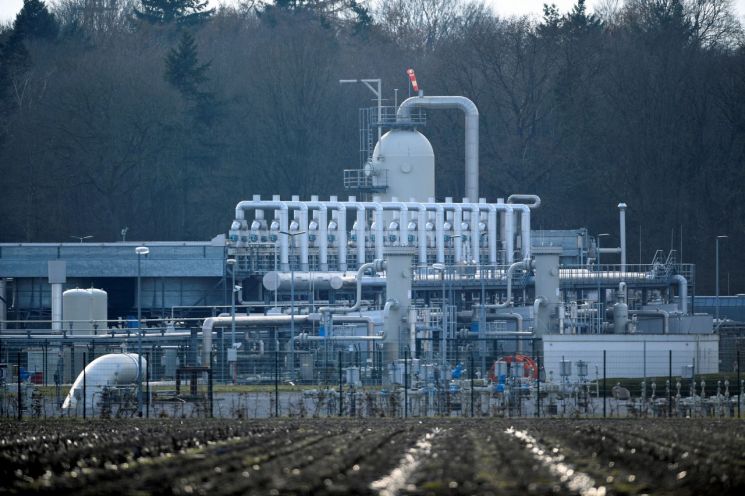
According to Russian news agency Interfax on the 11th, Gazprom recorded a loss of 629 billion rubles (approximately 9.35 trillion won) last year. This is the largest loss in 24 years since 1999. The loss far exceeded the market’s initial estimate of 447 billion rubles.
Until 2022, when the war in Ukraine broke out, Gazprom was a solid company with a net profit of 1.2 trillion rubles. However, from last year, Western sanctions against Russia, especially by the U.S. and Europe, intensified significantly. European countries restricted imports of Russian natural gas, turning Gazprom into a deficit company. Russia’s market share of natural gas in Europe plummeted from 42% before the Ukraine war to 8% last year.
Consequently, Gazprom’s natural gas export volume was halved compared to 2022. Last year, Gazprom’s gas sales revenue was 4.1 trillion rubles, a decrease of more than 50% from 8.4 trillion rubles in 2022. This was due to a drop in external gas sales revenue from 7.3 trillion rubles to 2.9 trillion rubles.
Gazprom is focusing on trade with countries like China and India, which have emerged as alternative markets to Europe, but given Europe’s previously large share of the gas market, it is difficult to replace it easily. Craig Kennedy, former vice chairman of Bank of America, told major foreign media, “The loss of sales in Europe is a problem that cannot be solved without returning to Europe. However, due to the war, returning to the pre-war export model is now impossible.”
Global Warming Also Plays a Role... Gas Demand Drops as Alpine Snow Melts
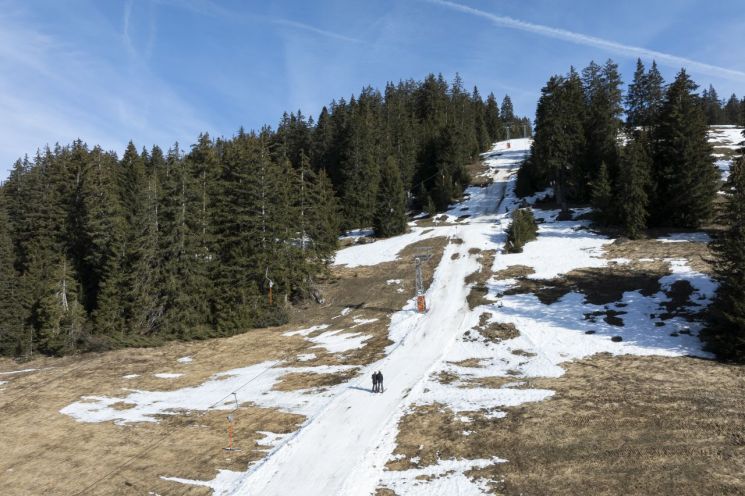 The scene of the Ormont Dessus ski resort in Switzerland, temporarily closed last February due to a decrease in snowfall. [Image source=EPA·Yonhap News]
Last winter’s significant temperature rise due to global warming is also cited as a major factor in the decline of gas exports alongside Western sanctions. Warm weather caused major ski resorts in the Alps to close due to insufficient snowfall, sharply reducing demand for heating gas. According to Euronews, Copernicus Climate Change Service (C3S), a leading European meteorological research institute, analyzed that last year’s global average temperature reached 14.98 degrees Celsius, 1.48 degrees higher than the pre-industrial period from the 1850s to 1900s, making it the warmest year on record since meteorological observations began.
In January, temperatures soared to 19.2 degrees Celsius in Altdorf, Switzerland; 18.9 degrees in Warsaw, Poland; 25.1 degrees in Bilbao, Spain; and even 12.6 degrees in Aved, Denmark, within the Arctic Circle, marking record highs for January.
Europe’s increased share of renewable energy generation, driven by concerns over global warming, also contributed to the decline in natural gas demand. According to data compiled by international think tank Ember, last year Europe’s power generation mix consisted of 44% renewables such as wind and solar, 23% nuclear, 17% natural gas, and 12% coal, with renewables surpassing fossil fuels like natural gas and coal.
Gazprom Supports 25% of Russian Finances... Impact on Ukraine War Inevitable
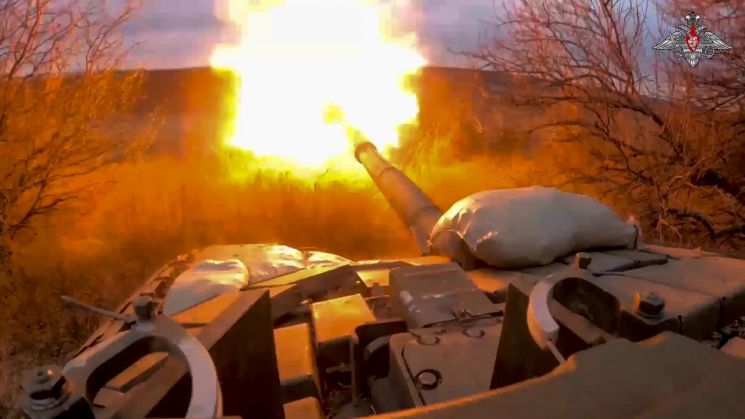
As Gazprom, one of Russia’s main sources of government revenue, experiences a significant decline in profitability, it is expected to inevitably affect the war in Ukraine. Although Russia has recently intensified its offensive before new U.S. weapons aid arrives in Ukraine, the difficulty in funding war expenses may weaken the intensity of the offensive.
According to TASS news agency, Russian forces recently captured the strategic eastern Ukrainian town of Ocheretyne. This area is about 15 km northwest of Avdiivka, which Russian forces occupied in February. Russia is launching a full-scale offensive to expand the front lines as much as possible before additional U.S. military support reaches Ukraine.
However, with Gazprom’s deteriorating profitability and increasing financial pressure on the Russian government, it seems difficult to significantly increase war expenditures. According to the British newspaper The Guardian, Gazprom accounts for about 10% of Russia’s total GDP and 25% of government revenue, employing approximately 500,000 people. The massive net loss last year inevitably reduces dividends and taxes paid to the Russian government.
With rising war expenses, Russia’s fiscal deficit is also growing. According to The Wall Street Journal (WSJ), Russia recorded a fiscal deficit of $34 billion (about 46 trillion won) in January and February. The Russian government had initially forecasted a maximum fiscal deficit of around $39 billion for the entire year of 2024, but within just two months, the deficit has already reached the set limit.
© The Asia Business Daily(www.asiae.co.kr). All rights reserved.
![Clutching a Stolen Dior Bag, Saying "I Hate Being Poor but Real"... The Grotesque Con of a "Human Knockoff" [Slate]](https://cwcontent.asiae.co.kr/asiaresize/183/2026021902243444107_1771435474.jpg)


















