US Treasury and Energy Departments Announce Final IRA Plan
The U.S. government has decided to provide subsidies under the Inflation Reduction Act (IRA) for two years to electric vehicles equipped with batteries made from Chinese graphite. Korean companies, which import 97% of their graphite from China and have found it difficult to find alternative sources, can now breathe a sigh of relief. Until now, the Korean government and companies have been requesting the U.S. government to exempt the IRA subsidy provisions related to graphite.
According to the Ministry of Trade, Industry and Energy on the 4th, the U.S. Department of the Treasury and the Department of Energy announced the final guidance on March 3 (local time) regarding the clean vehicle tax credit provision (§30D) under the IRA and the definition of Foreign Entity of Concern (FEOC). The U.S. government had previously released provisional guidance on the clean vehicle tax credit provision in March last year and provisional guidance on FEOC in December.
First, regarding FEOC, the U.S. government granted a grace (transition) period until the end of 2026 for graphite. When determining whether a specific electric vehicle meets the subsidy eligibility requirements, the U.S. government will not consider graphite used in batteries sourced from FEOC as an issue for two years until the end of 2026.
To receive up to $7,500 in IRA electric vehicle subsidies per vehicle, battery components must not be sourced from FEOC starting this year, and key minerals in batteries must not be sourced from FEOC starting in 2025.
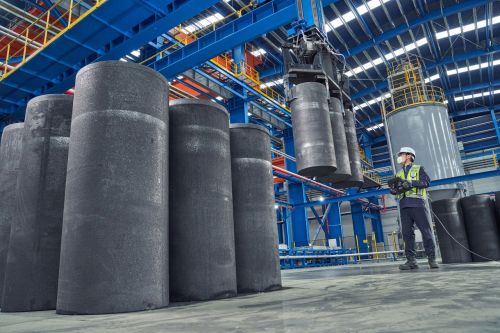
Graphite is a key raw material for the anode, one of the four main materials (cathode, anode, separator, electrolyte) of lithium-ion batteries. In Korea’s case, 97.7% of natural graphite and 94.3% of synthetic graphite are imported from China (based on data from the Korea International Trade Association, January to September 2023).
Accordingly, domestic battery companies and automakers have argued that it is difficult to replace the graphite supply chain in the short term, and if the original rules were applied, no companies would realistically be able to receive electric vehicle subsidies. They have been persuading the U.S. government on this matter. An official from the Ministry of Trade, Industry and Energy explained, "Since the announcement of the provisional guidance on FEOC regulations, we have collected industry opinions multiple times and submitted official statements to the U.S. side, continuing consultations at various levels."
In the final guidance, the U.S. government classified graphite as an 'impracticable-to-trace' key mineral and exempted it from FEOC application for two years. The U.S. Department of the Treasury explained that graphite is used as a mixture of natural and synthetic graphite, and for synthetic graphite, it is difficult to trace the origin upstream in the supply chain.
However, companies must submit a report to the U.S. government outlining their plans on how to comply with FEOC regulations after the two-year grace period ends.
Meanwhile, the final guidance introduced a new method for calculating eligible minerals that meet the battery key mineral requirements.
Last year’s provisional guidance considered minerals eligible if more than 50% of the added value from mining or processing was created in the U.S. or countries with which the U.S. has a Free Trade Agreement (FTA), and calculated the proportion accordingly.
However, the final guidance changed this to apply the actual proportion of added value created within the U.S. or FTA countries regardless of the 50% threshold. A two-year transition period was also granted, allowing companies to apply the previous method until the end of 2026.
© The Asia Business Daily(www.asiae.co.kr). All rights reserved.
![Clutching a Stolen Dior Bag, Saying "I Hate Being Poor but Real"... The Grotesque Con of a "Human Knockoff" [Slate]](https://cwcontent.asiae.co.kr/asiaresize/183/2026021902243444107_1771435474.jpg)
















