Interest Rate Options Market Reflects 18% Probability of September Hike
"Powell, Worst-Case Scenario if He Reverses Statement"
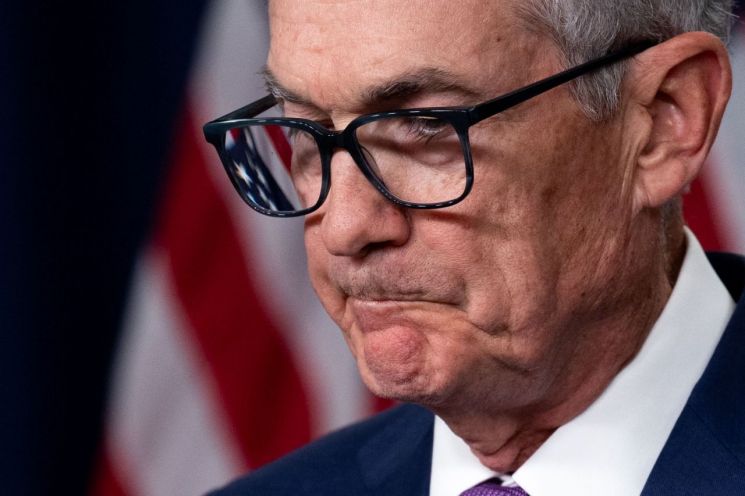
Jerome Powell, Chair of the U.S. Federal Reserve (Fed), dismissed the possibility of a rate hike, but many investors in the market still appear to be betting on an increase. Due to Powell's past misjudgments and reversals of statements regarding inflation, concerns are emerging again about the possibility that his dovish (monetary easing-favoring) remarks made the previous day might once more miss the mark.
On the 2nd (local time), the one-day SOFR (Secured Overnight Financing Rate) option market for U.S. Treasury repurchase agreements reflected an 18% chance that the Fed would raise rates in September. The probability of a rate hike in December exceeded 20%.
Although Powell said the likelihood of a rate hike was "unlikely," some traders are betting that the Fed's next move will be an increase. This means that some investors are not taking Powell's remarks at face value.
The day before, Powell expressed a somewhat ambiguous stance by drawing a line under the possibility of a rate hike, even as confidence in the decline of inflation weakened. He said, "It will take longer than expected to gain confidence that inflation is on a sustainable path toward 2%," but added, "The next policy rate move is unlikely to be an increase. The chances are very low."
The market, which had been concerned about hawkish (monetary tightening-favoring) messages, initially interpreted Powell's remarks as dovish. However, some worry that Powell's definitive dismissal of a rate hike possibility amid persistent inflation strength could lead to misjudgment.
Earlier, Powell had said in early March that it was "not far off" from gaining confidence that the inflation rate would slow to 2%, but by mid-April, just over a month later, he changed his stance, saying it would take a long time to reach the 2% target. In the March Federal Open Market Committee (FOMC) minutes, Powell attributed the inflation rise in January and February to seasonal factors. However, after the March inflation data was released, he revised his judgment, concluding that high inflation would persist. Until the second half of 2021, Powell had also described inflation as "transitory," which drew criticism for delayed response.
Mohamed El-Erian, former CEO of PIMCO, the world's largest bond management firm, said, "Powell ignored higher-than-expected inflation and wage inflation during the first three months of this year, which initially triggered a significant drop in bond yields and a rise in stocks." He added, "Looking at Powell's past press conference remarks, as revealed in the minutes released weeks later, he was more dovish than the committee discussions on actual policy." He predicted, "Given the current economic situation, if the Fed is unwilling to inflict large and unnecessary damage on the economy, it shows that achieving the 2% target is unlikely."
There is also widespread concern that if inflation remains strong and Powell mentions the possibility of future rate hikes, trust in monetary policy could be undermined.
Case Buchan, Senior Portfolio Manager at Globalt Investments, said, "If the Fed has to reverse Powell's statement that the chance of a rate hike is almost zero, it would be the worst-case scenario," adding, "Since Powell described inflation as transitory in 2021, rhetoric on monetary policy will be regarded as unreliable."
© The Asia Business Daily(www.asiae.co.kr). All rights reserved.

















