Eight University Hospitals Closed the Previous Day, Outpatient Services Reduced by up to 35%
On the previous day, out of 88 hospitals affiliated with 40 medical schools, 8 hospitals reduced outpatient services and closed temporarily, resulting in a decrease in outpatient volume ranging from at least 2.5% to as much as 35%, but no major disruptions occurred. The contract rate for fellows at 100 training hospitals exceeded 60% for the first time since the medical community's collective action crisis. The contract rate for fellows at training hospitals, which had remained at 30% in the early stages of the crisis, has now surpassed 60%, drawing attention to whether this will relieve the 'burnout' situation among the remaining medical staff in hospitals.
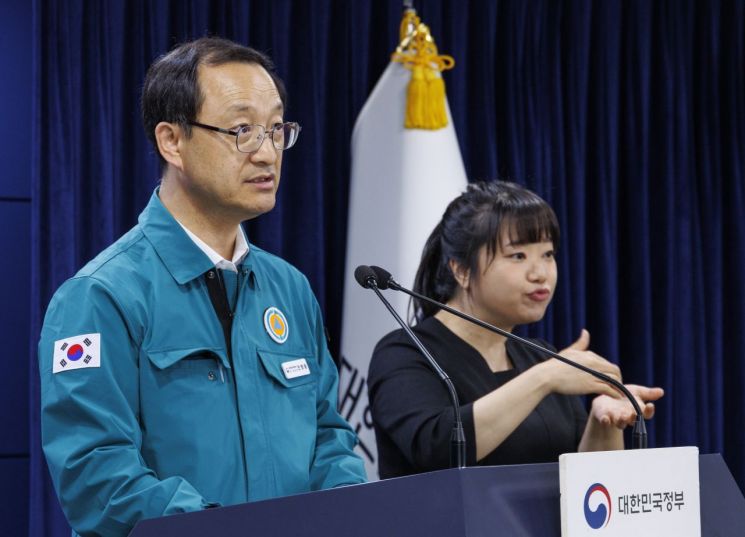 Jeon Byeong-wang, the 1st Controller of the Central Disaster and Safety Countermeasures Headquarters and Director of Medical Policy at the Ministry of Health and Welfare, is briefing the results of the Central Disaster and Safety Countermeasures Headquarters meeting on the response to the doctors' collective action on the afternoon of the 1st at the Government Seoul Office in Jongno-gu, Seoul.
 [Photo by Yonhap News]
Jeon Byeong-wang, Director of the Health and Medical Policy Office at the Ministry of Health and Welfare, announced this during a briefing held by the Central Disaster and Safety Countermeasures Headquarters for the doctors' collective action at the Government Seoul Office on the afternoon of the 1st.
Director Jeon stated, "On the previous day, 8 out of 88 hospitals affiliated with 40 medical schools reduced outpatient services and temporarily closed, with the reduced outpatient volume confirmed to be between a minimum of 2.5% and a maximum of 35%."
Earlier, some medical school professors had announced that they would stop outpatient services and surgeries once a week. On the previous day, professors from Seoul National University, Yonsei University, Korea University, and Gyeongsang National University medical schools individually closed their affiliated hospitals.
Director Jeon said, "Although some doctors' temporary closures were anticipated, there was no major confusion," adding, "Despite some doctors' temporary closures, many medical staff on site, including doctors and nurses, are still filling in for the absent residents and staying by patients' sides."
He continued, "However, the government takes the fears of patients who are anxious about delays in cancer treatment or postponed surgeries very seriously," and explained, "We will further strengthen the emergency medical system to minimize disruptions in medical use for severe and emergency patients, and actively cooperate with hospitals along with whole-government efforts to ensure that patients and their families do not feel anxious."
On the previous day, professors from Seoul National University, Yonsei University, Korea University, and Gyeongsang National University medical schools individually closed their affiliated hospitals. The decision was made at the level of each medical school's professors' emergency response committee, not the hospitals, so there was no 'shutdown' involving the entire hospital. Many professors decided to continue patient care instead of closing, preventing the feared chaos.
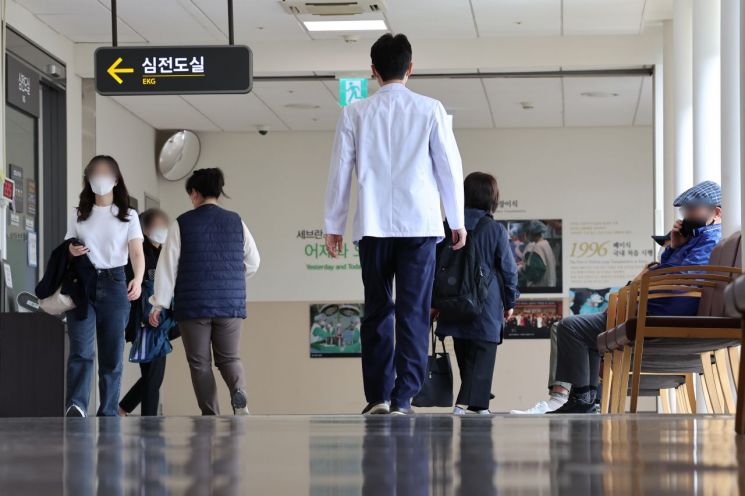 Medical personnel moving in a large hospital in Seoul on the afternoon of the 29th.
 [Photo by Yonhap News]
The participation rate in temporary closures varied greatly by hospital, with professors at Bundang Seoul National University Hospital showing a relatively high participation rate. Bundang Seoul National University Hospital includes four top officials, including Bang Jae-seung, Chair of the Seoul National University College of Medicine-Seoul National University Hospital Professors' Emergency Committee. Bundang Seoul National University Hospital reportedly reduced outpatient services by about 30% on the previous day.
Korea University Medical Center's Guro Hospital provided care with almost no temporary closures following the hospital director's persuasion. Korea University Anam Hospital and Korea University Ansan Hospital also had few professors participating in the temporary closures. At Korea University Ansan Hospital, about 3 to 4 out of 256 affiliated professors reportedly took part in the temporary closure.
The contract rate for fellows at 100 training hospitals is 61.7%, and the contract rate for fellows at the five major hospitals in the metropolitan area is 65.9%, showing a continuous increase. Previously, on the 25th of last month, the contract rate for fellows at 100 training hospitals was 58.7%, but as of the 30th of last month, it exceeded 60%.
'Fellows' are doctors who have completed their residency training and obtained specialist qualifications, then conduct research in detailed clinical fields while treating patients at hospitals. They are commonly called fellows or clinical instructors. Fellows usually sign contracts with hospitals on a yearly basis, and hospitals manage the number of fellows by setting quotas. The total quota (contract target) for fellows at 100 hospitals is 2,741.
The contract rate for fellows at the 'Big 5' major hospitals in the metropolitan area (Seoul National University, Severance, Samsung Seoul, Seoul Asan, and Seoul St. Mary's Hospitals) is even higher. As of the previous day, the contract rate for fellows at the Big 5 hospitals was 65.9%. Since surpassing 60% at 61.4% on the 25th of last month, the rate has steadily increased. This is an encouraging level compared to the contract rate for fellows at the end of February.
At that time, fellows joined the collective resignation and withdrawal of junior doctors (residents), and on February 29, the contract rate for fellows was only 33.6% at 100 training hospitals, with the Big 5 hospitals at 33.9%.
The government once again urged the medical community to stop collective action and engage in dialogue on this day.
Director Jeon said, "I hope the residents will not doubt the government's sincerity and return to the training sites promptly, and I also ask the medical school professors to stay by the patients' sides," adding, "I once again urge you to end the collective action and come to the dialogue table."
© The Asia Business Daily(www.asiae.co.kr). All rights reserved.
![Clutching a Stolen Dior Bag, Saying "I Hate Being Poor but Real"... The Grotesque Con of a "Human Knockoff" [Slate]](https://cwcontent.asiae.co.kr/asiaresize/183/2026021902243444107_1771435474.jpg)

















