Government Unveils First Social Mobility Improvement Plan
Restoring the Ladder of Class Mobility by Increasing Employment Rates for Women and Youth
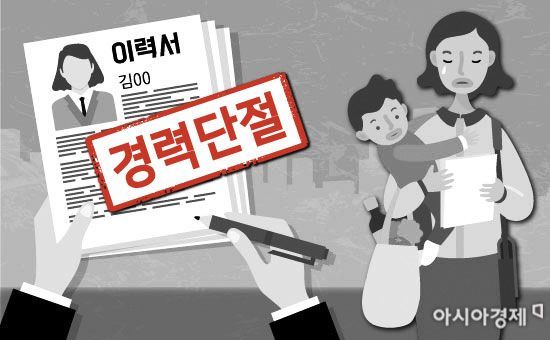
The government plans to extend paid paternity leave to 20 days to prevent career interruptions for women and abolish industry restrictions on reemployment for women who have experienced career breaks (Gyeongdan-nyeo). It will also establish an 'All-Care Platform' to provide timely employment services to job seekers and NEETs (Not in Education, Employment, or Training ? young people unwilling to work).
The 'First Plan for Improving Social Mobility' announced by the Ministry of Economy and Finance on the 1st includes support measures to promote economic participation of women and youth. The economic activity participation rates of women (aged 35?44) and youth (aged 25?29) in South Korea are 63.7% and 75.9%, respectively, which fall short of the OECD averages (75.3% and 81.8%). The government’s vision is to raise their economic activity participation rates to restore the ladder of socio-economic mobility and use it as a growth engine for potential growth rates.
Expansion of Reduced Working Hours During Childcare Period...Abolition of Industry Restrictions
First, to prevent career interruptions for women, the government plans to extend paid paternity leave to 20 days. This doubles the current 10-day paid leave stipulated under the Gender Equality Employment Act. The tax support conditions for companies hiring women who have experienced career breaks will also be eased. Currently, companies hiring such women receive a tax credit of 4 million to 15.5 million KRW per person annually for up to three years. However, there have been criticisms that the conditions are strict, such as requiring reemployment in the same industry after resignation. Accordingly, the government plans to abolish these industry restrictions and include men who have experienced career breaks as eligible for support.
Additionally, the government will gradually increase the monthly cap of 1.5 million KRW on parental leave benefits and expand the reduced working hours system during the childcare period, which allows balancing work and childcare. Through this, each parent can receive 100% of their ordinary wage for up to 36 months and up to 10 hours per week of reduced working hours. Alongside this, package support for small and medium-sized enterprises operating flexible work systems such as telecommuting, staggered working hours, and selective working hours will also be expanded.
The income eligibility criteria for government-supported childcare services (currently at 150% of median income) will be further relaxed, and the personal contribution rate (15?85%) will be lowered. Regulations will be added to encourage public institutions to actively introduce special childcare leave and infertility leave.

Youth support will also be expanded. To assist the increasing number of chronic job seekers and NEETs among youth, who are at their most active working age, an All-Care Platform will be established. Through inter-ministerial cooperation, the plan is to actively provide information on job matching and vocational training centered around University Job Plus Centers and Employment Welfare Plus Centers.
The Ministry of Economy and Finance stated, "Based on prior consent for providing employment services to approximately 1.41 million national scholarship applicants, we plan to actively support unemployed youth with employment information, consulting, and vocational training." To support platform construction and service provision, the ministry will establish a collaborative organization called the 'Employment Service Strategy Team' next month in cooperation with the Ministry of Education and the Ministry of Employment and Labor.
Regarding employment-linked scholarships, priority will be given to vulnerable groups such as basic livelihood security recipients and low-income households, and support for earning credits during military service and the Soldiers’ Tomorrow Preparation Savings will be expanded. The proportion of high school graduates hired in new public institution recruitments will also be increased. The government is considering raising the current 8% full score standard for high school graduate hiring in public institution management evaluations.
Abolition of the One ISA Account per Person Limit...Comprehensive System Reform
Alongside this, ISA-related benefits will be strengthened to increase household asset accumulation. The government plans to integrate the ISA types?brokerage, trust, and discretionary?and abolish the one-account-per-person principle to enable integrated loss management. It will also promote expanded application of loss offsetting for stock-type funds within ISA accounts.
ISA was introduced in 2016 to help asset formation through tax savings. In 2021, the brokerage type, which allows domestic stock investment, was added to the existing discretionary and trust types. However, there have been calls for system improvements due to financial sector silos. For example, if one subscribes to a trust-type ISA at a bank, they cannot directly buy or sell domestic stocks, and ISA accounts opened at securities firms cannot include deposits or savings. The government plans to double the contribution limit and increase the tax-exempt limit by 2.5 times compared to the current levels and establish a domestic investment-type ISA within the year.
© The Asia Business Daily(www.asiae.co.kr). All rights reserved.
















