- 2023 Social Survey Results Announced... Covering Youth to Elderly
- Gwangyang with Well-Developed Residential Environment... Attracting Demand as a Place People Want to Keep Living
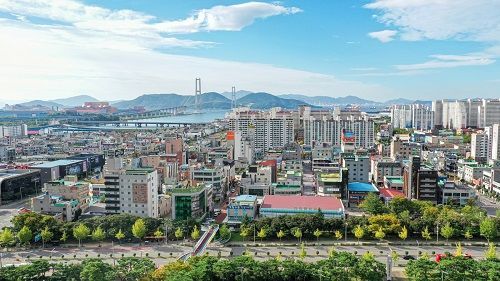
According to the results of the '2023 Social Survey' conducted in Gwangyang City, Jeollanam-do, 63.1% of Gwangyang residents expressed a desire to continue living in Gwangyang City even 10 years from now.
This survey was conducted from September 1 to 13 last year, targeting all household members aged 15 and older in 1,008 households across 84 sample survey districts within Gwangyang City. The average length of residence of respondents in Gwangyang City was recorded as 31 years.
Unlike other major cities in the eastern region of Jeollanam-do such as Yeosu City and Suncheon City, Gwangyang City has experienced population growth consecutively in 2022 and 2023. It also ranked highest in the Jeolla and Gwangju areas in the nationwide '2023 Social Safety Index - Best Places to Live' survey conducted by city, county, and district.
Regarding the key areas that Gwangyang City should focus on to become a more livable city, 23.2% of respondents selected 'Job creation and regional economic revitalization through fostering new growth industries,' followed by 'Development of a tourism and cultural city (21.0%).' Additionally, when establishing youth policies, 28.1% emphasized 'Expansion of quality jobs,' and to address aging population issues, 34.5% prioritized 'Expansion of medical and health facilities.'
Based on these citizen needs, Gwangyang City is continuing various efforts. First, to provide robust welfare and overcome low birth rates, the city has embarked on building the 'Gwangyang-type Life-cycle Welfare Platform.' In addition to existing welfare policies, new welfare policies are continuously being developed. In July last year, the city also established the 'Gamdong Era Promotion Team,' a control tower for welfare departments, through organizational restructuring.
Gwangyang City has developed welfare policies such as childbirth incentives, support for high school students' online lecture fees, operation of childcare centers, transportation cost support for out-of-area treatment of children with severe illnesses, university tuition support, travel expense support for newlyweds domestically and abroad, and operation of a youth participation point system. These policies are currently being prepared for implementation after actively collecting citizens' opinions.
According to Gwangyang City, the 'Gwangyang Life-cycle Welfare Platform' consists of about 360 welfare policies. The city organizes these policies by life cycle stages and distributed a guidebook at the end of February to help citizens easily access relevant policies, continuously striving to ensure no one falls into welfare blind spots.
The city is also actively promoting the creation of quality jobs through corporate investment attraction. In the past two years, quality jobs have been supplied through large-scale investments by POSCO Holdings group companies (POSCO Future M, POSCO Philbar Lithium Solution, POSCO Lithium Solution, etc.), CIS Chemical, and SNN C.
Furthermore, POSCO Group has pledged to invest 4.4 trillion KRW in new industries over the next 10 years. On the Donghoan site of the Gwangyang Steelworks, where POSCO Group is investing, future material new industry facilities such as secondary battery materials and hydrogen energy will be constructed, which is expected to generate significant new employment opportunities.
Thus, issues related to jobs, new industry development, and welfare, which were emphasized through suggestions from Gwangyang citizens during the '2023 Social Survey,' are being smoothly promoted and implemented.
The housing market is also undergoing changes through various urban development projects. Urban development projects in areas such as Hwanggeum District, Wau District, and Seonghwang and Doi Districts are attracting new housing demand, and apartments in these areas are scheduled for occupancy this year.
An industry insider stated, "Places where residents wish to live for a long time for any reason have strong housing demand." They added, "With active job creation and various welfare policies continuing in Gwangyang, housing demand is expected to increase further, raising expectations for the future value of the real estate market."
© The Asia Business Daily(www.asiae.co.kr). All rights reserved.
![Clutching a Stolen Dior Bag, Saying "I Hate Being Poor but Real"... The Grotesque Con of a "Human Knockoff" [Slate]](https://cwcontent.asiae.co.kr/asiaresize/183/2026021902243444107_1771435474.jpg)
















