Daiso Withdraws from Chinese Stores in First Half of Last Year
Emart Also Sells Shenyang Complex Town
Focus Shifts to New Markets like Southeast Asia and Mongolia
Domestic distribution companies that had entered the Chinese market are consecutively deciding to withdraw and close their local operations. Despite having sufficient demand backed by a population of 1 billion, they ultimately could not overcome the economic downturn in the Chinese market combined with the aftermath of the 'Hanhanryeong (Korean Wave restriction order)'.
According to the distribution industry on the 29th, Asung Daiso, which operates the fixed-price household goods store Daiso, withdrew all its stores in China in the first half of last year. Daiso operated a household goods specialty store under the name 'Hasco' in China, mainly opening stores in cities such as Beijing and Tianjin.
Hasco was mainly operated in the form of 'shop-in-shop' locally and at one point increased the number of stores to around 200. However, it is reported that it faced difficulties due to the slowdown in the Chinese domestic market and the COVID-19 pandemic. An Asung Daiso official explained, "We withdrew due to the difficult business environment caused by the economic downturn in China in the first half of last year," adding, "Although the external environment is challenging, the company will focus its business capabilities and implement a management strategy faithful to the basics of fixed-price household goods sales."
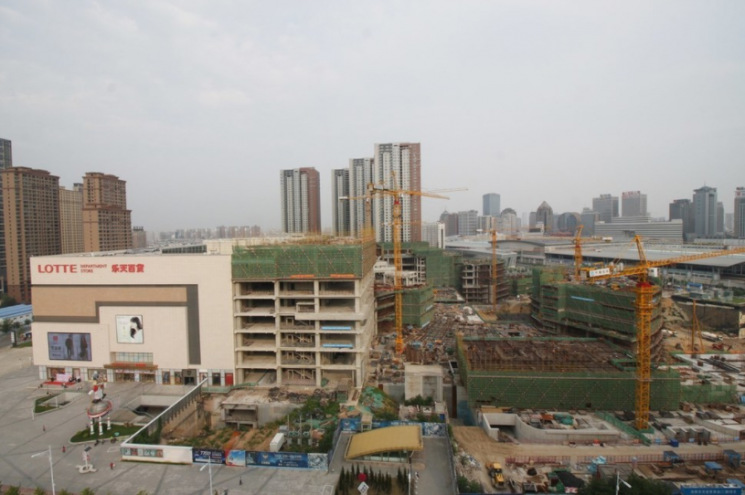
Lotte is also pushing for withdrawal from the Chinese market. This comes as they decided to sell a complex town planned to be developed in Shenyang, Liaoning Province, China. According to the distribution industry, Lotte has signed a stock sales contract with Shenyang Huanggu Chengxin Development Co., Ltd., a subsidiary of Huanggu District in Shenyang, and is proceeding with the procedures for the sale of the complex town.
This site was where Lotte had been constructing the 'Shenyang Lotte Complex Town,' which included department stores, hotels, apartments, and even a theme park. However, construction was halted from December 2016 after Lotte faced retaliation from the Chinese government due to the THAAD (Terminal High Altitude Area Defense) issue. Although Chinese authorities allowed construction to resume in April 2019, Lotte delayed restarting and eventually decided to sell. It is reported that the decision to halt the project and sell was made due to the prolonged impact of COVID-19 and the Hanhanryeong after the resumption of construction.
Lotte has already withdrawn from other business areas in China besides the Shenyang complex town. All Lotte Mart stores in China were sold in 2018, and in March 2019, Lotte exited the food manufacturing business in China. The Shenyang Lotte Department Store also closed in April 2020, six years after opening. Currently, the only remaining Lotte retail store in China is the Lotte Department Store in Chengdu, but Lotte is also pursuing the sale of this location.
Another distribution company that entered China, Emart, withdrew from the Chinese market earlier in 2017. Emart, which opened its first store in Shanghai in 1997, exited the Chinese market by selling its remaining six stores at the end of 2017, marking 20 years since its entry into the Chinese market.
SPC Group also withdrew some subsidiaries. SPC GFS, a subsidiary of SPC Samlip, liquidated Shanghai SPC on November 2 last year. Shanghai SPC distributed ingredients to over 330 Paris Baguette stores locally and exported SPC Samlip’s bakery and snack products as well as food products from domestic small and medium-sized enterprises. SPC Group also closed its business due to prolonged poor performance caused by the COVID-19 pandemic and the domestic economic downturn in China. An SPC Group official said, "Like in South Korea, the Chinese consumer market has shrunk significantly," adding, "We decided to liquidate Shanghai SPC to improve cost efficiency."
The reason distribution companies are consecutively withdrawing from the Chinese market is that they cannot avoid being affected by the economic downturn in China and local political situations. Lotte, which had been actively expanding in the Chinese market, faced strong retaliation from Chinese authorities after providing the site of Lotte Skyhill Seongju CC as a base for the THAAD system. At that time, local Lotte Mart stores were suspended from operation, and Lotte products were removed from Chinese e-commerce platforms, making local business difficult. Additionally, Chinese consumers launched a boycott of Lotte products, causing significant damage to performance.
Instead, the distribution industry is accelerating its expansion into Southeast Asia and Central Asian countries. Lotte is expanding its presence in Southeast Asian markets such as Vietnam and Indonesia, considering the population and economic growth rates of these markets, which indicate high growth potential. Lotte Mart has opened 48 stores in Indonesia and 16 in Vietnam, and Lotte Department Store operates four stores in Vietnam and Indonesia. Emart also operates local stores in Mongolia (4 stores) and Vietnam (3 stores) and plans to open its first store in Laos within the year.
© The Asia Business Daily(www.asiae.co.kr). All rights reserved.

















