EU to Impose Tariffs as Early as Next Month... 15-30%
"Even with 30% Tariff, 15% Premium Compared to China"
The European Union (EU) would need to impose a 'tariff bomb' of about 50% to block the influx of cheap Chinese electric vehicles (EVs) into the market, according to an analysis reported by major foreign media on the 29th (local time).
The EU Commission has been conducting an anti-subsidy investigation on Chinese electric vehicles since October last year. The US private research institute Rhodium Group stated in a report, "The EU Commission is expected to impose tariffs in the range of 15-30%," but added, "Even if the maximum tariff within this range is imposed, some China-based companies still enjoy significant cost advantages, allowing them to generate profits when exporting to Europe." This means that imposing hefty tariffs alone is insufficient to curb imports of Chinese EVs.
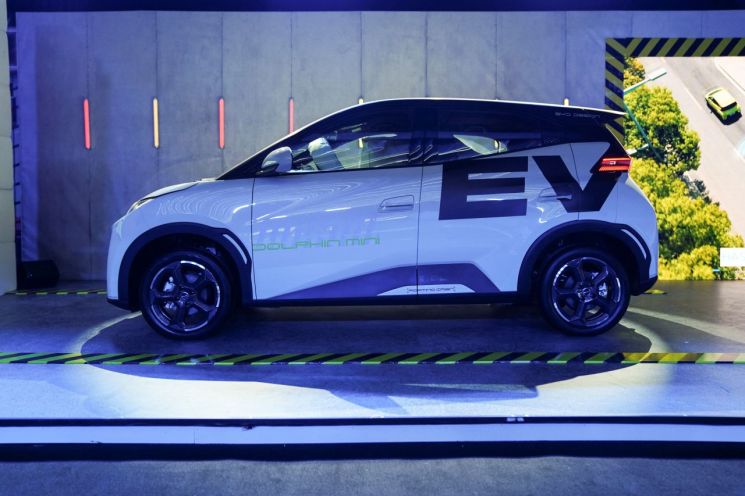
It further stated, "To make the European market unattractive to Chinese EV exporters, tariffs in the range of 40-50% are necessary," adding, "For vertically integrated manufacturers like BYD, this rate would be even higher."
The Rhodium Group explained that the price gap between China and the EU creates a strong export incentive. BYD's Seal U is sold for 20,500 euros (approximately 30.28 million KRW) in China and 42,000 euros (approximately 62.04 million KRW) in the EU. The expected profit per sale is 1,300 euros (approximately 1.92 million KRW) and 14,300 euros (approximately 21.12 million KRW), respectively.
Moreover, as long as Chinese manufacturers continue to make massive investments in factory facilities, exports are essential. BYD's annual production capacity in China is expected to increase from 2.9 million units this year to 6.6 million units by 2026. To absorb this production volume entirely in the domestic market, BYD would need to more than double its sales in China. Especially as countries including the US impose preemptive restrictions such as tariffs, the EU has become a major option.
Currently, imported car companies already pay a 10% tariff to the EU. The report stated, "Even a 30% tariff still grants companies an EU premium of 15% (about 4,700 euros or 6.94 million KRW) compared to China," and "Europe will remain an attractive market." It also added, "BYD can lower prices to achieve its goal of capturing 5% of the EU market by 2025 and 10% by 2030," and "Other Chinese EV brands will also enjoy significant profits from EU exports."
Including non-Chinese manufacturers with factories in China, electric vehicles imported from China increased from $1.6 billion (approximately 2.2048 trillion KRW) in 2020 to $11.5 billion (approximately 15.847 trillion KRW) in 2023. Last year, Chinese brands' market share was 8%, more than quadrupling over three years. According to Transport & Environment (T&E), this year's market share reaches 11%, and it is expected to soar to 20% by 2027.
The Chinese government criticized the EU Commission's investigation as protectionist, stating that it is simply because their domestic companies are more competitive.
Major foreign media expect the EU Commission's anti-subsidy investigation to conclude within a few weeks. EU officials have set a preliminary tariff imposition deadline for July but plan to impose tariffs as early as May. To impose permanent tariffs, the support of the majority of EU member states is required.
The Rhodium Group explained that, in addition to tariffs, the EU could restrict imports citing security reasons such as vehicle data collection or focus consumer subsidies for EVs on EU-manufactured models to protect its domestic industry.
© The Asia Business Daily(www.asiae.co.kr). All rights reserved.

















