Reckless Acts Continue for SNS Posts
Increasing Casualties from Subway and Bus Surfing
Following the trend of 'subway surfing,' where American teenagers climb onto moving subway trains to take selfies, a new craze called 'bus surfing,' involving climbing onto the roofs of buses, is causing controversy. On the 27th (local time), the New York Post reported on videos of 'bus surfing' posted on social media (SNS). The videos released by the New York Post showed scenes of streets captured by a person sitting on top of a moving bus.
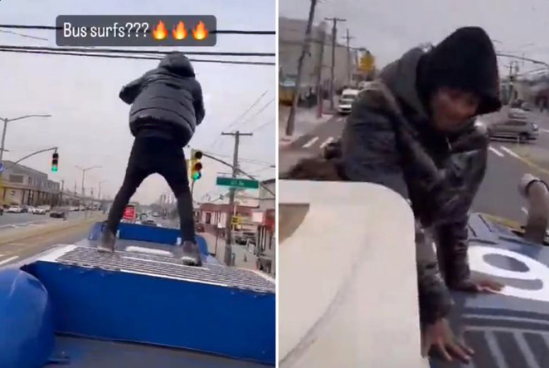 On the 27th (local time), the New York Post reported on 'bus surfing' videos posted on social media (SNS). The video released by the New York Post showed street scenes captured by a videographer sitting on the roof of a moving bus.
 [Photo by New York Post X (formerly Twitter)]
Previously, 'subway surfing' had become a social issue in the U.S. due to a series of casualties. In January, a 14-year-old boy who climbed onto a subway roof fell to his death, and at least five teenagers died last year while 'subway surfing.' In the first half of last year alone, there were 450 cases of 'subway surfing,' a sharp increase compared to 262 cases during the same period in 2019. Recently, however, bus surfing has become popular. Bus surfing refers to dangerous behaviors such as climbing onto the roof of a bus or hanging onto the back of a moving bus.
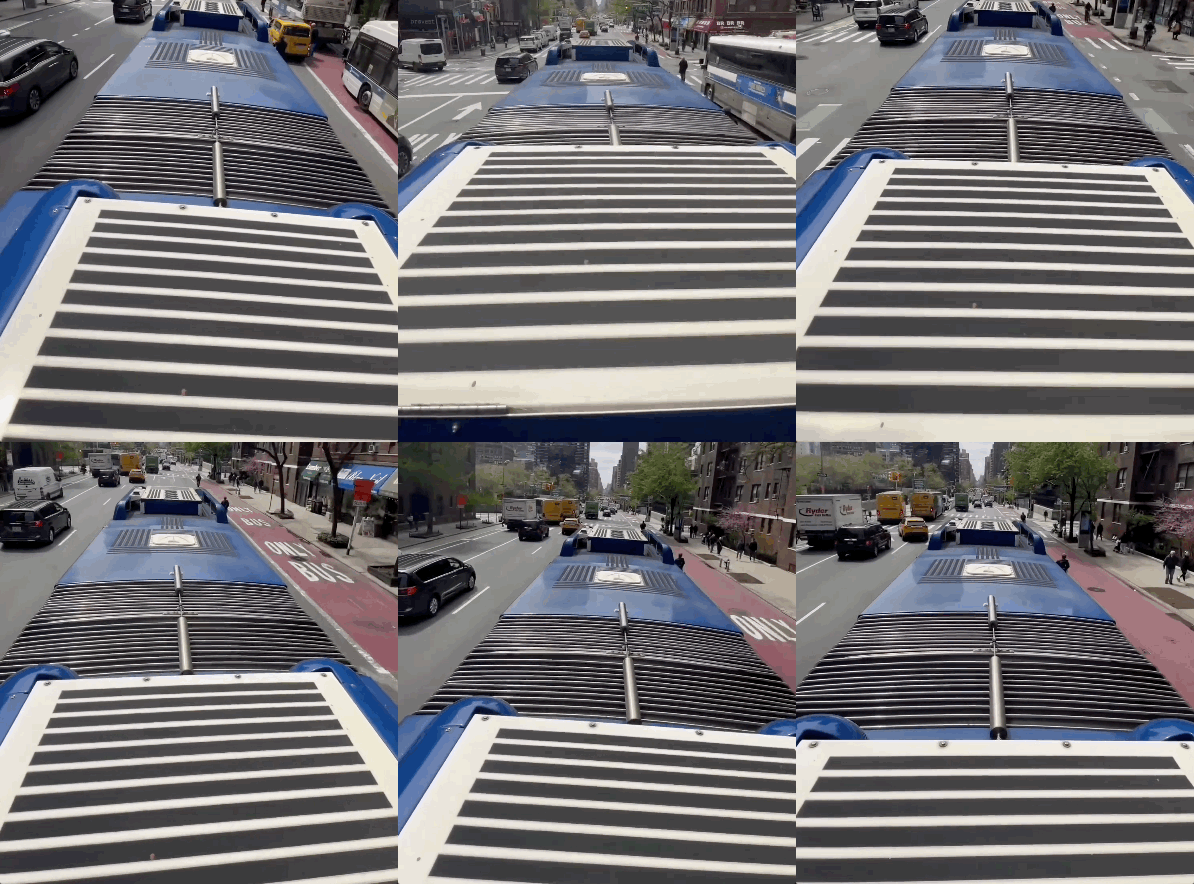 The problem is that 'bus surfing' is more dangerous than 'subway surfing.' Unlike subways that run on fixed tracks, buses can suddenly brake or change direction depending on road conditions. Additionally, unlike subways, there is also the possibility of causing unexpected harm to other drivers.
 [Photo by Instagram]
The problem is that 'bus surfing' is even more dangerous than 'subway surfing.' Unlike subways that run on fixed tracks, buses can suddenly brake or change direction depending on road conditions. Additionally, unlike subways, buses have the potential to cause unexpected harm to other drivers. Bus drivers suspect that so-called 'bus surfers' climb onto the roofs during the drivers' breaks or while waiting at traffic signals. One driver told the New York Post in an interview, "Now, I think I have to check the top of the bus before departure every time." As bus surfing resurfaces as a social problem, local governments and transportation authorities are requesting cooperation on SNS to block or delete posts related to public transportation surfing. They are also conducting campaigns such as advertisements warning about the dangers of such behavior. However, teenagers risking their lives for selfies to get 'likes' on social media continue unabated.
© The Asia Business Daily(www.asiae.co.kr). All rights reserved.


















