Democratic Senators Clash Over Nature of Protest
Republicans Even Mention Deployment of National Guard
As major universities in the United States suffer from the spread of anti-war protests, a dispute has erupted among prominent figures in the ruling party over the demonstrations. Criticism that the protests are anti-Semitic clashed sharply with opinions that they represent freedom of expression that must be protected.
On the 28th (local time), according to local media such as The Hill, Democratic Senator John Fetterman (Pennsylvania) criticized in an interview with NewsNation, saying, "Protests are a great American value, but I don't see how living in a small tent for Hamas helps," and added, "There are clearly anti-Semitic elements in the protests currently taking place."
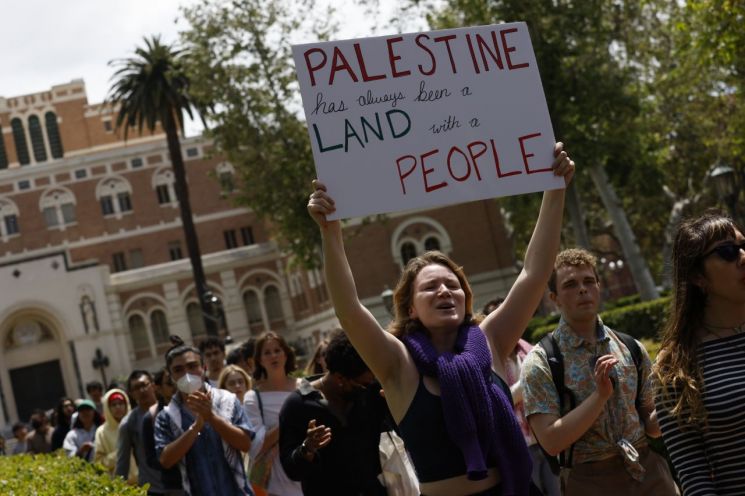
Senator Fetterman is classified as progressive but has taken Israel's side regarding the Gaza Strip war, distancing himself from the pro-Palestinian faction within his party. Earlier, on the 21st, he also pointed out on his social media that "these anti-Semitic protests are unscrupulous and dangerous," and told Columbia University President Nemath Shafik, the epicenter of the protests, to "do your job properly or resign."
On the other hand, independent Senator Bernie Sanders (Vermont), who leans Democratic, appeared on the U.S. public radio NPR and said, "I disagree with Senator Fetterman," defending the protests by stating, "Although there are anti-Semitic elements in the protests, public opinion polls show that most protesters are exhausted by the right-wing extremism of the Israeli government, which acts like a war machine, and the U.S. financial support for them." In a CNN interview, he also criticized, "Benjamin Netanyahu has displaced 80% of the Gaza Strip population, which is undoubtedly ethnic cleansing."
Democratic Senator Chris Murphy (Connecticut) also cautioned against labeling all protesters as anti-Semitic. In an interview with Fox News that day, he said, "95% of the students protesting on campus are there because of Israel's fundamental injustice," and added, "We must protect their right to peaceful protest."
The opposition Republican Party maintains a critical stance toward the anti-war protests and has even mentioned the need to deploy the National Guard. On the 24th, House Speaker Mike Johnson demanded the resignation of Columbia University President Nemath Shafik, stating, "If the protests are not suppressed early, the National Guard must be deployed." However, Senate Minority Leader Mitch McConnell, classified as moderate, toned down the rhetoric, saying, "University presidents should allow freedom of expression while standing against anti-Semitism."
The White House emphasizes that while peaceful protests are respected, anti-Semitic speech is unacceptable. John Kirby, National Security Council (NSC) Coordinator for Strategic Communications, said in an ABC interview that day, "We respect the right to protest peacefully," but also condemned "anti-Semitic language as well as hate speech and threats of violence."
Meanwhile, Kirby said regarding Secretary of State Tony Blinken's visit to Saudi Arabia on the 29th-30th, "Pursuing a temporary ceasefire is Blinken's top priority," explaining, "If a ceasefire is achieved, it would create six weeks of peace, meaning there would be no Battle of Rafah." The White House also reported that President Biden and Israeli Prime Minister Netanyahu spoke by phone that day to exchange views on ceasefire negotiations and the ground battle in Rafah.
© The Asia Business Daily(www.asiae.co.kr). All rights reserved.

















