KDCA Urges Pertussis Vaccination
Paroxysmal Cough... Highest in 10 Years, Mostly Children

This year, the number of pertussis patients exhibiting paroxysmal coughing, mainly among children, has surged by 33 times compared to last year. This is the highest occurrence for the same period in the past 10 years.
Recently, the Korea Disease Control and Prevention Agency (KDCA) announced on the 24th that the number of pertussis patients this year has been counted at 365. This figure is 33.2 times higher than the 11 cases during the same period last year and is the highest occurrence for the same period in the past 10 years. Compared to 152 cases during the same period in 2018, which recorded the highest number before the COVID-19 pandemic, this year's cases are more than double.
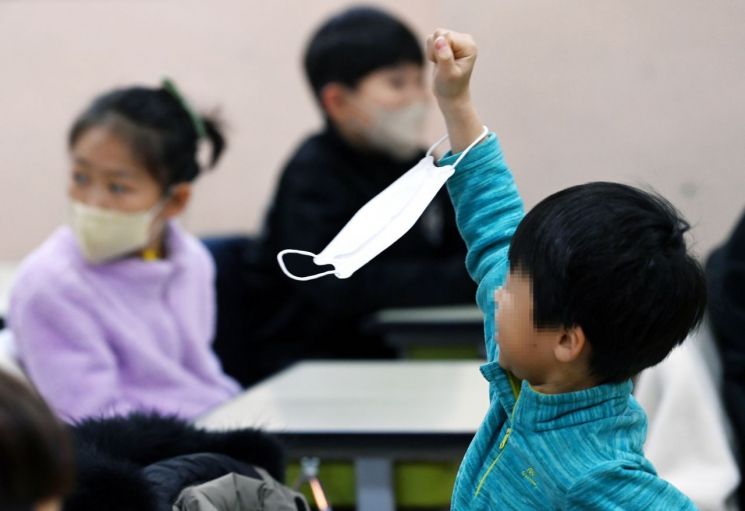
By age group, children aged 12 and under accounted for more than half with 216 cases (59.2%). This was followed by 13-19 years old with 92 cases (25.2%) and those aged 60 and above with 32 cases (8.8%). By region, cluster outbreaks centered around educational facilities were reported in Gyeongnam (182 cases, 49.9%), Gyeonggi (56 cases, 15.3%), and Busan (47 cases, 12.9%).
Pertussis is a respiratory infectious disease caused by the Bordetella bacteria, characterized by severe paroxysmal coughing. It initially starts with a runny nose or mild cough and progresses to paroxysmal coughing. The name "pertussis" means coughing (se) for 100 days, indicating the prolonged duration of symptoms. Severe coughing may also lead to vomiting or apnea. The infection mainly spreads through droplets expelled into the air when an infected person coughs or sneezes. In populations without immunity, one person can infect 12 to 17 others, demonstrating high transmissibility.
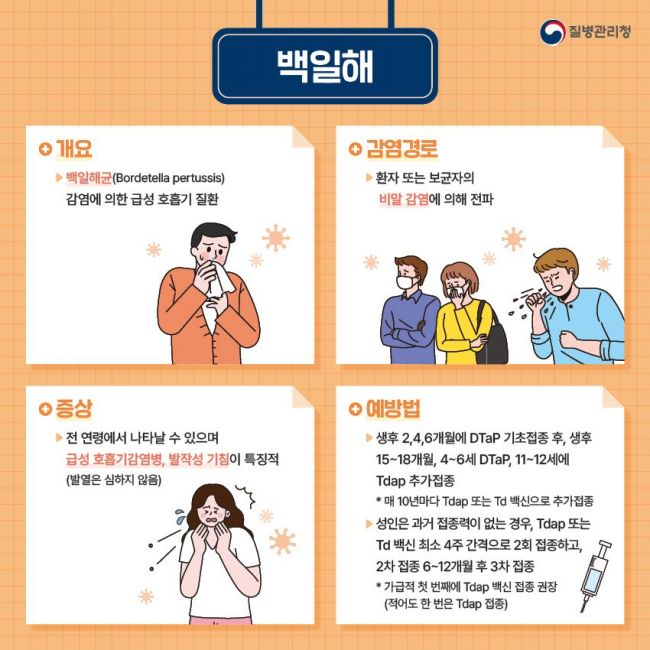
The KDCA urged that since pertussis is spreading mainly among children living in group settings, vaccination completion is essential for prevention. The pertussis (DTaP) vaccine requires three primary doses at 2, 4, and 6 months of age, followed by three additional doses at 15-18 months, 4-6 years, and 11-12 years. If vaccination is incomplete, there is a high risk of transmitting pertussis to friends or siblings, so all booster doses must be completed.
The KDCA also emphasized practicing proper hand hygiene by washing hands with soap under running water for at least 30 seconds, especially after going outside, before and after meals, after blowing the nose, coughing, sneezing, and after using the restroom. They also stressed the importance of covering the nose and mouth when coughing and avoiding touching the eyes, nose, or mouth with unwashed hands.
Director Ji Young-mi stated, "This year, pertussis is trending worldwide, mainly among children and adolescents. It is crucial to vaccinate infants under one year old on time as they are at risk of severe illness from pertussis infection. Children aged 4 to 12 who attend daycare centers and schools should receive the 5th and 6th booster doses," she emphasized.
© The Asia Business Daily(www.asiae.co.kr). All rights reserved.
!["The Woman Who Threw Herself into the Water Clutching a Stolen Dior Bag"...A Grotesque Success Story That Shakes the Korean Psyche [Slate]](https://cwcontent.asiae.co.kr/asiaresize/183/2026021902243444107_1771435474.jpg)


















