Worried About Resignation Effectiveness
Major Large Hospitals in Turmoil
Growing Complaints from Patients Coming from Provinces
It has been a month since medical school professors submitted their resignation letters, and as they begin to take effect, patients are growing anxious. Although there has been no collective departure of professors yet, patients alone are left to worry amid the prolonged conflict between the government and doctors.
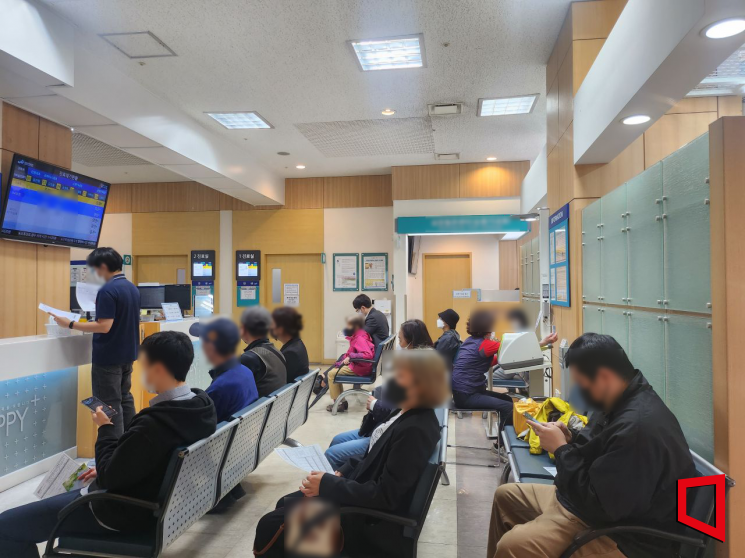
On the afternoon of the 25th at Severance Hospital in Seodaemun-gu, Seoul, Kim Mo (64) said, "My mother is eighty-seven this year, and a procedure she had scheduled in February was repeatedly postponed due to leg pain, and recently we received a cancellation notice." He raised his voice, saying, "The government should actively try to resolve this situation instead of just pressuring the doctors."
Min Mo (69), who underwent stomach cancer surgery a week ago, sighed, "Fortunately, I was lucky to have the surgery without delay, but I heard that a friend suffering from brain cancer has had their surgery postponed for two months and is deteriorating." He added, "Since I will continue to receive treatment at the hospital, I am very concerned about the professors’ planned work stoppages. Having surgery does not mean I can be completely at ease."
Hospitals were crowded with patients amid a chaotic atmosphere. Complaints were especially strong from patients who traveled from provinces to Seoul. Currently, the ‘Big 5 hospitals’?Seoul National University Hospital, Severance Hospital, Seoul St. Mary’s Hospital, Asan Medical Center, and Samsung Medical Center?show no clear signs of professors resigning. However, since the resignation submission times differ, professors leaving hospitals may appear over time, so it is still too early to feel reassured.
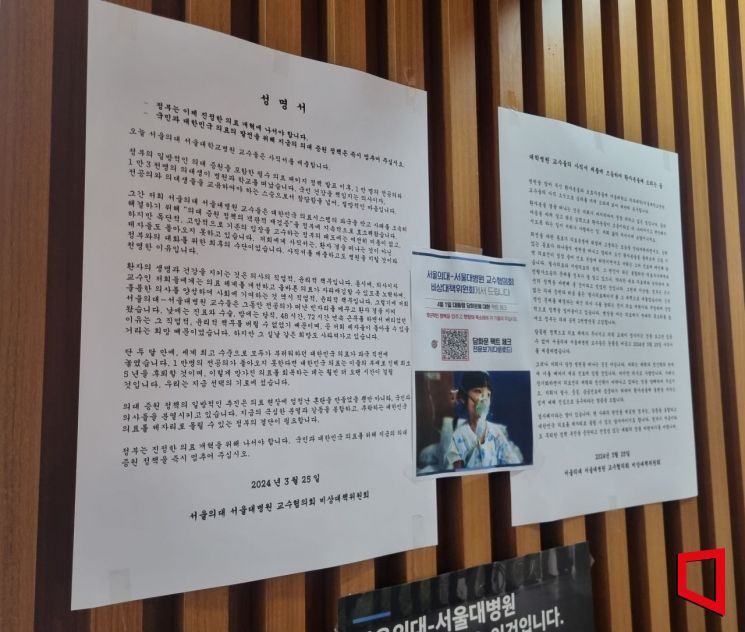 A statement from the Emergency Response Committee of the Seoul National University College of Medicine Professors' Association is posted at Seoul National University Hospital in Jongno-gu, Seoul.
 [Photo by Shim Seong-ah]
At Seoul National University Hospital in Jongno-gu, Seoul, Kwon Mo, a caregiver of a pancreatic cancer patient, expressed concern: “Simple procedures can be done in the provinces, but treatment can only be received here at Seoul National University Hospital, so the chemotherapy schedule is my biggest worry.”
Kim Jinhwa (59), a patient with autoimmune encephalitis, said, “I woke up at 4 a.m. today and took the KTX from Busan. These days, there are no available appointment dates, so I wait for a call from the hospital and come immediately.” He revealed his anxiety, saying, “Steroid treatment is only available in the provinces, so I must come to Seoul National University Hospital. Since the professors say they will all stop working, I am worried about what will happen next.”
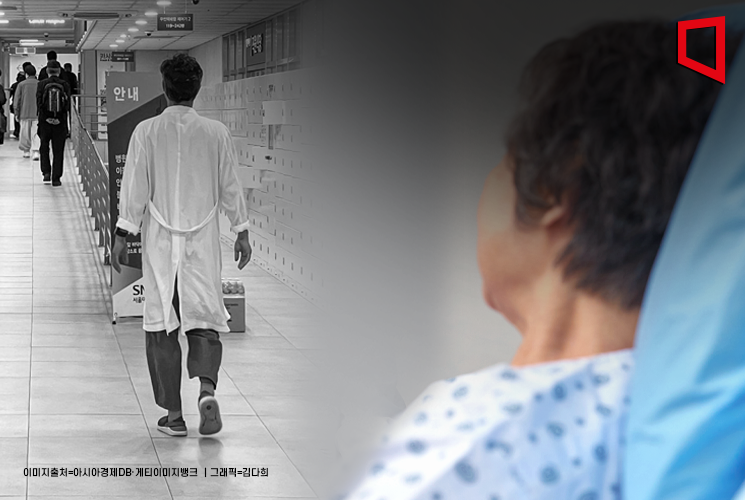
Voices complaining about treatment inconveniences or criticizing doctors also continued. Kang Mangu (38), who visited Chung-Ang University Hospital in Dongjak-gu, Seoul, said, “I had a kidney transplant two years ago, and I came today for an outpatient appointment. This is my first visit since the medical strike, and it seems like there are noticeably more people than before. I have already been waiting for about 20 minutes,” expressing discomfort.
Kim Hokyung (46), who came up from Daegu for cardiovascular disease diagnosis, said, “I heard even medical school professors resigned; I wish they would just cut them all off.” He criticized, “Abandoning patients means they have already betrayed medical ethics as healthcare professionals.”
© The Asia Business Daily(www.asiae.co.kr). All rights reserved.



















