Owner Consent Rate Below Two-Thirds Due to Exclusion of Rental Housing, Legal Requirements Not Met
Six Months of Legal Advice and Pre-Consulting Efforts for Approval Process Faced Limitations
Remodeling Requirements Missing for Mixed Complexes Like Namsan Town, Improvement Suggestions Planned
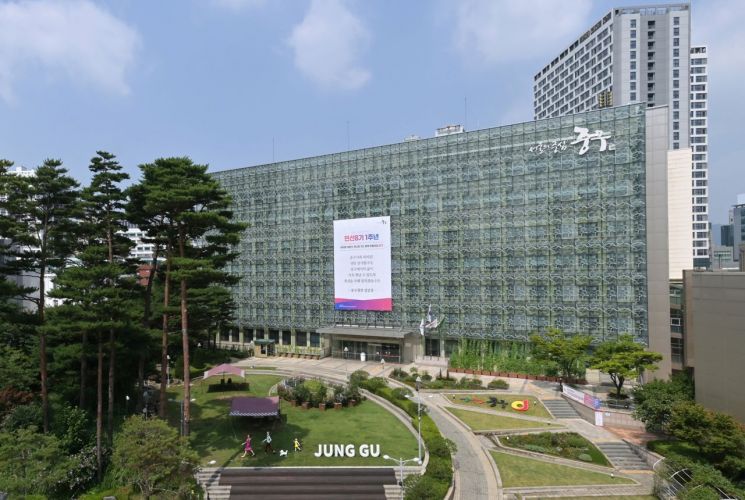
Jung-gu, Seoul (District Mayor Kim Gil-seong) rejected the application for approval of the housing cooperative establishment for the Namsan Town apartment remodeling project on the 24th due to failure to meet legal requirements.
This came six months after receiving the application for cooperative establishment approval in November last year.
Namsan Town apartment consists of a total of 42 buildings (35 sale housing units and 7 rental housing units) with 5,150 households residing, and since 2018, it has been promoting a 'housing complex type' remodeling project targeting only the sale housing units excluding rental housing.
The cooperative establishment approval that was rejected this time did not meet the legal requirements stipulated in Article 11, Paragraph 3, Item 1 of the Housing Act at the time of application. To meet the requirements for approval of a housing complex type remodeling cooperative establishment, consent must be obtained from at least two-thirds of all owners of sale housing, rental housing, and auxiliary and welfare facilities within the housing complex sharing the same lot. However, in the Namsan Town remodeling project, rental housing and auxiliary and welfare facilities were excluded from the project scope, resulting in a failure to meet the consent requirement from the outset.
Namsan Town was selected as a 'Seoul-type Remodeling Pilot Complex' by the Seoul Metropolitan Government in 2018. Jung-gu completed the basic design for remodeling the entire sale housing complex excluding rental housing and held resident briefings in response to Seoul City's request for project initiation.
However, selection as a pilot complex is merely a procedural step for drafting the basic remodeling plan and conducting feasibility analysis as a policy measure to revitalize apartment remodeling. Being selected as a pilot complex cannot serve as grounds for cooperative establishment approval. Cooperative establishment approval must comply with the legal requirements under the Housing Act.
Although this was a case for immediate rejection, Jung-gu considered the residents' efforts and trust in administration over the past five years important and conducted reviews through various channels such as inquiries to higher authorities, legal consultations, and preliminary consultations with Seoul City over six months to process the approval application.
Based on the legal consultation results, the district office judged that the consent of Seoul City, the owner of the rental housing, was necessary for cooperative establishment and inquired twice about Seoul City's opinion but did not receive a direct response regarding consent.
Additionally, Seoul City's preliminary consultation notified that the project was an 'excluded subject.' The preliminary consultation is a pre-audit system where the internal audit department suggests a course of action for cases facing decision-making difficulties. Following the consultation opinion allows for exemption from liability. However, since the response indicated that the project was not subject to consultation, assistance could not be obtained.
Currently, there are no remodeling requirements for mixed complexes including rental housing like Namsan Town apartment. This legal gap only causes unnecessary conflicts and inconveniences between local governments and residents.
Jung-gu plans to actively propose institutional improvements such as supplementing remodeling requirements for mixed complexes to higher authorities including the Ministry of Land, Infrastructure and Transport.
© The Asia Business Daily(www.asiae.co.kr). All rights reserved.

















