"Annual Average 868.9 Billion KRW Underestimation of Provisions"
Errors Must Be Reduced by Changing 'Payment Year' to 'Treatment Year' Standard
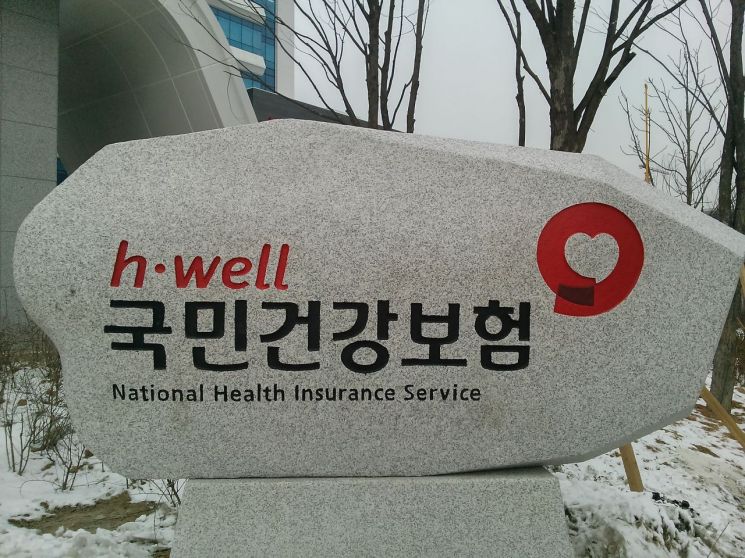
On the 24th, the Board of Audit and Inspection pointed out that the National Health Insurance Service (NHIS) significantly underestimated the amount to be paid as future insurance benefits during the accounting process.
In the audit report titled "Inspection of the Appropriateness of Public Institution Accounting," released on the same day, the Board stated, "Comparing the provision for in-kind benefit liabilities (liabilities with uncertain timing or amount of expenditure in accounting) for the following year’s medical treatment from 2016 to 2022 with the actual payments made the next year, it was analyzed that the provision was underestimated by an average of 868.9 billion KRW annually."
Regarding in-kind benefit expenses, NHIS calculates the average composition ratio of benefit expenses by treatment year based on the "payment year" at the end of each fiscal year’s settlement. Using this ratio and the cumulative payments by treatment year, NHIS estimates the total benefit expenses by treatment year. The provision for liabilities is then recorded based on the "payment year" method, which estimates the benefit expenses expected to be paid after the following year by subtracting cumulative payments from the estimated total benefit expenses by treatment year.
However, the Board of Audit and Inspection found that this estimation method has a low direct correlation between the items subject to ratio application and the components of the applied ratio when estimating total benefit expenses. Furthermore, when medical expenses show an increasing trend, the proportion of payments for the current year’s treatment within the total in-kind benefit payments of that year tends to be calculated higher compared to when medical expenses remain stable. Consequently, there is a risk that the estimated total benefit expenses and provisions for liabilities are underestimated. Therefore, the Board proposed using the "treatment year" as the basis instead of the "payment year" method as an alternative.
For example, in the 2022 fiscal year, the provision for in-kind benefit liabilities was 8.2381 trillion KRW, whereas the benefit payments for the following year amounted to 11.6445 trillion KRW, resulting in a difference of 3.4063 trillion KRW.
The Board estimated the two-year provision for in-kind benefit liabilities from 2016 to 2022 using the "treatment year" method and compared it with actual payments. It was confirmed that the estimation error decreased in five out of seven fiscal years compared to the "payment year" method used by NHIS.
Additionally, the average difference between actual payments and estimated amounts was 868.9 billion KRW under the "payment year" method, but decreased by 550.4 billion KRW to 318.5 billion KRW under the "treatment year" method.
The Board of Audit and Inspection notified the NHIS President to "prepare a plan to improve the estimation formula for health insurance benefit provisions to appropriately reflect the trends and characteristics of health insurance benefit payments and to apply this in accounting treatment."
© The Asia Business Daily(www.asiae.co.kr). All rights reserved.
![User Who Sold Erroneously Deposited Bitcoins to Repay Debt and Fund Entertainment... What Did the Supreme Court Decide in 2021? [Legal Issue Check]](https://cwcontent.asiae.co.kr/asiaresize/183/2026020910431234020_1770601391.png)
















