Samsung Biologics recorded its highest-ever performance for the first quarter. Although it did not reach the '1 trillion KRW quarterly sales' achieved in the previous two quarters, the company expects sales from the operation of Plant 4 to be fully reflected in the results from the second half of the year, and anticipates annual sales growth of 10-15% this year.
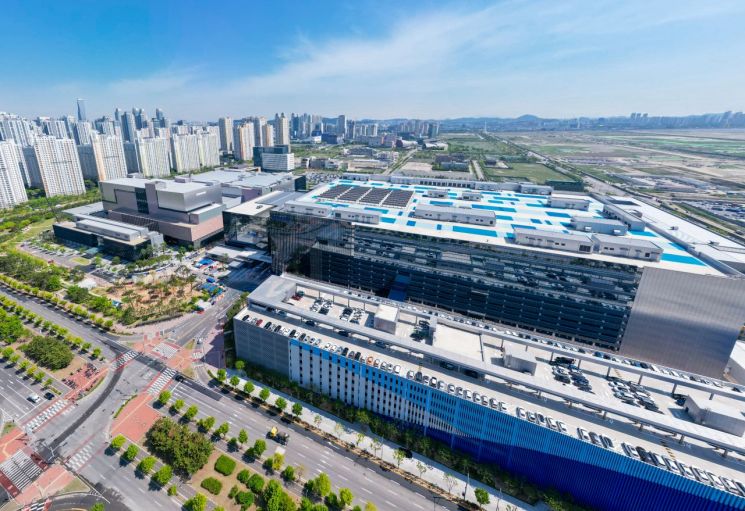
On the 24th, Samsung Biologics announced through a public disclosure that its consolidated sales for the first quarter of this year amounted to 946.93 billion KRW, with an operating profit of 221.299 billion KRW. Compared to the same period last year, sales grew by 31.4%, and operating profit increased by 15.4%. The company analyzed, "Despite the global economic crisis, we recorded the highest-ever sales and operating profit for the first quarter due to increased sales contributions from Plant 4 and the expansion of the biosimilar business."
Samsung Biologics also continued growth on a standalone basis. Sales reached 669.5 billion KRW, a 13% increase compared to the same period last year. However, operating profit decreased slightly by 1% to 232.7 billion KRW. The slight decline in operating profit was explained as "an impact of increased costs due to depreciation expenses of Plant 4, which began full operation in June last year." Researcher Jeong Yoo-kyung from Shin Young Securities also analyzed, "Operating profit margin is expected to slightly decline compared to the same period last year from the first quarter due to increased labor and training costs as early hiring for Plant 5 started in the second half of last year, as well as increased PPA amortization expenses."
Subsidiary Samsung Bioepis posted sales of 280.1 billion KRW and operating profit of 38.1 billion KRW, growing 31% and 6% respectively compared to the same period last year. Bioepis stated, "There was an increase in sales of biosimilar products in overseas markets such as the U.S. and Europe," adding, "Operating profit also increased based on the scale growth from sales expansion."
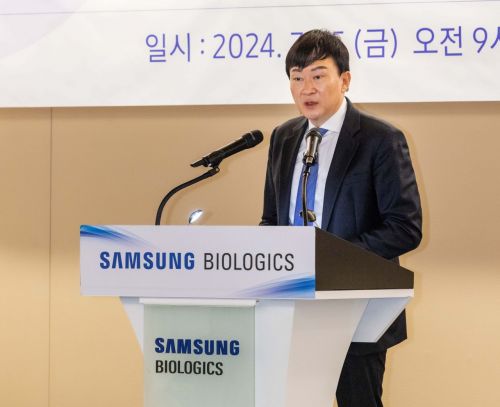
Although the first quarter sales did not reach the 1 trillion KRW recorded by Samsung Biologics in the third and fourth quarters of last year, they grew by more than 30% compared to the same period last year, continuing the growth trend. The securities industry expects Samsung Biologics to maintain a 'low in the first half, high in the second half' performance pattern this year as well, achieving annual sales of 4.2459 trillion KRW, a 14.9% increase. This aligns with Samsung Biologics' sales growth target of 10-15% set in January this year.
The biggest factor behind the expected 'low in the first half, high in the second half' pattern is Plant 4, the world's largest single plant with a production capacity of 240,000 liters, which began full operation in June last year. After initially operating a 60,000-liter capacity in 2022, the 180,000-liter production facility was fully operational last year. Contract development and manufacturing organization (CDMO) facilities typically start recognizing significant sales about one year after beginning operations. Considering this, sales growth from the full operation of Plant 4 is expected to be reflected in actual results starting from the third quarter.
Samsung Biologics is not stopping there; to maintain its title as the world's largest production capacity, it is constructing Plant 5, scheduled for completion in April next year. Plant 5 is designed as an 180,000-liter production facility that consolidates the best practices from Plants 1 to 4. Once completed, Samsung Biologics will secure a total production capacity of 784,000 liters. Furthermore, the company plans to maximize production capacity by completing Plants 6 to 8, each with the same capacity (180,000 liters) as Plant 5, by 2032.
The company is also accelerating orders to fill the increasing production capacity. This year, it has signed contracts with global big pharma companies such as Belgium's UCB and the U.S.'s MSD, with cumulative orders reaching 629.2 billion KRW in just four months. This pace is similar to last year's record-high order performance, indicating that the order strategy is progressing smoothly. Additionally, pre-orders are already coming in for Plant 5, which is not yet completed, and Samsung Biologics is reportedly considering expanding its third bio campus as orders continue.
In terms of production technology, Samsung Biologics is actively pursuing antibody-drug conjugate (ADC) technology, which is leading recent trends in the pharmaceutical and bio industries. Through the Samsung Life Science Fund, a venture investment fund jointly established with Samsung C&T and Samsung Bioepis, the company has been continuously investing in ADC-related ventures. After investing in Switzerland's Araris and Korea's AimedBio, it invested last month in the U.S.'s BrickBio, making more than half of its current portfolio of five investments ADC-related. Samsung Biologics is constructing an ADC dedicated production facility in Songdo, scheduled for completion in December.
© The Asia Business Daily(www.asiae.co.kr). All rights reserved.


















