BOK Issue Note: Data-Driven Early Warning Model for Financial and Foreign Exchange Crises
Early Warning Possible for Financial and Foreign Exchange Crisis Occurrence
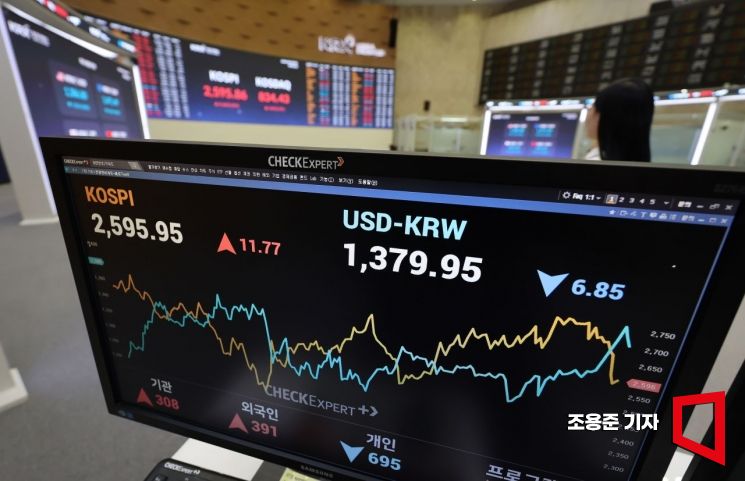
The Bank of Korea has developed an early warning model capable of preemptively alerting financial and foreign exchange occurrences. Through this model, it is expected that crises can be warned about approximately six months in advance when economic-related events occur.
According to the 'BOK Issue Note: Data-Driven Financial and Foreign Exchange Early Warning Model' report released by the Bank of Korea on the 24th, the bank has recently developed a model to detect the possibility of financial and foreign exchange crises early when specific events occur, amid increasing uncertainties such as geopolitical risks, tightening financial conditions, and the accumulation of household and corporate debt.
Financial and foreign exchange crises arise from the interaction of vulnerabilities in the financial system, such as excessive leverage and high short-term and foreign currency debt, with trigger events like tightening monetary policy and expanding economic uncertainty. These characteristics have posed constraints on the development of early warning models in the past. This study complemented the limitations of previous research by utilizing AI and ML (Machine Learning) algorithms.
Unlike the Financial Stress Index (FSI) published by the Bank of Korea, this model forecasts financial conditions over a long-term horizon. The FSI is a monthly index that helps judge the possibility of financial stress with timeliness. In contrast, this model aims to predict crises over a six-month horizon. Overseas central banks, such as the Bank of England, have also developed early warning models using annual data.
The ML algorithm used in the model, ET (Extremely randomized Trees), demonstrated high predictive power (0.95). This is an improvement over the predictive power (0.84) of the signal extraction method used as an early warning model since the 1990s. The closer the value is to 1, the higher the predictive power.
In fact, when validating the effectiveness of the early warning model through past market stress events, the warning index indicating the possibility of crisis occurrence was below 0.1 up to 3 to 6 months before the event. However, it gradually increased afterward, exceeding 0.4 to 0.6 just before the event occurred.
When calculating the warning index during the 2008 global financial crisis, the 2020 COVID-19 pandemic, and the 2022 Legoland-related crisis, the index showed 0.7 in March 2009, 0.49 in April 2020, and 0.51 in October 2022. The closer the value is to 1, the higher the likelihood of a crisis occurring within six months. In 2020, the warning index surged sharply in a short period, whereas in 2022, it showed a relatively gradual upward trend.
Although concerns about financial crises, such as the recent Middle East situation, have been growing, the warning index of this model showed favorable indicators. As of last month, the early warning model's warning index was 0.03.
However, this model has the limitation of not being able to specifically identify which factors triggered the crisis. Park Jeong-hee, head of the Digital Innovation Office at the Bank of Korea and author of the report, explained, "The early warning model quantitatively indicates the possibility of future crises using periodically obtained economic and financial indicators," but added, "It does not provide information on which sectors have accumulated vulnerabilities or which trigger events provoke market stress."
She continued, "It is necessary to develop an early warning system that not only includes early warning models but also expert surveys, such as the IMF's Early Warning Exercise (EWE), to comprehensively identify financial and real economy risk factors and assess sectoral vulnerabilities."
© The Asia Business Daily(www.asiae.co.kr). All rights reserved.
![Clutching a Stolen Dior Bag, Saying "I Hate Being Poor but Real"... The Grotesque Con of a "Human Knockoff" [Slate]](https://cwcontent.asiae.co.kr/asiaresize/183/2026021902243444107_1771435474.jpg)











