Ministry of Agriculture, Food and Rural Affairs, 2023 Livestock Environment Survey Results
It was found that more than 70% of livestock manure generated last year came from pigs and Hanwoo beef cattle.
The Ministry of Agriculture, Food and Rural Affairs announced on the 24th the results of a field survey conducted together with the Livestock Environment Management Agency on over 15,000 sample farms raising Hanwoo beef cattle, dairy cows, pigs, chickens, and ducks. The survey covered farm status, livestock manure management, odor control, and energy usage.
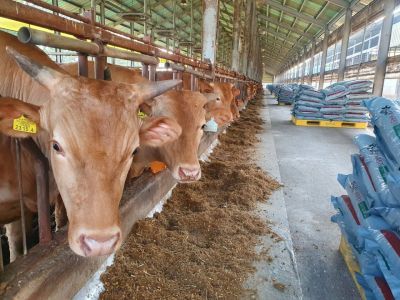
The Livestock Environment Survey has been conducted annually since 2022 to supplement the limitations of previous small-scale and irregular livestock manure-related surveys and to collect factual information required for carbon neutrality and odor reduction implementation in the livestock sector.
According to the 2023 Livestock Environment Survey, it is estimated that a total of 50,871,000 tons of livestock manure were generated last year. Among these, pig manure accounted for 19,679,000 tons (39%) and Hanwoo beef cattle manure for 17,511,000 tons (34%), with these species making up 73% of the total amount generated. Of the generated livestock manure, 51.5% (2,619,000 tons) was self-treated by farms, while the remaining 48.5% was entrusted to livestock manure treatment facilities. By species, Hanwoo beef cattle and dairy cow manure were mainly self-treated, whereas chicken, duck, and pig manure were primarily entrusted for treatment.
Approximately 73% and 12% of the generated livestock manure were utilized as compost and liquid fertilizer, respectively, with the majority of manure, except for pig manure, being used as compost.
To reduce odors, 55% of farms were found to have equipment and facilities such as mist spraying systems, and 62% of farms were using various microbial agents.
Additionally, most of the fuel used in livestock barns was tax-exempt fuel, and efforts were being made to reduce energy consumption in barns through the installation of shading nets in summer, insulation work, and the installation of eco-friendly energy facilities.
Kim Jeong-wook, Director of Livestock Policy at the Ministry of Agriculture, Food and Rural Affairs, stated, "Through the Livestock Environment Survey, we will build a highly reliable database on the actual conditions of livestock farms to utilize in establishing policies for improving the livestock environment." He added, "Based on this, we hope to contribute to creating an environmentally friendly rearing environment and sustainable livestock industry development by establishing and implementing customized plans suited to regional conditions."
© The Asia Business Daily(www.asiae.co.kr). All rights reserved.
![Clutching a Stolen Dior Bag, Saying "I Hate Being Poor but Real"... The Grotesque Con of a "Human Knockoff" [Slate]](https://cwcontent.asiae.co.kr/asiaresize/183/2026021902243444107_1771435474.jpg)
















