Donald Tang, chairman of the online fashion shopping mall Shein, known as the "Chinese version of Uniqlo," defended against being labeled as a symbol of fast fashion that causes environmental pollution, attributing it to "a lack of understanding." He also emphasized that the company is actually a model enterprise in terms of pollution emissions.
Tang made these remarks in an interview with the French daily Le Figaro on the 23rd (local time).
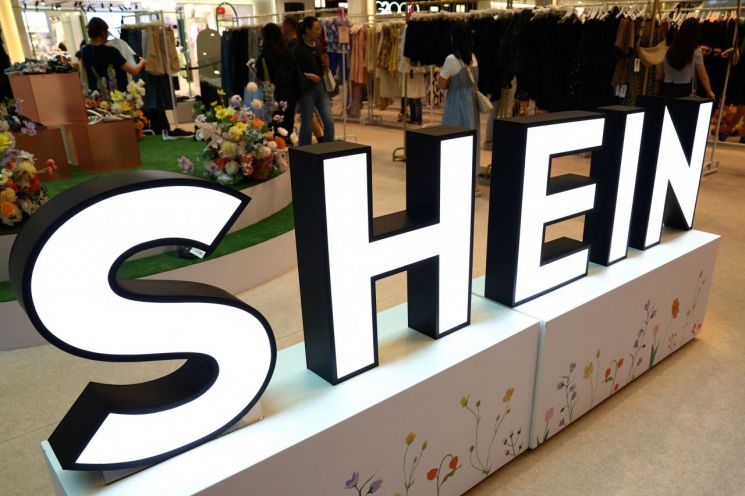
Recently, the French National Assembly passed a bill imposing an environmental levy of 5 euros (about 7,300 won) on fast fashion products and banning advertisements for fast fashion products and companies. If the bill is finally passed by the Senate, companies like Shein are expected to be significantly impacted.
Regarding criticism that Shein causes environmental pollution, Tang explained that it is a misunderstanding caused by a lack of understanding of the company and insufficient communication from the company.
Tang emphasized, "Shein may be perceived only as a popular and cheap brand, but it is a new business model" and "a model company in terms of pollution emissions."
He continued, "The biggest problem in the ready-to-wear industry is that there is too much waste and many unsold products," and claimed, "Shein has innovated with a demand-based (on-demand) production system to solve this." While competitors produce products vertically, Shein first introduces new products in small quantities and then mass-produces them if there is demand, so there is no inventory. He repeatedly stated that Shein operates a 'very small quantity production' system rather than mass production.
In response to criticism that Shein continuously releases cheap new products to stimulate consumer purchasing desires, he countered, "Customers wear our clothes more often and longer because they resonate with the styles we offer."
Shein, which started in Nanjing, China, quickly established its position with an ultra-low price strategy after entering the U.S. and Europe in 2017. It currently has its headquarters in Singapore and produces 90% of its products in China. Last year, it recorded global sales of $45 billion (about 61 trillion won) and a net profit of $2 billion (about 2.7 trillion won). It is pursuing a listing on the New York or London stock exchange.
© The Asia Business Daily(www.asiae.co.kr). All rights reserved.