Rising Importance of Working Conditions Comparable to Wages
Many Women, Young, and Highly Educated Workers Employed in Jobs with Good Working Conditions
Women’s Job Satisfaction Varies Significantly by Working Conditions
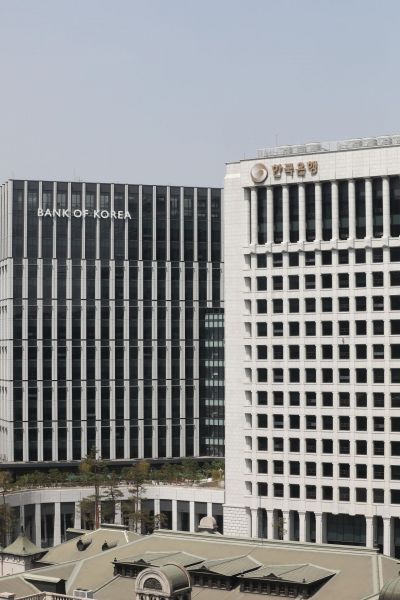
A study has found that improving working conditions in the domestic labor market is essential to encourage economic participation among women and the elderly. It also analyzed that part of the gender wage gap may stem from differences in preferences for working conditions between men and women.
On the 23rd, the Bank of Korea stated in its report titled 'BOK Issue Note: Preferences for Job Amenities and Changes in the Labor Market' that recently, workers increasingly value working conditions such as flexible work arrangements, job autonomy, and development opportunities as much as wages. There are many workers in the labor market willing to forgo a portion of their wages for better working conditions.
In fact, according to the supplementary survey data on wage workers from the Statistics Korea's Economically Active Population Survey, the proportion of employed persons who consider working conditions as a major factor when choosing a job was 31.5% (as of 2023), surpassing the 26.8% who consider wages as the main factor.
Jobs with Good Working Conditions Involve Less Physical Activity and Allow Flexible Work... High Professionalism
The report divided working conditions into eight categories: ▲flexible work ▲telecommuting ▲physical intensity ▲work intensity ▲job autonomy ▲job independence ▲development potential ▲job meaningfulness, and calculated an index for each occupation. The higher the working conditions index, the better the job’s working conditions, and the higher the subjective satisfaction in terms of job autonomy, development potential, and job meaningfulness.
As a result, occupations with the highest working conditions index included legal and auditing professionals, product planning, promotion, and research experts. These jobs involve less physical activity and allow the use of flexible work and telecommuting. They also feature a high level of professionalism, enabling individuals to develop their work capabilities. Conversely, occupations with low indices included simple workers in construction and mining, and equipment operators for goods movement. These jobs involve physical activity and often consist of high-intensity, repetitive tasks.
By industry, the working conditions index was high in information and communication, finance and insurance, education, and professional scientific and technical services. Education was classified as an industry with relatively high working conditions despite not having high wage levels. Meanwhile, manufacturing and construction industries, which have high wage levels, had working conditions indices below average due to the nature of their work.
Women, Younger Age Groups, and Highly Educated Workers Occupy Jobs with Good Working Conditions
Jobs with good working conditions were mainly occupied by women, younger workers, and highly educated employees. The report analyzed that women prefer jobs that are not physically demanding and allow flexible work arrangements. It also reflected labor demand factors making it difficult for women to be employed in high-wage but harsh working environment jobs such as manufacturing production or construction.
By age group, workers in their 20s to 40s had higher working conditions indices, while those aged 50 and above showed significantly lower indices. This was interpreted as the elderly having higher preferences or satisfaction for working conditions but being disadvantaged in employment competition due to lower education levels compared to younger workers.
Highly educated and high-wage workers were also found to be more likely to work in jobs with good working conditions. This is because highly educated and high-income workers tend to work in cognitive jobs that require less physical ability and in professional occupations with high potential for personal development.
Good working conditions were analyzed to have a positive effect on voluntary work and job satisfaction among women and workers in the Seoul metropolitan area. For women, higher working conditions correlated with higher voluntary work levels. Also, working in the metropolitan area increased the likelihood of voluntary work compared to rural areas. This was interpreted as regional infrastructure provided by the metropolitan area positively influencing job choice. Additionally, women, older workers, and highly educated workers showed relatively higher job satisfaction based on working conditions compared to men, younger workers, and less educated workers.
Income Inequality Worsens but Gender Wage Gap Narrows
When converting working conditions into monetary value to measure income inequality, income inequality among wage workers in South Korea was found to be worsening. The report estimated income inequality in South Korea considering working conditions by referencing results from existing overseas studies. As a result, the hourly wage for the lowest income quintile increased by 33.3%, while the highest income quintile rose by 42.9%. Consequently, the income quintile ratio increased by 0.2 from 4.0 before considering working conditions to 4.2 after.
On the other hand, the wage gap between men and women actually narrowed. When reflecting working conditions, men’s hourly wages increased by 38.8%, while women’s rose by 44.8%. As a result, women’s income level relative to men increased from 70.5% before considering working conditions to 73.6% after. This was analyzed to be because women not only work more in jobs with good working conditions but also assign greater value to them.
Lee Soo-min, head of the Employment Analysis Team at the Bank of Korea’s Research Department and author of the report, evaluated, "Considering the result that the gender wage gap narrows when reflecting working conditions, it suggests that part of the gender wage gap can be explained by differences in working conditions."
In the future, South Korea’s economically active population is expected to decline due to low birth rates and aging. Additionally, as overall education levels rise, the labor market, which was previously centered on core age groups and men in manufacturing, is transforming into a more diverse labor market. Consequently, the economic participation rates of women and the elderly are also expected to increase. The report assessed that, in line with these changes, demand for jobs with good working conditions will increase, and labor shortages in jobs with poor working conditions will intensify.
Lee stated, "To encourage economic participation of women and the elderly, measures to improve working conditions in the domestic labor market should be considered. While changes in working methods are expected to naturally occur with technological advancements, policy support such as subsidies for flexible work systems and the 52-hour workweek system should continue."
© The Asia Business Daily(www.asiae.co.kr). All rights reserved.
![Clutching a Stolen Dior Bag, Saying "I Hate Being Poor but Real"... The Grotesque Con of a "Human Knockoff" [Slate]](https://cwcontent.asiae.co.kr/asiaresize/183/2026021902243444107_1771435474.jpg)
















