Fran?ois Villeroy de Galhau, Governor of the Bank of France and a policymaker at the European Central Bank (ECB), once again emphasized the need to cut policy rates in June despite geopolitical risks originating from the Middle East.
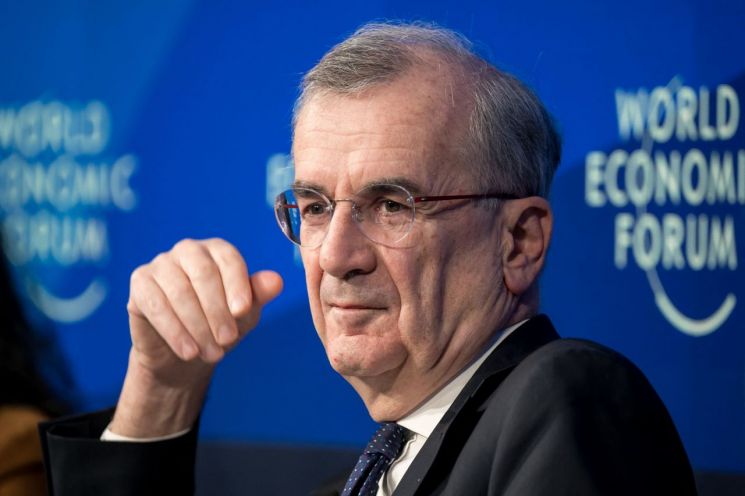
In an interview with the French daily Les Echos on the 21st (local time), Governor Villeroy de Galhau was asked whether the start of monetary easing could be delayed due to uncertainties such as rising oil prices. He responded, "No. Unless something surprising happens, we should not wait too long."
This statement drew attention amid growing Middle East risks, including the possibility of retaliatory attacks following Iran's assault on Israel and concerns over rising oil prices. Governor Villeroy de Galhau assessed, "At this point, it is not leading to a significant increase in oil prices," adding, "We need to analyze whether this shock is temporary and limited or if it spreads beyond commodities to core inflation." Furthermore, he expressed confidence in achieving the 2% inflation target next year, forecasting that "additional rate cuts will follow at a pragmatic pace."
Despite hawkish voices suggesting that the timing of the ECB's rate cuts might be delayed due to Middle East-related oil price risks, the policy of starting cuts in June remains unchanged. Governor Villeroy de Galhau has consistently advocated for a June rate cut regardless of the U.S. Federal Reserve's (Fed) actions, warning that prolonged high interest rates could increase downside growth pressures.
Governor Villeroy de Galhau stated, "We always have the ability to adjust if inflation is threatened by external shocks," and expressed "sufficient confidence that the 2% inflation target will be achieved by next year."
He is not the only ECB official maintaining the June easing stance despite Middle East risks. Earlier, Joachim Nagel, President of the Deutsche Bundesbank, pointed to persistently high core and service inflation but also noted that "the possibility of a June cut is increasing." ECB President Christine Lagarde similarly said, "We need a bit more confidence in disinflation," but added, "If things proceed as expected without major shocks, we are moving toward the time to ease monetary policy." This contrasts with the Fed, where Chair Jerome Powell has directly suggested that the timing of rate cuts may be delayed.
© The Asia Business Daily(www.asiae.co.kr). All rights reserved.
![Clutching a Stolen Dior Bag, Saying "I Hate Being Poor but Real"... The Grotesque Con of a "Human Knockoff" [Slate]](https://cwcontent.asiae.co.kr/asiaresize/183/2026021902243444107_1771435474.jpg)
















