19 Military Coups Occurred, 12 Successful
Current Government Plans Gradual Military Reform Implementation
Thailand, where 19 military coups have occurred and 12 have succeeded since the transition to a constitutional monarchy, is pushing for the enactment of an anti-coup law.
According to local media Bangkok Post on the 21st, Thailand's government Defense Committee approved a draft of the anti-coup law on the 19th, and the bill will be submitted to the parliament after passing through the cabinet.
The core content of the bill is to grant the prime minister the authority to immediately suspend the duties of high-ranking military officers who conspire to seize power by mobilizing military force and overthrow the government.
Chamnong Chaimongkhon, Deputy Minister of Defense, explained that the ruling party Pheu Thai Party and civil society groups in the democratic camp have been discussing the enactment of the anti-coup law, and since the inauguration of Defense Minister Sutin Klangsaeng, a working group including military representatives has been formed.
He added that since it was difficult to include anti-coup provisions in the constitution, which could be nullified by coup forces, it is more reasonable to specify them in law.
Additionally, the Defense Committee approved other measures for military reform, such as strengthening criteria for general promotions and abolishing military courts in each province.
Thailand’s military is powerful and deeply involved in politics. Since the transition to a constitutional monarchy in 1932, there have been 19 military coups, with 12 successes.
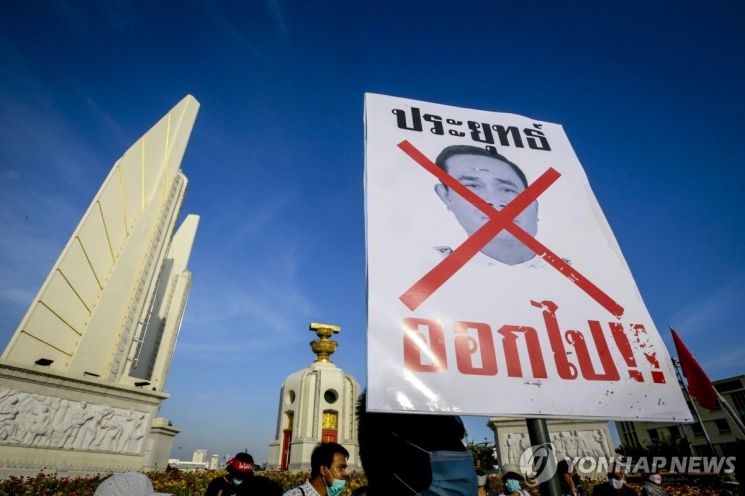
Even in the 2000s, two coups occurred. Former Prime Minister Thaksin Shinawatra was ousted in the 2006 coup, and in 2014, another coup took place, making Army Chief Prayut Chan-o-cha the prime minister. Prayut, who extended his regime through the 2019 general election, stepped down last year after losing the election, ending his nine-year tenure.
The Pheu Thai Party, the political force of former Prime Minister Thaksin, formed a coalition government with pro-military parties, but the influence of military forces within the regime has significantly decreased.
The current government is led by entrepreneur Prime Minister Srettha Thavisin. The first defense minister of the current government is Minister Sutin, a politician and former deputy leader of the Pheu Thai Party. This is the first time a civilian has held the position of Thailand’s defense minister, excluding cases where the prime minister concurrently held the post.
Since taking office, Prime Minister Srettha has announced plans to gradually implement military reforms, including the phased abolition of conscription, reduction in the number of generals, and changes in weapons procurement methods.
© The Asia Business Daily(www.asiae.co.kr). All rights reserved.

















